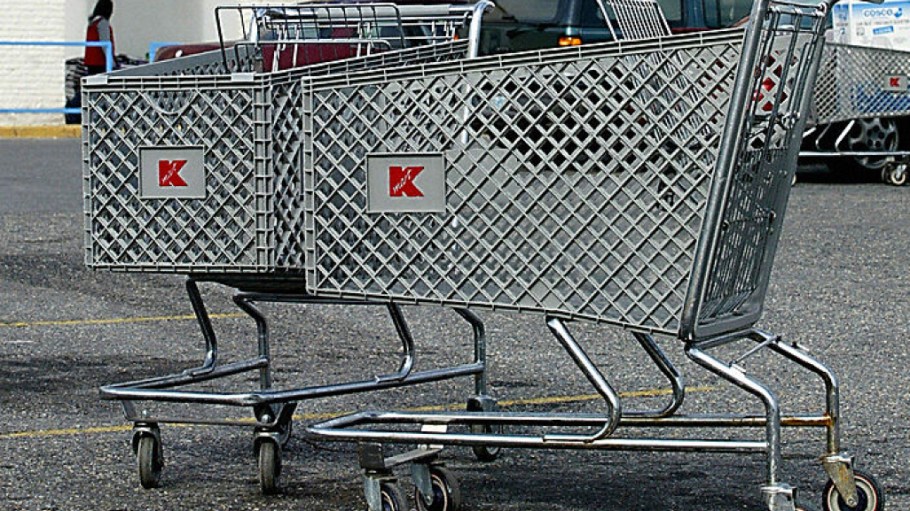
Kmart‘s time came and went long ago, but for now, there’s still one store that will serve as a reminder of what was.
A call to the Kmart store in Bridgehampton, N.Y., elicited confirmation from a store associate that Kmart’s last full-size store is set to close on Oct. 20. She said store hours will remain 9 a.m. to 9 p.m. every day until the closure.
Following the shuttering, the only store in the contiguous U.S. to remain open is a much smaller location in Miami, Fla., one that’s a fraction of the size of a full-line Kmart big box. The nameplate also exists in store locations in the U.S. Virgin Islands and Guam.
Related Stories
Kmart in July 2021 shuttered its last remaining Manhattan store at Astor Place, located at 770 Broadway in Greenwich Village. A Penn Plaza location closed in February 2020. At the start of 2022, Kmart was set to have just six stores in operation after shutting down 10 in 2021. It closed its Avenel, N.J., store in 2022, followed by a Westwood, N.J., location last year, leaving just the Bridgehampton store as it only remaining full-line door.
The mass discount chain started as S. S. Kresge in 1899, named after founder Sebastian Spering Kresge. He once sold goods to variety store F.W. Woolworth Co. before investing in his own five-and-dime stores with John McCrory, who would go on to found his own discount chain called McCrory’s. By the late 1990s, both Woolworth and McCrory’s landed in bankruptcy court after variety stores fell out of favor. Both names are now residents a growing retail graveyard.
S.S. Kresge was renamed Kmart Corp. in 1977. It was once the largest retailer in the U.S., but fell to second place in late 1990 when Walmart took the No. 1 spot. As Walmart and later Target Corp. gained ground, profitability at Kmart—which once had nearly 2,500 locations—peaked around 1992. It began closing stores and the discounter filed a Chapter 11 petition for bankruptcy court protection on Jan. 22, 2002. Hedge funder Edward S. Lampert took a stake in the discounter’s debt through his fund ESL Investments. He held a controlling stake when Kmart exited Chapter 11 on May 6, 2003.
A year later, Lampert engineered the $11 billion Kmart merger with Sears, Roebuck & Co., renaming the merged entity Sears Holdings. At the time, Kmart had about 1,400 doors and Sears operated nearly 900 full-line department stores.
Lampert didn’t know much about retail, and he has been criticized for what some refer to as asset stripping. Under his ownership, Sears sold off assets such as Lands’ End, and two of Sears’ crown jewels, the automotive battery brand DieHard and its tool brand Craftsman. The third crown jewel is the appliance brand Kenmore, which is owned by Transformco, the latest owner of Sears that is also controlled by Lampert. He also sold off what some some consider to be Sears Holdings’ best real estate assets.
Sears filed its Chapter 11 petition on Oct. 10, 2018. Creditors in the bankruptcy case accused Lampert of “serial asset stripping” in court. Lampert got the court nod to acquire the bankrupt entity for $5.2 billion, and the company is now part of the Lambert-controlled Transformco operation. That helped to save some 45,000 jobs, but Sears emerged with its Sears and Kmart banners as a shell of themselves with just 425 stores in operation.
Transformco went on to acquire Sears Hometown and Outlet Stores in June 2019, a group of stores that was spun off from Sears Holdings in 2012. But by December 2022, Sears Hometown filed its own Chapter 11 petition.
There are now only about a dozen Sears stores in the U.S. and one in Puerto Rico. Its last N.Y.-area location closed earlier this year. It closed 26 large-format doors in August 2019, followed by 96 more locations three months later. There are Sears stores in Mexico, but those have no connection to Transformco. Those doors are operated by an entity owned by Mexican billionaire Carlos Slim.