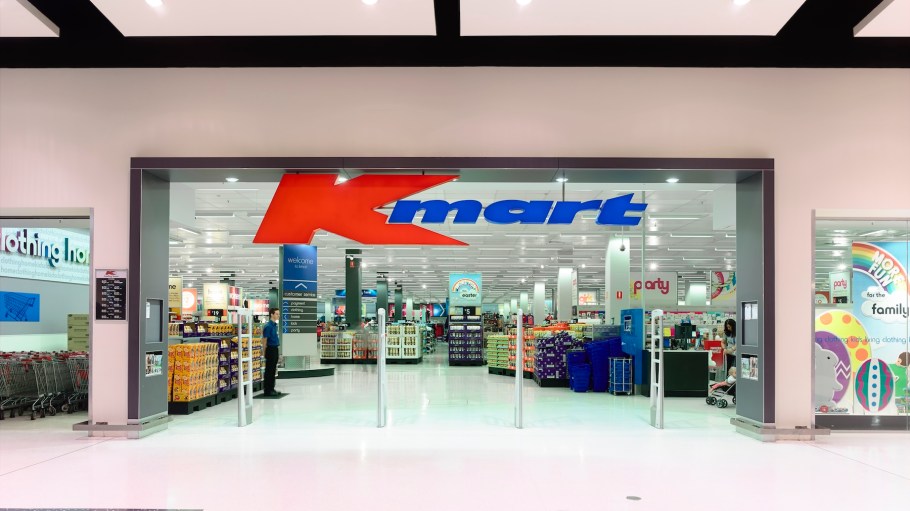
Kmart New Zealand is in the crosshairs of the New Zealand Commerce Commission (NZCC) after the discount department chain couldn’t confirm its “100 percent sustainably sourced cotton” advertising claims.
“Our message to businesses is simple,” said Vanessa Horne, general manager of the Commerce Commission’s competition, fair trading and credit branch. “If you can’t back it up, don’t say it.”
From Aug. 2023 to Oct. 2024, Kmart NZ Holdings Limited advertised certain products as containing “100 percent sustainably-sourced cotton.”
Related Stories
During the investigation, the independent Crown entity reported that Kmart admitted its Better Cotton was actually mixed with conventional cotton in the supply chain. Specifically, while Kmart NZ utilized “Better Cotton,” as sourced through the Better Cotton Initiative (BCI), the investigation revealed that within the supply chain, this BCI-certified cotton was blended with conventional cotton.
Because of the mixing, Kmart NZ cannot guarantee its clothing was made from 100 percent sustainably sourced cotton—thus making the claim misleading.
“Businesses know that consumers are increasingly considering the environment when buying goods or services and may be influenced to purchase from one company over another because of their environmental claims,” said Horne. “Unsubstantiated claims are unfair for businesses who put in the time and resource to make sure their environmental claims are legitimate.”
Kmart NZ agreed with the NZCC that consumers have a right to clear and accurate information, a spokesperson confirmed to Sourcing Journal—and that Kmart NZ advised the NZCC that the retailer could not say, with certainty, that 100 percent of its cotton was sustainability sourced. But other elements were less settled upon.
“The NZCC’s comment that Kmart ‘admitted’ that its Better Cotton was mixed with conventional cotton is incorrect,” the spokesperson said. “Kmart is disappointed with the Commission’s assessment and notes that the statement appeared on a now inactive webpage.”
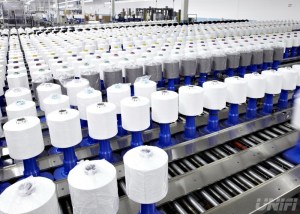
That being said, NZCC’s issue seemingly stems from Better Cotton’s mass balance system. This chain of custody model lets brands pay farmers to grow a certain amount of sustainable cotton and then collect an equivalent amount of the fiber after ginning and spinning, which could have conventional fibers mixed in. The scheme has been a recurring source of scrutiny for the nonprofit.
Last June, Earthsight questioned the legitimacy of Better Cotton’s chain of custody system and certification process after a whistleblower told the “Fashion Crimes” nonprofit that some Better Cotton staff in its Swiss and UK-based offices have “manipulated” the scheme’s data on its online platform—meaning brands using Better Cotton may be making sustainability claims based on defective data.
“Kmart’s cotton is largely sourced through Better Cotton, the world’s largest cotton sustainability program based on a mass balance model—used by over 300 brands globally—or is recycled or certified organic cotton,” a spokesperson told SJ.
For Kmart NZ, because its Better Cotton was sourced via the BCI’s mass balance system, it could be mixed with other types of cotton—meaning the final product might not contain any Better Cotton—per the warning.
For BCI, it’s crucial for retailers and brands, as well as other partnering companies, to communicate their sourcing and use of Better Cotton “correctly and with complete transparency.”
“We recognize that generic claims of sustainability are misleading to consumers, and we have a framework which guides members to make claims which are specific, accurate and credible,” a Better Cotton spokesperson told SJ. “Since November 2023, Better Cotton Traceability has allowed physical Better Cotton to be traced back to its country of origin, increasing the amount of information about sourcing available to retailers and brands for their communications to customers.”
Following the NZCC’s raised concerns, Kmart NZ removed the “100 percent sustainably sourced cotton” claim from its website. Kmart NZ will reportedly continue to provide regular compliance training for its staff members in consumer and competition law. In the event of a repeat offense in the future, the NZCC has stated that legal action remains an option.
“Consumers have a right to clear and accurate information; greenwashing makes it virtually impossible for a consumer to identify if a product is genuinely sustainable,” Horne said. “Kmart’s absolute claim of ‘100 percent sustainably sourced cotton’ implies a high level of certainty that we believe Kmart did not have.”
Of note: Kmart Australia has been a Better Cotton retailer and brand member since 2017.
“In October 2020, Kmart celebrated an important milestone with their customers since setting the ambitious goal of ‘100 percent more sustainably sourced cotton by July 2020’ back in 2017 as part of their ‘Better Together’ sustainability program,” Lucy King, then-serving as Kmart Australia’s sustainable materials manager, said Feb. 2022 during a Q+A with Better Cotton. “Kmart launched it’s ‘100 percent sustainably sourced cotton’ brand campaign to celebrate that all of the cotton for Kmart’s own brand clothing, bedding and towels range is now sourced as Better Cotton, organic or recycled cotton.”