
The heat is on across the U.S., especially at the gas pump, where an average gallon of regular is about $2.52. Wal-Mart on Tuesday cited high fuel prices as one of the reasons behind its smallest quarterly profit growth in four years. The cost of gasoline topped WSL Strategic Retail’s July 2005 Everyday PULSE report, which asked women to list products they found to be too expensive for their value. “This was the first time we’ve asked this question in our PULSE report,” said Wendy Liebmann, president and founder of WSL Strategic Retail. “This year we hypothesized that the whole change in value perception in this economy — and in this country — was something we really needed to measure. It’s not just about price — it’s about value.” Certain items of apparel, such as designer shoes and clothing, also ranked highly, along with prescription medication and cosmetics.
Related Articles
- GASOLINE
Percentage of women who perceive product is too expensive: 78
Californians are paying the most for gasoline ($2.78 per gallon), while Wyoming has the lowest prices ($2.38 per gallon). Crude oil prices have increased to more than $66 per barrel as both oil and gas prices have been affected by malfunctioning equipment and production delays at refineries in the U.S., along with increasing instability in the Middle East and rising demand, particularly in the U.S. and China. Consumers have been hitting Web sites such as Gasbuddy.com and Gaspricewatch.com, which are intended to help people find the cheapest gas prices in areas where they are driving. - DESIGNER SHOES*
Percentage: 70
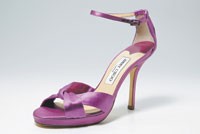
Two million bucks for a pair of shoes? Not your average price, of course. The world’s priciest pair of women’s shoes were designed by Stuart Weitzman in 2004. The stiletto sandals were adorned with 565 platinum-set Kwiat diamonds (including 55 carats of clear diamonds and one 5-carat stone). Weitzman named them, “The Cinderella Slippers.” Liebmann of WSL Strategic Retail said, “Designer shoes and jeans aren’t targeted to appeal to 100 percent of the population. The reality is that this is a specific niche.” - DESIGNER JEANS*
Percentage: 70
With demand for designer jeans labels rising, lower-cost brands will have to fight to stay competitive. WWD reported last week that Zac Posen has teamed with Seven For All Mankind to design a jeans collection. Prices range from $450 to $995. WWD also reported that the denim industry is seeing a number of premium brands showing up at specialty stores, as well as off-price spots like T.J. Maxx. - PRESCRIPTION MEDICATION
Percentage: 60
Government figures at the end of last year revealed that more than 40 percent of Americans take at least one prescription drug and about 16 percent take at least three. Almost half of all women take prescription drugs — 49 percent — compared with 39 percent of men. The latest strategy: using generic drugs whenever possible in an effort to save money. - COSMETICS PURCHASED IN A SPECIALTY STORE
Percentage: 54
Specialty stores like Sephora are making it tougher for department stores to sell cosmetics. Still, 54 percent of women in the study believed that the prices in specialty stores were too expensive. “Specialty stores are becoming an increasingly important part of shoppers’ portfolios,” Liebmann said. She also pointed out that shoppers find that the overall store experience, including service, is reflected in the value of the product. “If women are paying premium prices for beauty products, they want to have a positive and valuable shopping experience.” - COSMETICS PURCHASED IN A DEPARTMENT STORE*
Percentage: 50
A report by consultant firm Kline and Co. in April noted that beauty product sales at department stores were facing challenges in growth because of fewer selections at the counters, which goes against consumers’ growing interest in shopping for numerous brands (and in other venues, like specialty stores or outlets). These struggles could keep beauty product sales in the department store channel relatively flat through 2009, Kline and Co. said. - MOISTURIZER PURCHASED IN A SPECIALTY STORE*
Percentage: 50
At Sephora, a 2.8-oz. bottle of Kinerase’s moisturizer cream goes for about $117, while Walgreens offers customers an 18-oz. bottle of Suave’s skin firming daily moisturizer for $2.79. Kinerase tells consumers its product is for “skin that’s been photo-damaged, is post-procedure (i.e. chemical peels, microdermabrasion, etc.), retinoid intolerant and sensitive.” But Suave touts its product as “clinically proven to firm and tone skin, dermatologist-tested, and specially formulated with alpha hydroxy acid and seaweed extract to improve the tone, texture and appearance of skin.” - CELL PHONE PLAN
Percentage: 49
As cell phone companies compete for business, there are definitely a few tricks to saving dollars each month. For nonfrequent users, it’s wise to invest in a plan that allows minutes to roll over into the next month, such as Cingular Wireless. And Virgin Mobile also offers its users a pay-as-you-go phone plan, giving customers control over their usage by purchasing phone cards containing set amounts of minutes. Verizon Wireless customers can also receive gift cards from friends or family, which can be used to pay their wireless service bills. - BASIC CABLE SERVICE (NO PREMIUM CHANNELS)*
Percentage: 47
Basic cable service on television may be thought of as too costly, but it’s apparent that the U.S. is still watching: As of January, there were 73.2 million basic cable customers, out of 109.6 million television households — putting the cable penetration level at almost 67 percent. For many New York City area residents, basic cable is a necessity just for reception purposes — Time Warner Cable’s basic cable customers pay $20.01 per month for regular network stations and a few original programming channels (such as TBS and The Food Network), while standard service (which includes more channels but no premiums) is $50.69 per month — one premium channel alone costs $12.95 per month. - FACIAL MOISTURIZER PURCHASED IN A DEPARTMENT STORE*
Percentage: 47
Mass market stores have taken on skin care products and moisturizers of late in an effort to compete with department stores and spas by offering similar products at lower prices. In fact, walgreens.com has a section titled, “Beauty and Spa,” suggesting that customers can get similar types of skin care products at the Deerfield, Ill.-based drug store — which has almost 4,900 chains across the nation — instead of at a pricier spa or department store beauty counter.
Source: WSL Strategic Retail’s “How America Shops” Everyday PULSE Report from July 2005. Women were asked if the prices in each category are too expensive for what they get. *Indicates a tie.