
Wretched excess is out. Saving the world is in.
By tying a luxury brand to a noble cause, companies are mining a new cultural mind-set and giving consumers a chance to feel virtuous about an upscale product they purchase.
A growing number of Americans, from teens to Baby Boomers — and especially the very wealthy — really want to do good, based on recent studies by American Express and youth and young adults marketing specialist Alloy Media + Marketing. And they like and buy brands that want to do good, as well.
While marketing and causes are not exactly strange bedfellows, the current wave of cause-oriented campaigns reflects a major cultural shift in the mind-set of Americans, especially Baby Boomers, maintained Tom Watson, chief strategic officer for Changing Our World Inc., a consultant specializing in philanthropy and the publisher of online title onPhilanthropy. “You can’t turn around without seeing a big new campaign, a magazine cover, big media coverage or financial sector ads targeting Boomers’ desires to do good,” he said. “We’re experiencing a moment in time where philanthropy is becoming an aspirational lifestyle choice.”
A number of factors are spurring the current fascination. Famous Boomers, such as Bill Clinton, Bono, Richard Branson and Bill Gates, have launched high-profile campaigns, setting an example for others of their generation at a time when many will receive a transfer of wealth from their parents, Watson pointed out. In addition, a number of recent disasters — from Hurricane Katrina to the 2004 tsunami in Indonesia — drew big media coverage and prompted a widespread emotional and financial response.
As a result, style-driven companies are embracing various causes — in some cases, those of their customers or celebrity fans — and making them part of a brand’s identity. Once a quiet endeavor, philanthropy has become fashionable with celebrities, bringing star power to various causes, such as Bono for the American Express Red Card and Branson, who donated $750,000 to help form the Sara Blakely Foundation, a group dedicated to helping women around the world, starting with underprivileged women in Africa.
“From a cynical point of view, this is good for business. It makes people feel good about the company,” Branson said at a party in Atlanta last week to launch the foundation formed by Blakely, founder of Spanx, a footless panty hose line with headquarters in Atlanta. “But when companies do it, it has to be from the heart because the consumer will know the difference.”
Related Articles
You May Also Like
“Luxury brands try to find ways to wrap themselves in virtue,” said author-consultant Paco Underhill, chief executive officer of Envirosell, who cited Kiehl’s and ABC Carpet & Home as examples. “It’s a way to gain recognition without spending money on advertising, in the 20th-century ad model.”
At least one observer said the upswing in brands’ support for charitable causes reflects a backlash against the excess portrayed in the media, and could be an effective way to assuage consumer guilt. “It validates consumerism and makes people feel less guilty about spending lots of money,” observed Samantha Skey, senior vice president of strategic marketing at Alloy.
Alloy’s research indicates 18- to 30-year-old college students see themselves as having less in common with Paris Hilton than Mother Teresa. Intent on doing good, they consciously seek out brands that embrace social responsibility. In addition, experts advised, today’s culture is one in which the prevalence of spoiled, rich teenagers, with no cause more meaningful than acquiring the latest designer handbag, is more myth than reality, despite their portrayals on TV shows such as MTV’s “Laguna Beach,” “The Hills” and “My Super Sweet 16,” and Fox’s “The O.C.”
This mind-set has been making it easier for cause-connected brands to lure socially conscious youths. “Young people want to do good, but it’s superficial — they don’t dig deep,” Skey contended. “They don’t want to be candy stripers or get their hands dirty, so buying a product is a way to wear their commitment on their sleeves. The climate is definitely ripe for brands to do the right thing.”
At MyCause, an online network for change, high school students can get involved with six causes, ranging from animal rights to anti-poverty programs, as well as shop and socialize with their peers via blogs and digital photos. Launched in August by Alloy, MyCause has links to roughly 40 e-tailers, including Amazon, Bluefly and Target, each of which donates a percentage of sales to the half-dozen social efforts backed by the online network. Donations range from 0.6 percent to 12 percent of a transaction to benefit government; anti-violence and anti-war projects, peace and fighting terrorism.
Parents, especially the very wealthy, say they value philanthropic values over a lavish lifestyle and frivolous spending. “Customers are increasingly socially conscious and there’s a growing opportunity for customers to feel good about brands,” said Simon Kahn, vice president, Platinum Card product management, at American Express.
In September, an American Express survey of 1,170 consumers with average annual household income of $472,000 revealed parents care deeply about ethics and values, and enjoy travel and cultural experiences — and want to share them with their children. Over the past few years, American Express has stepped up cause-related programs like the recently launched Red Card, spearheaded by Bono in the U.K., which benefits AIDS charities, and begun more joint programs with brands, such as Gap, which did a recent Red promotion that included special offers related to social causes aimed at youths and parents alike.
It’s not that luxury customers have stopped buying expensive things. But their buying decisions are shifting, increasingly influenced by their values, said Kahn. “Affluent customers are still buying luxury goods, but they have to believe that something has value, and that can mean different things to different people,” he said.
Thus, the “experience,” or the story behind a purchase, often is as important as the item itself. Brands that are a personal, individual expression, or convey a message about the individual, often trump the need to possess an item reflecting a “hot trend of the month.”
With its Love Charity Bracelets, launched in June, Cartier updated its 30-year-old Love bracelet, an emotionally charged item familiar to the luxury brand’s Boomer consumer. To appeal to a broader market, Cartier recruited eight celebrities, from Spike Lee to Scarlett Johansson to Sarah Jessica Parker. Each selected a silk cord bracelet in a signature color and applied it to their favorite cause, succeeding the older Love piece, which was a gold bracelet with screws that could be opened by a person’s partner.
With its campaign, Cartier tried to touch several bases — philanthropy, personal expression, celebrity and a multigenerational appeal.
People’s desire for philanthropic, cultural experiences also is creating an opportunity for luxury travel and services to market new opportunities to wealthy families.
Luxury vacations, in villas or homes; destination clubs offering time shares in lavish homes and resorts, and the transformation of private jets or yachts from ownership to membership, will all be winners, forecasts Milton Pedraza, ceo of the Luxury Institute. “The philanthropic trip, where people can go and build a home or help a child, rather than just write a check, will become more important,” said Pedraza. “People want to be involved directly, personally,” he said of affluent Americans, including families who would engage in such activities together.
Mudd Jeans has recruited young consumers to the cause. In Mudd Girls Move the World, a back-to-school campaign launched in June, more than 2,000 teens responded to a nationwide call that included a 200-word essay on any cause. Six girls were chosen from six cities, including Albuquerque, N.M., Atlanta and New Orleans, where a survivor of Hurricane Katrina wanted to “rebuild her city.” The girls are appearing in Mudd’s online and print advertising and point-of-sale materials through next June. Mudd donated $5,000 to each girl’s cause.
The girls, while serious about their causes, were just as excited about becoming models, noted Catherine Sadler, president of Catherine Sadler Group, the New York marketing agency that created the campaign. “Teens are teens,” Sadler said. “Their social concerns co-existed with their love of fashion, being pretty and dressing up.”
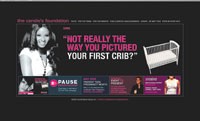
Mudd’s owner, Neil Cole, is no stranger to the complexities of incorporating causes into brands. In 2000, he launched the Candie’s Foundation, which has raised over $10 million for teen pregnancy prevention, in response to what he called flak over campaigns featuring teens in sexy ads for Candie’s, a brand also owned by Cole. Since then, the ads have been toned down somewhat, he said, but he attributed the move more to market forces than moral pressure.
“I still believe that sex sells,” Cole said. “I’m not talking out of both sides of my mouth. We can’t pretend sex doesn’t exist, but you can wear a short skirt and still be smart and not ruin your life.
“Most important when dealing with young people,” Cole added, “is you have to keep it real.”