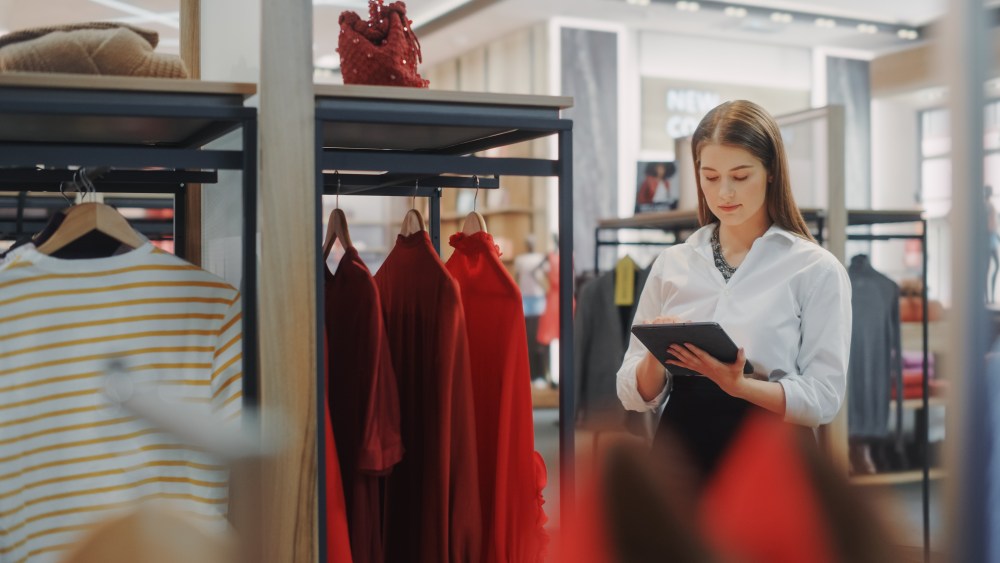
Nikki Baird, Vice President of Strategy and Product at Aptos, delves into the significant transformations within physical retail over the past five years, highlighting evolving consumer behaviors, the financial benefits of selling through stores and the strategic integration of omnichannel experiences.
Further, Baird discusses the challenges and opportunities facing retailers today, from the shifting dynamics of store staffing to the technological investments necessary for creating modern and engaging retail environments. Her insights shed light on how physical stores are adapting to meet higher customer expectations and the crucial role stores play in a brand’s growth.
Related Articles
Fairchild Studio: How has physical retail changed over the past five years?
You May Also Like
Nikki Baird: With the pandemic falling in that five-year period, I would say that physical retail has changed by an enormous amount.
First, there is omnichannel. The big uptick in using stores to serve as fulfillment for customers changed everything from parking lots for curbside pickup (still big for grocery but fading for most other types of retail) to front-of-store design to accommodate pickup orders in a more organized way. The other big structural change has been store location strategy – retailers have had to rethink their city center locations and focus on smaller, more flexible locations out in the suburbs to be closer to where the work-from-home population lives.
There has also been a remaking of the workforce. There has been a rise in wages to entice frontline workers back into the store, followed by a reduction in staffing hours – which has meant more challenging service models with not enough people and with theft, high turnover, etc. That has driven a renewed investment in mobile in stores with a focus on enabling store associates to be more productive and better able to get out from behind the cash wrap and out onto the floor.
Fairchild Studio: What’s driving customers to stores? And what role does the store play?
N.B.: All the surveys of consumers keep saying they value the product discovery, fit, feel and tactile nature of stores. They value the entertainment aspect, the social connection of shopping with friends, and the ready access to employee help when they’re ready for it. Younger generations, for example, want a balance between digital experiences and “IRL” ones and are really embracing the store experience as a result.
The store is crucial to retail success. Online sales go up in a particular area when stores open locally, and they fall when stores close. A customer acquired in a store is more valuable and has a longer lifetime with the brand than a customer acquired online. Stores are actually more scalable from a growth perspective – to grow sales in a physical location, there is very little marginal cost to achieve that. But growing online sales has direct costs that don’t have any efficiencies, like inventory handling and shipping costs, which means once you have an established store, growth out of that store is significantly more profitable than e-commerce growth.

Fairchild Studio: What do consumers expect in a physical store shopping experience?
N.B.: Consumers expect all their senses to be engaged. They expect ready and easy access to help, and they expect store associates to be able to help them with more than just what’s happening in that store. They expect associates to be able to navigate the retailer’s entire estate for that customer’s benefit.
And they expect that to be fun and entertaining; to promote wellness and help combat loneliness; and to help solve their wants and needs without promoting overconsumption. By the way – expectations today are a lot higher than they were five years ago.
Fairchild Studio: As retailers and brands double down on creating omnichannel experiences for consumers, what challenges do they face?
N.B.: Retailers are still really struggling with the basics. What inventory do I have, where is it, and can I get it to a customer? They also struggle a lot with how to leverage customer data. I’ve seen retailers spend a lot to collect customer data, and then not use it because they’re afraid of being “creepy” or running afoul of privacy or consent (even though they’re following all the requirements). With those challenges, it’s going to be hard to make a lot of progress.
Fairchild Studio: What can retailers do to drive in-store conversions?
N.B.: They need to focus on equipping store associates with the best information they possibly can. It used to be that store associates knew the most about the customer because the store was the only place where customer activity happened – it hasn’t been that way in a long time, but now, because so much of customer interaction happens in digital, the store associate is often the LEAST knowledgeable person in the company engaging with customers when they walk in the door. There have been quite a few studies done that show that there is an optimal amount of time spent per customer that, when a store associate engages, maximizes conversion and the spend for that trip. The optimal amount varies depending on what you’re selling – it could be 5 minutes for books and 45 minutes for luxury handbags.
Fairchild Studio: From a technology perspective, what investments are needed to create a modern retail store?
N.B.: Mobile is definitely key. Consumers increasingly expect the store associate to be out on the floor, engaging directly, and able to start and finish a transaction. And associates need to be able to do more than just complete the transaction, whether that is advising on how to make the most of loyalty points or offers in the store or looking at order history to see the status of an order the customer placed online a few days ago.