In the bustling locale of New York City’s Hudson Yards at newly constructed building The Spiral, a new culinary hotspot, Papa San, emerges, blending Peruvian flavors with Japanese traditions and infusing it with a New York twist. The restaurant is the brainchild of co-owners restaurateur Juan Correa and chef Erik Ramirez, who are celebrated for their establishments Llama Inn and Llama San.
The location of Papa San is not by chance. Teaming up with Tishman Speyer, Correa and Ramirez sited their latest endeavor in a neighborhood brimming with new energy and vision. It’s a West Side renaissance story that reflects a demand for vibrant spaces to live, work and convive.
Related Articles
Here, the menu and space celebrates the significant Japanese influence in Peru. “Many people do not know that Peru has the third largest population of Japanese people in the world outside of Japan,” Correa said. “Japanese immigrants started arriving in Peru in the late 1800s/early 1900s to work in agriculture and quickly integrated into commerce and other activities mostly in coastal cities. Rapidly, they exerted great influence in Peruvian cuisine, which has evolved over the decades and continues to do so as younger generations of chefs further explore this symbiotic relationship.”
Papa San aims to capture the spirit of its predecessors with its casual yet poignant approach to this unique cuisine style. “This is a restaurant that has existed on our minds for many years, as we have triangulated between Lima, Tokyo and New York as our muses, and we are so excited to finally see it come to life,” Correa said.
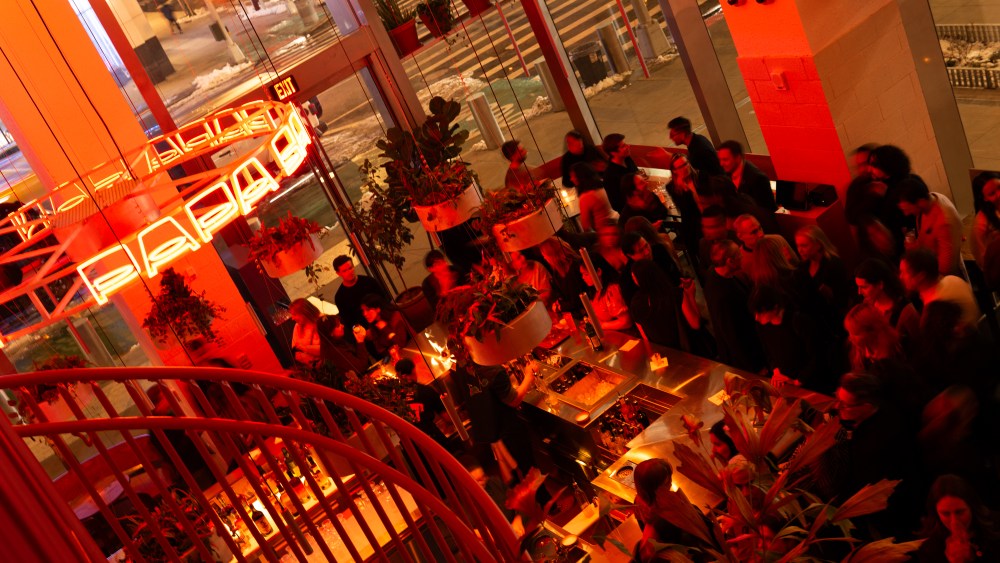
Situated on the ground floor of The Spiral, the restaurant was designed by INC Architecture & Design and takes inspiration from industrial themes juxtaposed with Peruvian textiles and an abundance of plants to filter light, contributing to creating an inviting atmosphere.
“The space is imposing, with monumental ceiling heights and a tremendous amount of light because of its glass façade,” Correa explained. “As we started working on the space, we kept thinking of factories, plants, and the strategic use of color and modernity found in Peruvian Pre-Inca textiles.”

Correa said, ultimately, “everything in the space feels very industrial (the materials, the light fixtures, the service stations), which we have softened with textured walls, the abundant use of plants to filter light, Peruvian textiles to bring color, and by furniture that is simple and unfussy in a nod to Japanese traditions.”
Ramirez faces the challenge of crafting a menu that respects its roots while appealing to a diverse New York crowd. The emphasis is on creating dishes that narrate the intersection of Peruvian and Japanese cuisines in a way that advances the city’s status as a culinary destination. Signature dishes are poised to offer diners an innovative yet familiar experience, underscoring the inventive potential of Nikkei cuisine.
“At Papa San, we’re crafting a concept that is more than just food — it’s about telling a story that bridges cultures and invites people from all walks of life,” Ramirez said.
“An exciting challenge has been creating an offering that caters to the singular dynamics of the Hudson Yards neighborhood,” Ramirez added. “Our guests come from different walks of life — professionals, tourists, and locals — all with varying tastes and dining habits. We’ve had to think carefully about how to create something that appeals to everyone while maintaining the integrity of Nikkei cuisine and staying true to who we are.”
But there’s another dimension to the menu that further sets it apart.
“We’re also proud of how our menu reflects both innovation and tradition,” Ramirez said. “The structure and flow feel fresh — it’s not your typical izakaya menu, but it still has the familiarity and warmth you’d expect from one. There’s a good sense of balance between Japanese, Peruvian and New York sensibility; from what you see on the plate, to what you taste and to where it can bring you — how it can make you feel. It’s about creating dishes that feel familiar but taste distinctly Nikkei, which is what makes it exciting.”
In line with embracing South American warmth, the restaurant also embodies the lively and celebratory ethos prevalent in Latino dining culture, which is being enhanced by a spirited cocktail program designed in collaboration with Tres Monos. This renowned bar team from Buenos Aires lends their expertise to ensure drink offerings resonate with the vibrant flavors on the menu. And then there’s the sake (over 60 labels) and wine (150 labels) lists that offer a sense of discovery and with accessible opening price points.
Regarding the layout, Papa San features an open kitchen and uniquely structured bar area that serve as focal points, pushing the boundaries of traditional dining to more interactive and engaging dimensions. This is a design choice that promotes an inclusive and dynamic dining environment.
Regarding the origin of the restaurant’s name, it’s a blend of tradition and edgy pop culture.
“Music and cinema are huge cultural influences for us, and we love The Clash and their F**k You energy,” Correa explained. “This song is one of our favorites from them, but the funny thing with ‘Straight to Hell’ is that it also works for us at different levels than just the name of the song. Papa means potato in Spanish, the most Peruvian of all ingredients! and San is a nod to the name of our other Nikkei restaurant Llama San. Put together, it refers to the humble potato in the traditionally Japanese reverential form, which feels to us not only appropriate, but very brat.”
Looking ahead, Correa hopes Papa San will resonate deeply with New York’s diverse population and plans to extend this dining concept, bringing a slice of Peruvian and Japanese synergy to more areas.
Papa San not only promises an extraordinary culinary journey but also a bold statement in New York’s rich and diverse restaurant scene, setting the stage for a new era of dining where cuisine, culture and innovation intersect.