
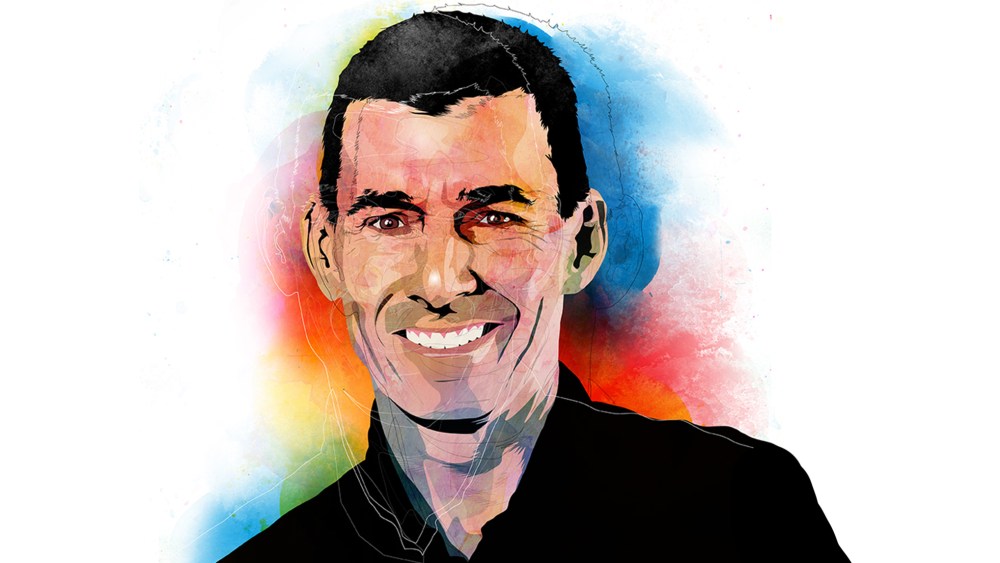
While Levi Strauss & Co. is firmly charging forward and making up for pandemic losses, it’s not without serious reflection from its chief executive officer Chip Bergh.
“I’m super proud of the results that this company has delivered over the past decade [and] the turnaround of the company,” Bergh said at WWD’s CEO Summit last week. “We took the company public back in March 2019. We’ve accomplished a lot….But at the end of the day, when the pandemic happened, I said to myself: ‘Nobody’s gonna remember me for all that other stuff.’ It’s going to be how did we manage through the pandemic? Did we survive through the pandemic and, more importantly, did we come out of the pandemic even stronger.”
Related Articles
For Levi’s, “even stronger” means a rebound in the third quarter with the company’s net profits rising to $193.3 million (up from $27 million a year earlier), as well as seeding its WWD Honor for Corporate Citizenship.
You May Also Like
Bergh spoke to these things and more, outlining the company’s outlook, supply chain hiccups, pandemic woes and recent gains — as in wholesale and the “white space,” in the $400 million Beyond Yoga acquisition.
Going “beyond denim” is something Levi’s has been steadily undertaking.
With the fast-growing performance and athletic category five times the size of denim, Bergh said Beyond Yoga “gives us an authentic brand and a meaningful way to enter this category with a great team, great product and enormous runway for success.”
Spelling out the potential, the CEO said right now Beyond Yoga has women’s yoga apparel on lock, but the company has no men’s vertical, no retail stores and little to no brand recognition.
“We can help them with that,” he said, citing the company’s men’s expertise, brick-and-mortar capture (with some 500 stores worldwide and 50,000 wholesale locations) and Levi’s cultural significance and brand relevance. “Our balance sheet and the fire power we have in terms of cash and liquidity — that, I think, makes for a very powerful recipe in terms of the future potential of Beyond Yoga, as part of the LS&CO portfolio.”
Denim domination is still on the agenda, however.
“The acquisition of Beyond Yoga is not any commentary on our belief in the future of Levi’s at all. It’s strategic for us…,” Bergh said. “To be clear, Levi’s still doesn’t have a 100 percent market share — so we have lots of work still to do at Levi’s,” Bergh added, reaffirming the commitment to keep denim in pocket as Levi’s sees direct-to-consumer channels and international (now 60 percent of the business) growth.
Diversifying is also key to the company’s success. “We’ve been doing it very successfully over the last couple of years by diversifying away from being a men’s denim bottom’s business sold in U.S. wholesale — which is what this company was when I joined 10 years ago — to diversifying to driving our women’s business. Our women’s business has gone from 20 percent of the business several years ago to now over a third of the business. It was our fastest-growing segment this last quarter. Our women’s bottoms business is up 18 percent versus pre-pandemic.”
Bergh also spoke to “premiumizing” denim, or high-glossing its image, as well as looking to “digitally transform our business,” with some 100 employees internally upskilled as data scientists.
“[Digitization is] going to touch just about every aspect of our business,” he said. “The opportunities are significant. More than 50 percent of our capital investment over the next couple of years is going into digital transformation.”
While today’s digital pursuits are a long way from the brand’s humble mining town beginnings, the company’s corporate citizenship is easily traced back to its 168-year-old heritage.
“We do believe that we are in the business to do more than just make a dollar for our shareholders,” Bergh quipped, in a signal to the triple bottom line that has created a business case for sustainability unparalleled in industries. “Our employees are stakeholders, our retirees are stakeholders, the communities where we operate are stakeholders. Society at large and the world at large are important stakeholders, and we feel we have a responsibility to all of those stakeholders.”
The Levi Strauss Foundation granted $3 million to communities affected by COVID-19 in 2020.
At the onset of the pandemic, grassroots sources like The Worker Rights Consortium, or WRC, and Remake condemned brands for delayed and canceled orders. While Levi’s was at one point challenged for its payment delays, the company quickly rectified its stance on payment extensions providing access to low-cost financing as part of its expanded International Finance Corporation (a member of the World Bank Group) loan program and the creation of a new loan facility designed to accommodate suppliers ineligible for the IFC program.
The San Francisco-based company was also keen to support voting rights (partnering with Rock the Vote last year) while carving out a platform for youth climate activism and resale (with Levi’s SecondHand, which launched last October). On the diversity front, Bergh said in a recent interview with WWD that Levi’s will couch diversity, equity and inclusion as “one of our top priorities going forward.” Publishing its first diversity report last June, the company will report annually on employee demographics and diversity statistics, publish wage equity audits biannually and rebalance its board to increase Black, Asian and Latine executive representation.
“Climate change is existential. If we don’t collectively make meaningful progress against this, our future existence is at risk. Not just as a company. We tend to focus on the things that are within our control first and foremost and we believe we have an important role to play in addressing climate change,” Bergh said. “Our entire innovation is shaped around sustainability.”
He mentioned Levi’s Waterless program, which has saved billions of liters of water over the last decade. “It’s so impactful that we’ve open-sourced it to all of our competitors. Anyone can have access to our programs and how we’ve made jeans with less water,” he said.
On the topic of environmental footprint, air freight is one area that Bergh mentioned in passing (but didn’t speak to from a sustainability standpoint) as a strategy to work around mangled supply chains as the holidays approach.
“I think the fourth quarter is going to be a little bit [harried] because everyone is trying to ship stuff into the markets during the holiday season, but we’ve expected that,” he said. “We’ve managed our orders and shipping to offset what we expect to be longer lead times and shipping times at the ports. It’s a good problem to have when you’re chasing demand. We’re pretty confident there will be plenty of product underneath the Christmas trees and plenty of Levi’s for gifting.”
FOR MORE, SEE:
Levi’s Wants to Buy Back Your Old Jeans — and Sell Them
Levi’s Bounces Back in Third Quarter Despite Pandemic Woes