2022 has been an eventful year for the consumer industry. On the one hand, with consumers resuming traveling internationally, luxury and beauty groups have resumed their high level of growth in traditional high-end consumer markets such as the U.S., Japan, and Europe. But on the other hand, there has been a slowdown in the growth of the Chinese market, a market that used to help international brands persevere in the face of difficulty for the past two years. However, with the Chinese market still bearing considerable volume and potential, companies will need to seek innovation opportunities on multiple levels to achieve sustainable growth.
Related Articles
According to the Report on Digital Trends of China’s Luxury Market and Report on Digital Trends of China’s Prestige Beauty Market jointly released by Tencent Marketing Insight and Boston Consulting Group recently, the luxury market size of the Chinese mainland is forecasted to reach 530 billion CNY, increasing by nearly 1% compared to 2021. In short, there will be growth, but less significant than before. With the development of social commerce, different platforms seem to be playing a much less separate role in the Chinese market, which is why enhancing digital innovation has continued to be the key topic in the new consumer era for companies.
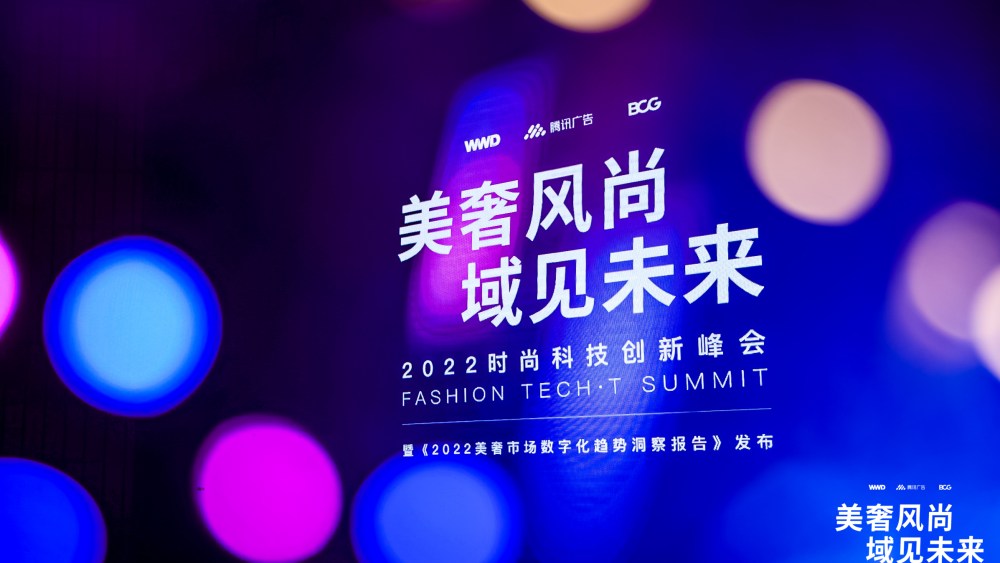
At the 2022 Fashion Tech·T Summit held in Shanghai on December 12, Daniel Shu, Head of Beauty & Luxury Industry of Tencent Marketing Solution, proposed the idea of omni-operation, introducing the audience to a digital future from the aspects of content, touchpoints, and omni sales.
In Daniel’s opinion, for the cosmetics and luxury industries, to achieve omni-operational success in the new era, it is essential to work on the following three factors: excellent content, comprehensive and multi-layered touchpoints, and business generated from these touchpoints. In the past year, Tencent saw a considerable increase in the volume of its luxury and cosmetics consumers. Meanwhile, there was a double-digit growth of the gross merchandise value of Wexin Mini Programs concerning luxury and cosmetics goods. Under such circumstances, it has become a key topic for Tencent and luxury brands in an age where top companies seek to become digitally mature to work on the aforementioned three factors to intensify the connection between brands and consumers further so as to help with the long-term development of the brands.
Having the content widely known to expand the marketing range
With consumers raising their awareness and their content consumption habits changing, the traditional top-down operation in the luxury and beauty industry is now being challenged. Daniel observed, “With rules easing in the post-pandemic era, consumers can now have their normal lives back and continue their pursuit of beauty. Meanwhile, companies start to think about what is the most important for a brand. As I see it, for the luxury and beauty industry, in the long run, brand power is most important. But establishing brand power and creating emotional attachment require substantial content.”
Therefore, the content for traditional digital brand marketing on various social platforms has become some of the first digital content of China’s beauty industry. And now, these brands are exploring the boundaries of content technology in the new era within innovation ecosystems like Tencent. During Milan Fashion Week, Gucci kicked off a new approach to live-streaming with its Spring-Summer 2023 runway show by tapping Tencent’s Super QQ Show app, which allows users to dress themselves up and socialize in virtual scenarios. Tencent is now collaborating with multiple luxury brands to build a marketing pyramid in the metaverse. With its powerful underlying technology, social networks, and content ecosystem, Tencent can help luxury brands better transform their marketing strategies to communicate more effectively with the digital generation.

Building public and private brand systems with multiple touchpoints
Being the most chased-after digital ecosystem by the luxury and beauty brands in China, and with its powerful digital matrix, the Tencent ecosystem can help with a brand’s cross-platform marketing so they can reach more people on different vertical networks and get through to more high-quality potential consumers after working out the cross-platform synergies. From Daniel’s Perspective, now that Wexin and Tencent’s network of touchpoints has become more complete, the branding strategies that used to be applied within the old ecosystem are now worth another try.
For example, the “T-Live Maison” launched by Tencent, a solution that allows luxury brands to live-stream their physical fashion shows, is one of the examples where Tencent tried to work on releasing new potentials of luxury brands who are running away from traditional marketing in today’s ecosystem.
Achieving stable business growth with omni sales
Nonetheless, the ultimate goal of marketing is to convert the target audience of a brand into consumers and to pull off the sale, repeatedly, if possible. Tencent wishes to make use of its powerful content technology and network of touchpoints to establish a decentralized and sustainable ecosystem, which can help continue to increase the customer lifetime value.
“Decentralization refers to responding to customers’ buying habits and providing efficient solutions whenever they tend to make a purchase. This way, we help customers quickly get what they wish for.” Daniel explained, “This is what decentralization is really about. Tencent does not intend to create a new environment that is centralized, nor does it wish to equalize the price with the value.”
With the upgrading of the touchpoints within Tencent’s ecosystem, brands are now able to establish sales channels both within the ecosystem and on multiple platforms, and from online to offline. In this way, they can satisfy the needs of different customer groups. Also, this can help brands better promote their culture and values in the marketing process and ultimately create their economic moat.
Please click here to learn more about Tencent Omni-Operation Ecosystem.