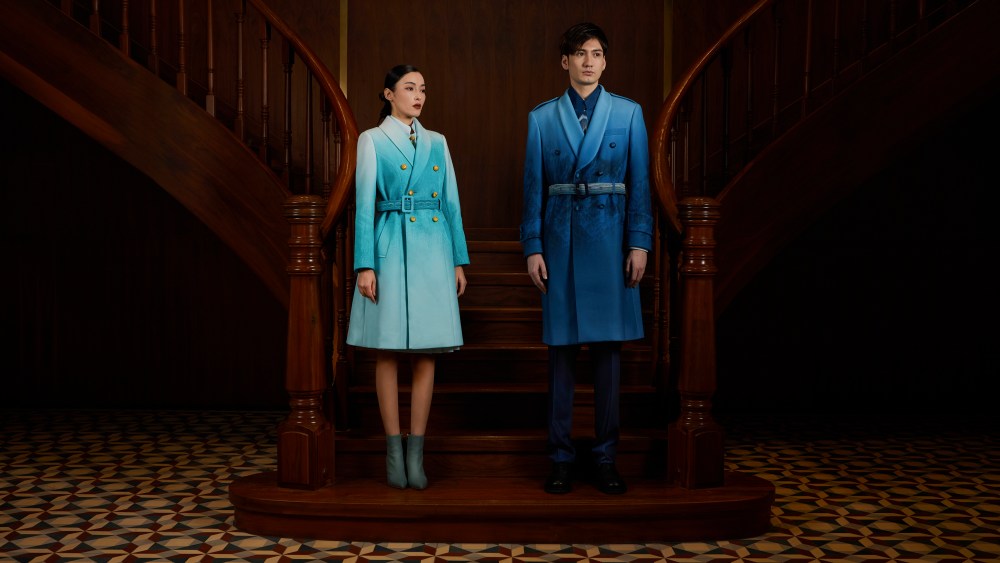
Suzhou, with more than 2,000 years of history, is known for its cultural heritage. Situated in the Pingjiang Road Historical and Cultural Block, Yanlord Cangjie brings fashion styles to this historic city. Together with the Fashion Lab of Chinamind NEXT, it officially launched the crossover design project of “Unparalleled Beauty in Jiangnan Style,” which integrates intangible cultural heritage with clothing art, creating exclusively-designed uniforms for fashion ambassadors at Yanlord Cangjie. This collaboration bridges traditional aesthetics and international fashion and presents a contemporary reinterpretation of indigenous culture.
Related Articles

Poetic Jiangnan Culture & Elegant Suzhou. Dating back over 2,000 years, Suzhou is one of the oldest cities and its historical architecture and art forms have always held a unique position throughout Chinese history. From the Four Gardens of Suzhou that embody the architectural art of the Jiangnan region to the Suzhou Museum, a unique hybrid of modern museum buildings, traditional Suzhou architecture, and innovative garden elements, traditional Chinese and modern complexes stand harmoniously together and blend within the context of this thousand-year-old city. Yanlord Cangjie Project, located at the heart of the ancient city of Suzhou, is positioned as “Neo ♾ Fusion,” and will bring vitality to the historic neighborhood.
To be a world-class, future-oriented luxury complex in harmony with the historical district, Yanlord Cangjie values the inheritance and development of the indigenous culture. Inspired by Suzhou embroidery, Yanlord Cangjie launched a crossover design project with WWD China and invited Rosalie Huang, Editorial Director of Fashion Lab, to design uniforms for a selected Cangjie staff that serve as fashion ambassadors to demonstrate the intangible cultural heritage through the clothing art. The project, themed “Unparalleled Beauty in Jiangnan Style,” integrates fashion with local culture and historical architecture and showcases the essence of Suzhou with a global vision and a contemporary language.
Dong Jianfeng, General Manager of Suzhou Yanlord Cangjie, explains, “As an urban regeneration project, Yanlord Cangjie brings a modern lifestyle to the historical district of Suzhou and forms a new urban community inspired by the local lifestyle and global luxury fashion through commercial real estate development. Similar to the inheritance of intangible cultural heritage, the communication of indigenous culture perfectly reflects the spirit of sustainability. WWD is the authority on news and trends in fashion, beauty, and retail. It shares a deep understanding of the fashion industry and is aware of the importance of sustainability. With this shared mission of social responsibility in mind, we were able to reach an agreement on carrying out this meaningful project.”
Transcendence of Time in Architecture and Internationalized Vision for Fashion
A well-developed economy raises people’s standard of an aesthetic life. A commercial complex is now more than a shopping place but needs to provide more diversified services and interactive consumption scenarios to stand out in the fierce market competition. And culture is the “spiritual core” that unites all these attributes. For a landmark luxury complex like Yanlord Cangjie in particular, it is crucial to properly understand, interpret, and communicate indigenous culture to differentiate itself and gain an upper hand in the competition.
Situated in the Pingjiang Road Historical and Cultural Block, Yanlord Cangjie is adjacent to the classical gardens – UNESCO World Cultural Heritage sites such as Ouyuan Garden, Humble Administrator’s Garden, Lion Grove Garden, etc. The “modern garden” style of architecture demonstrates the essence of Suzhou and brings freshness to the thousand-year-old city. Yanlord Cangjie, featuring both global fashion and local culture, is the right place for the crossover design project of intangible cultural heritage. It deconstructs architectural aesthetics and Suzhou culture and offers an innovative interpretation of indigenous culture inheritance with fashion and modern commercial real estate development.
Based on the complex’s servicing nature, the project selects a customer-facing staff of Yanlord Cangjie as fashion ambassadors and integrates architecture, fashion, the intangible cultural heritage, and ancient and modern aesthetics from both China and the West into a uniform design. Covering both the commercial real estate industry and the fashion industry. It is not only a design case that bridges architecture and fashion but also a cultural exchange between China and the world. “Just by taking a glimpse of our uniquely-designed uniforms, people visiting Yanlord Cangjie would immediately feel the Suzhou-style aesthetics and the rich history and local culture behind it. This is why we chose the staff as our fashion ambassadors.” Dong Jianfeng adds, In Dong’s opinion, the project is also a novel attempt at cultural communication with the outside world for the high-end commercial complex.
Adding cultural heritage to creative design, Yanlord Cangjie moves the traditional culture and classical gardens from the scenic spots to the modern commercial complex and shares them with the world in a more fashionable and touchable way. This is the grand view of Yanlord Cangjie as a luxury commercial complex and an important part of the city’s plan, while it pays full respect to historic wisdom and strives to achieve co-prosperity with the local culture. “We hope Yanlord Cangjie Project can introduce Suzhou’s remarkable techniques, aesthetics and traditions accumulated over the past thousand years to the public and brings sustainable inheritance of the intangible cultural heritage into modern lifestyles and businesses. Meanwhile, as a public space, Yanlord Cangjie would shoulder more social responsibilities and bring more vitality to the neighborhood by properly combining valuable cultural content with the in-store experience,” said Dong Jianfeng.
Rosalie Huang, the designer of the crossover project, believes that “Traditional craftsmanship is very time-consuming and expensive. People appreciate and yearn for intangible cultural heritages because they are created by human hands and embody human culture and aesthetics. You can see this in the Suzhou style, traditional craftsmanship, ancient Yanlord Cangjie architecture, and Eastern and Western fashion. They are combinations of beauty co-created by time and human beings.”
After studying fashion design overseas, Rosalie Huang worked as an editor and consultant for a well-known international fashion magazine in China. She once had in-depth exchanges on fashion art and literature with Karl Lagerfeld, Yves Saint Laurent, Giorgio Armani, and other renowned fashion designers who have had a significant impact on global fashion. Out of her passion for fashion design, Rosalie Huang grew to be a fashion design director and art director of film and TV series, with up to 65 works. The stylish looks in many of her works, such as “Tiny Times,” “A Dream of Splendor,” “Tribes and Empires: The Storm of Prophecy,” and “The Legend of Xiao Chuo,” have left audiences with an impression that “fashion is a silent language.” To revitalize traditional craftsmanship, Rosalie Huang presented a cultural exhibition that integrated Eastern and Western, traditional and modern cultures, “GONG XI – The Dragon and The Phoenix Bringing Prosperity,” which displayed up to 40 techniques listed as intangible cultural heritages, Suzhou embroidery is included as one of them.
Seeing her deep understanding of Eastern and Western fashion art and aesthetics, Dong Jianfeng told us that “We have invited Ms. Rosalie Huang to be the designer for the project because judging from her professional background and practices, we are sure that she is the right person to demonstrate Chinese traditional culture and convey our ideas through the clothing art.”
Culture Revitalized in Clothing Art with Traditional Craftsmanship
Inspired by the works of Zhang Xue, a Suzhou embroidery artist, Rosalie Huang pursued to deliver the delicate beauty of Suzhou embroidery with fashion art. Her design presents a stylish interpretation of Suzhou’s cultural heritage and architectural aesthetics.
As Rosalie Huang pointed out, Zhang Xue, a post-85 generation Suzhou embroidery inheritor, has his innovative expressions of the traditional art form with over 2,000 years of history. His stitches create a simple and elegant look, recognized as “Xue’s style”. After in-depth conversations with Zhang Xue and out of her respect for his innovative skills, Rosalie Huang decided to apply Suzhou embroidery to the uniform design. In her words, “the world is a melting pot, and the merging of cross-cultural art forms is no surprise. When we dive into our traditional cultural heritage, we would discover numerous fun possibilities. The bold attempt to integrate Suzhou embroidery with uniform design in the Yanlord Cangjie project is one of them.”
Setting aside the stereotypical opinion on uniforms that they all look the same and are inflexible, Rosalie Huang regards them, when worn by staff, as the best representative of the corporate culture. She has not only integrated traditional culture and embroidery techniques into the uniforms but also facilitated the integration with advanced technology. While incorporating indigenous culture into the exquisite design, the project has also ensured cost-effectiveness for high-quality mass production. Rosalie Huang believes that the collaboration is not only a step forward in restoring traditional craftsmanship but also shows respectful humanistic care to every member of staff. Meanwhile, Fashion Lab which revives Chinese intangible cultural heritage craftsmanship has also contributed to restoring Chinese culture and intangible cultural heritage techniques and innovating on top of them. The crossover project this time has taken advantage of the techniques, patterns and color palettes stored in the collection and, more importantly, broken down stereotypes around uniforms.
Apart from authentic Jiangnan culture, the characteristics of different job positions have also been taken into consideration. The designed uniforms are both stylish and functional, and with the help of the fashion ambassadors, they introduce to the world the charms of Suzhou style, echoing Yanlord Cangjie’s positioning of “Neo ♾ Fusion.” According to Dong Jianfeng, “The palette and style of the uniforms succeeded in disclosing the cultural characteristics of Suzhou and the Jiangnan region.”
Suzhou’s Cultural Heritage in New Style
As an urban experience destination that captivates the younger generation of cultural consumers, Suzhou is a gateway where the past meets the future and connects China with the world. The crossover design project is only a start in our efforts to convey remarkable Chinese indigenous cultures to the world.
In addition to the unique aesthetics of Suzhou-style architecture, Yanlord Cangjie Project strives to create a memorable cultural experience for every customer by introducing like-minded international luxury brands and integrating them with indigenous culture. Yanlord hopes their customers can see one-of-a-kind cultural marks as they enter Cangjie and Intangible cultural heritage is one of the highlights. Meanwhile, the innovative blending of international luxury brands with the local culture is an extension of the brands’ vitality and creativity in China and will surely contribute to more diversified brand content.
Besides, Dong Jianfeng believes that Yanlord Cangjie, as an urban regeneration project, shoulders the responsibility of providing space for modern city dwellers where their lifestyles are compatible with the historic heritage. The uniform design is a perfect example of combining an intangible cultural heritage with a modern lifestyle and sheds light on how design can reinvigorate traditional cultures in real life.
In the future, Yanlord Cangjie will collaborate with more fashionable retail brands to create unexpected crossover projects covering intangible cultural heritages, global fashion, architectural aesthetics, etc. Crossover collaborations that integrate architectural characteristics and go beyond the standard retail environment of commercial complexes promise a unique experience of modern lifestyle colliding with the essence of traditional Suzhou. A new style begins to take shape with the cultural heritage of the thousand-year-old city through the language of fashion.