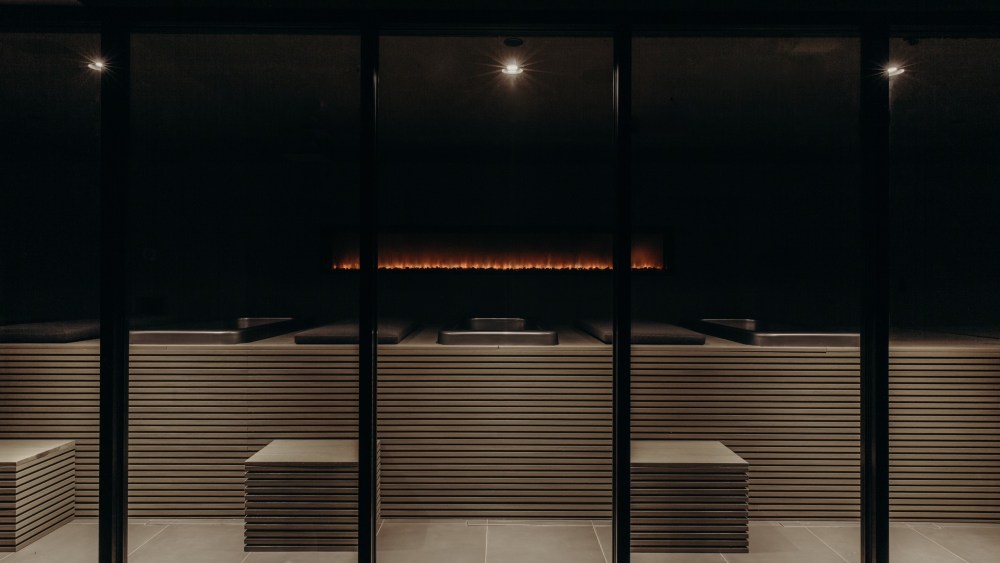
New York’s hottest club might just be a wellness club.
In 2023, a wellness routine, once consisting of “me time” involving a face mask alone at home, has moved to diving into a cold plunge with a group of friends, networking with like minded people at a breathwork class or sweating out toxins in an infrared sauna on a first date.
The reason appears to be that coming out of isolation after COVID-19, people are craving social activities, while as the emphasis on health has increased, consumers are also seeking social alternatives to drinking or dining out.
Related Articles
Enter social wellness clubs and people-oriented locations, like Remedy Place, Peoplehood and Sage+Sound, to name a few. This sort of wellness real estate is identified as a key pillar of the category, accounting for $275 billion of the $4.4 trillion global market, according to the Global Wellness Institute.
“The pandemic really galvanized the discussion about loneliness, the reality of loneliness and an interest in these new spaces that are really putting the social first and using wellness as supportive programming,” said Beth McGroarty, vice president of research and forecasting at the Global Wellness Institute, which recently cited social wellness as one of the top trends of the year.
While the category is proving to be lucrative with business expansion and investor interest, social wellness is also essential for overall well-being, according to experts.
“Social wellness refers to the health of our relationships and our connection with others and within our community,” said Alyssa Mancao, a Los Angeles-based licensed clinical social worker. “The reason why this is important is because we don’t heal in isolation. We heal within our relationships to other people.”
She explained that interacting with others, especially in times of distress, can help people regulate their nervous system, a concept known as coregulating. Although everyone requires different levels of social interaction, maintaining a balance is key for one’s mental health.
“A person who is deprived of social interaction when they’re actually in need of it, they can experience an increase of loneliness, negative self-perception and depression,” Mancao told Beauty Inc. “Those who allow themselves to have these nurturing relationships within the social wellness context might be able to see themselves adapt to situations.”
Many of the early adopters of the social wellness category resembled age-old practices — think of the Russian and Turkish Bath House located in the East Village neighborhood of New York City. Locations like Great Jones Spa, Bathhouse and World Spa, all located in New York, have taken this approach with communal baths, cold plunges, saunas and more.
But Remedy Place, which calls itself the first social wellness club, has taken a more elevated approach focused on technology. The remedies range in price from $40 to $375 and a monthly all-access membership costs $2,750 in New York City.

While visitors are welcome to experience hyperbaric chambers, ice baths or infrared saunas on their own at the New York and Los Angeles locations, the company’s mission is all about getting social, as founder Dr. Jonathan Leary discovered that those dedicated to health and wellness often found the lifestyle lonely. Therefore, all remedies at Remedy Place are built to be enjoyed in groups and the design, which includes café-style seating, lends itself to being social.
“It was finding a way for them [clients] to have a social lifestyle but finding a way to take away the bad things and give them a new way that they can connect,” said Leary, citing Remedy as a place for everything from a first date to a work meeting.
While Remedy, which was valued at $60 million last year, is expanding — expecting to open two new locations each year with even more social elements — Leary is focused on scaling with product, as well. Specifically, Remedy will be launching a product line of tech remedies to make the experience available globally for spas, hotels, gyms, country clubs and homes.
“Our end goal isn’t to create a million clubs. It’s really the platform for us to find ways to teach people, to make it accessible,” Leary told Beauty Inc.
Similarly, Sage+Sound was founded by Lauren Zucker and Lacey Tisch after recognizing the isolation that often comes with self care. While the wellness destination includes traditional spa treatments like manicures and facials, the social aspect really shines in The Study, a space that hosts $55 breathwork classes, sound baths and meditation sessions.
“We discovered…there was really power behind a collective so you didn’t feel that you’re kind of floating on your own ship alone,” Zucker said.
With The Study and the café, the duo have noticed visitors become more open to the social elements.
“People are going with their friends,” Tisch said. “But we have people that have met in the room and are now friends outside. Because we’re socializing wellness in a community way people are starting to find that to be the norm in their lives.”
Peoplehood, cofounded by SoulCycle founders Julie Rice and Elizabeth Cutler, has focused its business model on social relational wellness, looking to build visitors’ listening skills. The company, which has a flagship location in New York City and a virtual platform, offers 60-minute guided experiences made up of breathwork, music and conversations — Rice equates it to a combination of SoulCycle, Alcoholics Anonymous and church. Depending on the style of session, a monthly membership costs between $95 and $145.
“When we left SoulCycle we really started to think about, ‘Where can people go to find the community to find connection?’ and beyond that, ‘What are the skills that we need to teach people to connect with each other deeply?’” Rice said. “We began to really understand that there was a need in the market and that people were, in the landscape of social wellness, people were not carving out time to intentionally work on relationships.”
Although Peoplehood is all about human connection and conversations — and the social wellness category is primarily seeing brick-and-mortar growth — Rice sees a great opportunity to scale digitally with its virtual platform.
“We believe that a lot of the growth this time comes from digital scale, and we’re hoping that we’ll see thousands of people a day on our online platform,” said Rice, noting that the brand will likely open locations in San Francisco, Los Angeles and London in the next few years.
Padel Haus, a padel club, is another example that’s combining fitness and social wellness, gaining traction with members and investors alike. The brand operates one location — a 16,000-square-foot club in Brooklyn, New York. With a $7.5 million Seed A round and an $18 million valuation, Padel Haus has three new locations planned over the next two years. For nonmembers, an hour on the court could cost $40 to $55. Members pay a $490 initiation fee, a $150 member fee monthly and between $25 to $35 for an hour on the court.
As the social wellness category is emerging, clubs and locations are on the pricier end. However, McGroarty expects this to change, referring to Othership, a Toronto-based destination with breathwork classes and sauna sessions, as a more accessible option. An eight-class, monthly membership costs about $207. The company recently secured $8 million in funding and plans to open 20 locations across North America over the next five years.
Gyms and fitness studios are also implementing social elements, like TMPL Gym, which has a DJ at certain locations. McGroarty expects traditional locations to continue implementing social activities and entertainment to keep up with the trend.
“Social wellness clubs with different vibes and price points will surge, where group bonding comes first and the [sometimes dizzying menus of] wellness experiences serve as social icebreakers,” she said in the Global Wellness Institute’s trend report.