After a stellar 2022 for a large chunk of the beauty industry, some cracks are beginning to show in two of the biggest players’ financial results — the Estée Lauder Cos. and Ulta Beauty. But is this a sign that a big slowdown is on its way for the industry after enjoying the fruits of a post-pandemic boom?
According to analysts, the recent results shouldn’t sound the alarm for the industry as a whole, although expect some moderation in growth as the 2022 comps will be very tough to beat.
Related Articles

After all, as consumers returned en masse to beauty post-COVID-19, despite soaring inflation and recession fears, 2022 was a year that Ulta Beauty clocked in annual revenue of more than $10 billion for the first time in its 33-year history, E.l.f. Cosmetics was named the best performing stock in fashion and beauty, Coty’s fragrance business was booming and Inter Parfums barreled toward $1 billion in sales.
Still, there are headwinds. Lauder, which last year acquired Tom Ford, once again slashed its full-year forecasts in May for both the top and bottom lines due to a slower-than-expected recovery in travel retail in Asia, on which it is particularly reliant, causing the company’s share price to tumble around 18 percent.
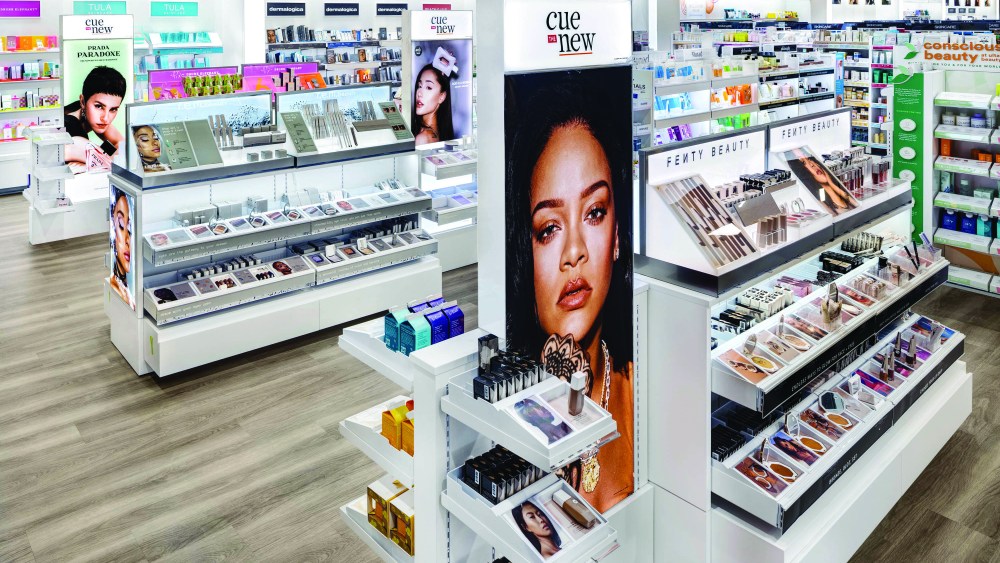
A few weeks later, Ulta’s rapid pace of growth appeared to be moderating as it unveiled its first-quarter fiscal 2023 results, while it also revealed that inventory shrink, partly caused by organized retail crime, was putting pressure on its operating margin.
Analysts stressed that Lauder and Ulta are facing very different and very specific issues. “Even though they’re all in the same general family, it’s really quite different because Estée is prestige skin care and global and Ulta is nearly 100 percent domestic,” Oliver Chen, a senior equity research analyst at TD Cowen, told Beauty Inc. “I think they all have really different stories. Estée Lauder is pretty different. Their issue has been more Hainan and Korea related to travel retail.”
They also appear to have differing prognoses. In a note, Chen detailed that he continues to see Ulta as a best-in-class retailer, but the nature of tough comparisons combined with higher promotions and inventory shrink are factors to monitor. “We believe the underlying business momentum remains healthy, but stock may be volatile in the near term until there is a clear visibility into sustained growth and margins,” he said. “We remain outperform-rated but acknowledge that temporary headwinds may limit upside.”
For Lauder, Olivia Tong, an analyst at Raymond James, stressed at the time of its results that there will likely be continued volatility in near-term earnings due to travel retail accounting for 27 percent of the company’s FY22 sales, significantly higher exposure compared with other beauty companies, and “an unclear strategy on how to address the disconnect.”
For the rest of the industry, while recession fears in the U.S. appear to be dampening (for this year anyway), most analysts agreed that there will likely be some moderation in the overall rapid pace of growth the beauty industry witnessed in 2022.
Beauty surged more than 15 percent in 2022, a figure that is expected to decline over the next couple of years. In its Global Health and Beauty market index, the consultancy GlobalData forecast a worldwide increase of 5.5 percent this year, 2.7 percent next year and 4.9 percent in 2025. In 2026, growth is expected to come in at 4.4 percent, before rising to 4.7 percent in 2027, the final year of the forecast.
For the U.S., it is forecasting growth of 5.5 percent this year, 1.4 percent in 2024, 3 percent in 2025, 2.2 percent in 2026 and 2.5 percent in 2027.
“After that massive boom, we expect the market to slow down a bit. Obviously it’s not going to be in decline, it’s not reversing, it’s just normalizing after that,” said Tash Van Boxel, a retail analyst at GlobalData.
“We still have got that market in growth,” she continued. “I think that is mostly because it’s underpinned by such strong demand. Beauty seems to be quite resilient, even when things are quite tough financially. People still buy skin care, they still buy their usual conditioner, shampoo, all of that, regardless of their financial situation.”
Tong agreed that the environment will be a bit more challenging as there are very difficult comps to go against, but believes there is still significant opportunity, especially if there is a strong innovation pipeline at work.
“High-end fragrances remain very, very strong. Prestige hair is also an area that as a category has been expanding, and makeup now starts younger and people are using more products,” she told Beauty Inc.
And of course, there could still be some standout individual performances. Take E.l.f., which saw net sales jump 78 percent to $187.4 million in the three months ended March 31, blowing through Wall Street forecasts and marking its 17th consecutive quarter of growth.
“We reiterate our Buy rating and raise our PO to $120 from $105 prior on our increased estimates,” said Bank of America research analyst Anna Lizzul in a note. “We believe this premium multiple is warranted as the company is still in a high growth phase and continues to diversify its portfolio and customer base.”