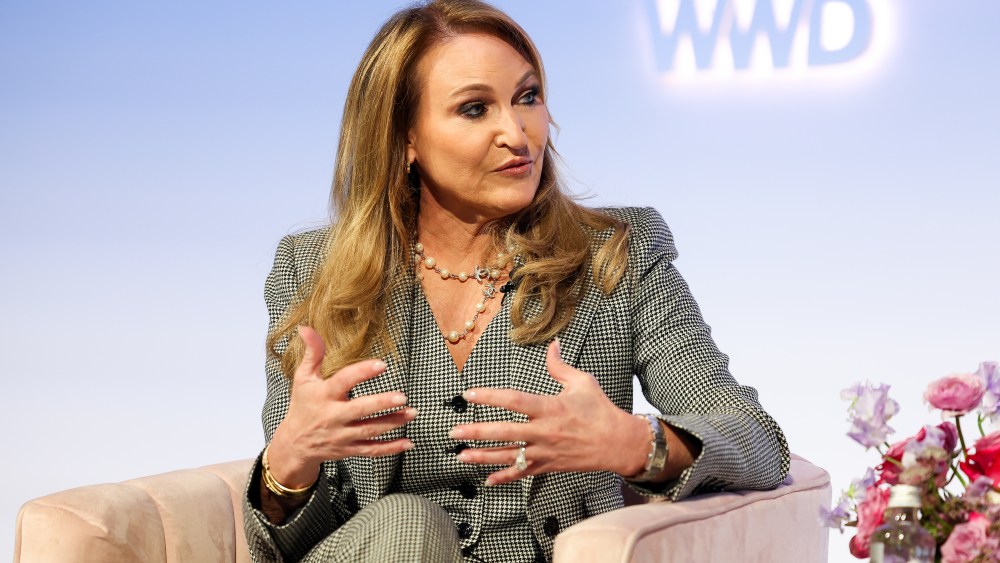
Just a few months into her tenure as chief executive officer at Ulta Beauty, Kecia Steelman’s vision for the retailer is coming into focus — and it’s panoramic.
Steelman detailed all of the facets of her growth plan for the company at the 2025 WWD Beauty CEO Summit in conversation with WWD senior editor Kathryn Hopkins, and it ranges from advocating for emerging brands to doubling down on in-person experiences, driving retention through its loyalty program and taking that mission global with international expansions.
Related Articles

Steelman praised the emotional nature of beauty and its general resilience to broader macroeconomic challenges, noting that it’s historically only garnered further share of mind and wallet.
“The more that we can share as an industry, the more we can thrive collectively. This category is special because it’s not just about the products, it’s about the way we impact people’s lives. It’s much more than just selling products on beauty and wellness. When I think about the opportunities that are out there, I think we can continue to lean in on innovation and experiences and the human connection that’s vital.
“The potential is for beauty to continue to grow, especially when you include wellness in that category,” Steelman continued.
That being said, Steelman did acknowledge a increasingly complex landscape for the industry. “Competition isn’t getting any easier. Every single day, more and more people are coming into beauty because it’s an attractive category. We’re in it to win it,” she said, noting that 80 percent of Ulta Beauty’s sales are still in brick-and-mortar. “That human connection — the discovery, the playfulness, the innovation — you just can’t get online.”
That’s not to say the company isn’t also focused on e-commerce. “Replenishment is important, and if you have a lipstick that you buy all the time, you can buy that online. Soon, you’ll see a ‘subscribe and save’ option online. But it’s the human connection that makes us different,” she said.
That includes the experiential and service side of the business. “You throw our salons into it, we’re leaning into eventing. This next year, we’re going to increase eventing by about 40 percent,” said Steelman. “We’ll have over 70,000 events happening in our stores. It’s theater, it’s beauty, it’s entertainment and connectivity that you get to create.”
Pointing to Ulta’s recently minted partnership with Cécred, the hair brand founded by Beyoncé Knowles-Carter, Steelman sees opportunities for more collaboration with brand partnerships.
“We have this 360-degree activation in stores where we have not only products on the shelf in a beautiful way, but we’re leveraging our salons to have treatments around it: a scalp treatment, a protein treatment, moisture treatments,” Steelman said. “We also have backbar takeovers in about 200 of our stores where it is like Cécred on steroids.”
With over 44 million members of Ulta’s rewards program, the executive noted that 95 percent of sales come through those members. “We know how often they’re purchasing, the power of our UB Media network to communicate with them, and leveraging our brands to be able to talk directly to them,” Steelman said. “We are laser-focused on not only gaining new members, but retention of those members and creating experiences like community.”
For Steelman, that community starts where she herself started her career — in the stores. “I think it’s pretty special to be a CEO who worked her way through almost every single position in retail. It gives me a much better perspective and understanding of what it takes to make this machine work,” she said. “The person at the register who engages with every guest is one of the most important people,” she added, explaining that they define the experience. “Having that at the root of who I am is really important.”
Since assuming her role on Jan. 1, Steelman has been on a listening tour not just with store teams, but the investment community, internal teams and brands. She sees all those different stakeholders as equally important to the success of the company. “If we’re not successful, our brands aren’t successful, and we’ve all got to be in this together to move this business forward.”
As for what she’s seeing on the ground now, “I’m seeing high activity around newness and innovation, and when there’s an activation or reason to purchase like our 21 Days of Beauty, it’s driving great traffic,” said Steelman. “When the customer feels they’re getting something special, you see traffic come through.”
Citing the company’s quiet period before earnings on May 29, Steelman said she couldn’t share much on specific behaviors, but did allude to the category’s general resilience. “I like what I’m seeing; engagement with beauty as a whole is still very healthy. When we went through COVID, wellness really started to spike, regimes were being picked up, and a lot of those have stuck. The consumer, even though they might be stretched in their wallet, they view beauty as an affordable luxury and it’s something that they’re going to do for themselves.”
International expansion is also on the docket, with a joint venture taking the company to Mexico and a licensed franchise deal helping it break into the Middle East. “We’re going to do what works best for our strategic initiatives in each country,” Steelman said. “It’s important for me that we’re still focused on the U.S.-based business, that’s always going to be the top priority. I don’t want to be too distracted with chasing a shiny object.”
Steelman’s ambitions include strengthening the company’s ability to build emerging brands, and sees that as among Ulta’s differentiators moving forward. “What I mean by that is how we are leveraging our 360 — stores, e-commerce and media network — to unlock our marketing campaigns and bring that to life,” she said. In addition to that, there’s a workforce of 58,000 beauty associates, services and a broad swath of consumers. “You’ve got to be exceptional in all parts of your business, and that’s what I’m really focused on.”