Haeckels is scaling up sustainably.
The British natural skin care and fragrance brand, which celebrated its 10th anniversary in 2022, used the milestone as a year of reflection.
“It’s a year in which we have built the brand in a scalable and transformational way,” said Charley Vickery, Haeckels managing director. “As we’ve expanded, we’ve honored that commitment to sustainability and to the environment.”
Related Articles
The pledge is three-pronged, with Haeckels focused on reducing its carbon footprint, pioneering new materials, and creating and growing less resource-intensive ingredients in lab conditions — while expanding.
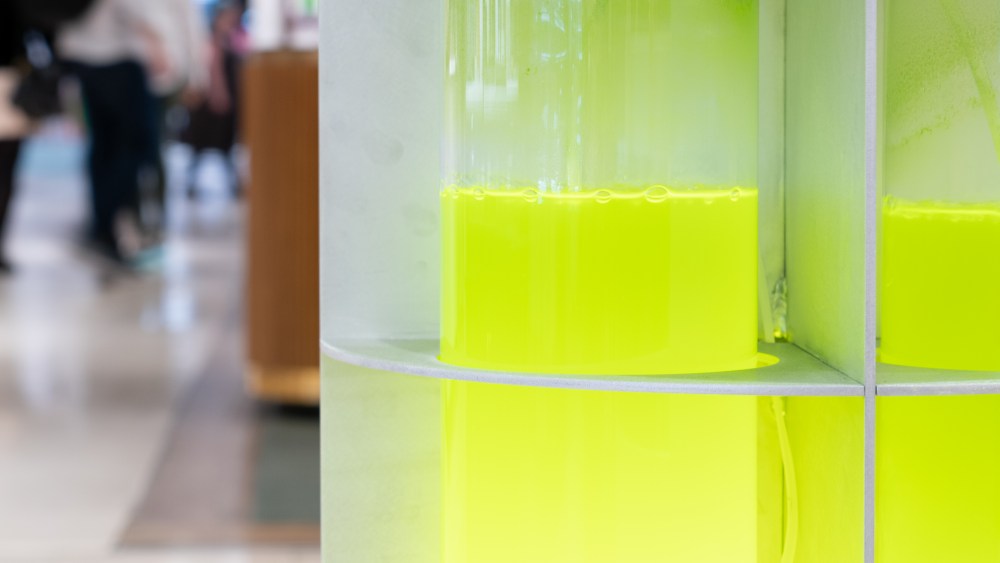
The equivalent of Haeckels 2.0 was launched in July 2022. Part of the goal was to not be a sustainable brand sold in traditional apothecary-style stores, Vickery said. So Haeckels, which is vertically integrated, began growing its key ingredient, algae, in bioreactors installed in some retail spaces, to create a local-ingredient supply chain.
In the U.K., the brand has debuted the concept in the likes of Selfridges, while in Continental Europe, it was launched at Dover Street Parfums Market in Paris in October.
Haeckels considers the latter to signify its true big step back into Europe, with a new retail experience and relaunched brand.

Haeckels plans to grow its hotel activity, having in 2021 partnered with Patina, starting in the Maldives. “We believe there’s a really nice narrative over there about creating a sustainable blueprint in the hotel industry,” said Vickery.
He said that today, Haeckels’ scalable supply chain has enabled the brand to open in different markets and territories. It produces newfangled materials.
Haeckels launched its skin products in packaging created from Vivomer, a home- and ocean-compostable material made with microbes.
The brand knew its consumers wanted a refillable packaging system and more durable bottle for the home products. It drew inspiration from the ocean — sea glass, or naturally weathered glass — then Haeckels sandblasted glass to get its effect, and used a dye to make a longer-lasting label.
It also whittled down some other product packaging, such as candle holders.
The brand seeks to upcycle materials. For instance, Haeckels worked with a large energy-drinks company to make an edible, post-biotic cup.
It recently launched a new arm of its business, called Haeckels Lab — “looking at lab-grown and nature-identical ingredients,” which are grown in its laboratory in Margate, the U.K, said Vickery.
“They’re nature-identical, but they’re not always natural,” he said, adding that they are much less negatively environmentally impactful than natural ingredients shipped from afar.
The Estée Lauder Cos. took a minority stake in Haeckels, owned by its founder Dom Bridges and angel investors, last February.
“They’ve allowed us the freedom to do what we’ve done,” said Vickery, explaining Lauder has let Haeckels invest in the company more than in growth.
The executive would not discuss company sales, but industry sources estimate they fall below 5 million pounds and grow by double digits annually.
Meanwhile, Haeckels remains open to investment.
“For us, there’s a million ideas,” said Vickery. “If you invest into the right department and you scale it, it can grow into something amazing. In particular, our packaging innovations,” as plastic alternatives.