
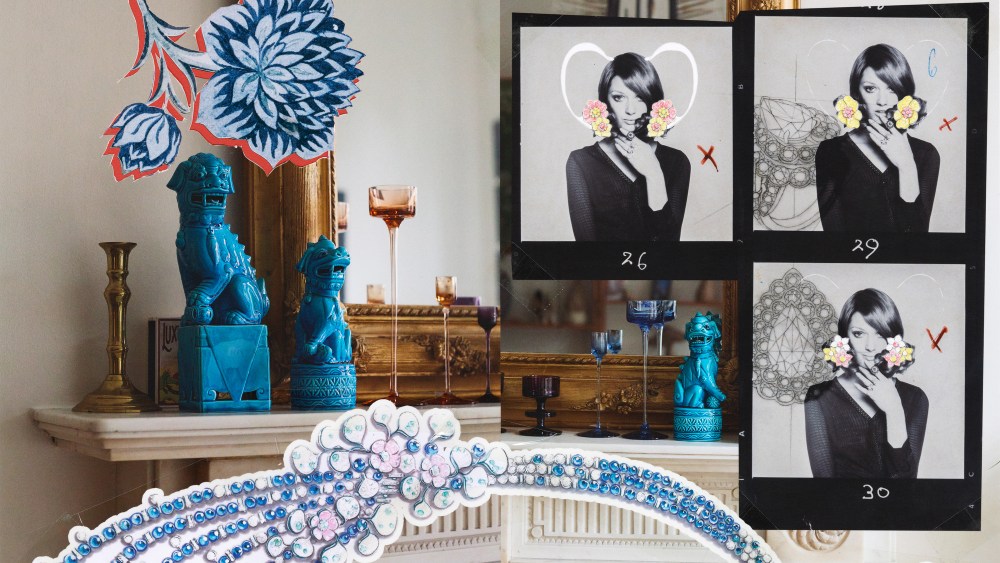
At David Morris, being “the London jeweler” is a family affair that began in the 1950s, when the paterfamilias began his apprenticeship with a leading jeweler in the British capital’s famed Hatton Garden district.
The Swinging ’60s makes for the perfect script plot line for a glamorous biopic. Within a year of opening his own jewelry business in 1962, David Morris had won the De Beers Diamonds International Award with his then-design partner, then netted a second one the following year.
Related Articles
His firm became linked with “The Firm,” aka the British royal family, when Queen Elizabeth II ordered a silver Welsh dragon to adorn the hood of the legendary Aston Martin she gave the-then Prince Charles for his 21st birthday.
By the mid-1960s, David Morris designs were seen on royalty as much as the red carpet, on “It” girls about town and “Bond girls” on the silver screen. A heart-shaped necklace for Elizabeth Taylor, the Miss Universe crown still used today, an all-gold Jelly Bean machine and a diamond-decked Barbie doll cemented expanded his reach far beyond London durably.
You May Also Like
And the sequel David Morris’ Jeremy Morris has been writing since he took over the business and creative wheel in 2003 is no less glamorous.
The current chief executive officer and creative director credits his nous for entrepreneurship to his maternal grandfather, who ran a dozen-strong group of hairdressers in South London and went on to manufacture wigs for the wax museum Madame Tussauds. Where he gets his creative side goes without saying.
There are perhaps fewer royals and A-listers spotted at the Bond Street boutique — one of two flagships and 10 doors around the world — these days, but its designs continue to charm with an ever-growing creative range that spans the florals and hearts of the founder, blended with a more angular, abstract direction as of late.
Some things haven’t changed: the British jeweler continues to sell to Londoners, as in his parents’ time, and to families, who come back to add to their heirlooms or even rework previous pieces as creations for a new generations. Others have evolved: Londoners are an even more cosmopolitan bunch than ever before, with roots that spread far beyond the confines of the British capital.
Not that being an independent house has been all smooth sailing. “Many rounds in the ring, battered and bruised for sure,” the CEO says. But now, things are fully shipshape: In 2024, he bought back the stakes held by outside investors, returning the company to its fully family-owned status once more.
Founder David Morris and his wife Suzette have taken a step back but remain “very much involved in their own way,” says Cecily Morris, the third generation of the family and brand content manager.
And the next generation has already stepped up to the plate. In addition to Cecily, there are also sister Phoebe Morris, special projects coordinator, and younger brother Dylan.
For now, he is learning the ropes by accompanying their father to visit stone dealers — and listens in as his father and sister tell WWD Weekend about the best way to negotiate and why real estate is like jewelry.
WWD Weekend: What does it mean to be part of a jewelry dynasty?
Jeremy Morris: I never think about it, really. Cecily thinks about it more, [saying] she wants to continue and that it’s important the business stays within the family. She feels the weight of responsibility [while] I’ve been more bailing the water out of the bottom of the boat for the last 40 years, too busy to think about the historic dynasty. (Laughs.)
Cecily Morris: There was no expectation of me staying or continuing the legacy, but it felt like a natural fit. [Once I started] it just didn’t feel like there was anything more important than being here and doing what we are doing.
WWD Weekend: Did you consider other careers?
J.M.: I wanted to be a drummer in a post-punk band. I would have fitted in nicely with The Cure or Joy Division. That was the dream at 20. In my 30s, I was also very good at property but for me, property is just like making jewelry. You find a rough stone, then you polish it, put it into a nice setting and that’s something I have done constantly throughout my life: buy properties, renovate them, live in them, then get bored and move on.
C.M.: In your 40s, you wanted to go into art dealing. I studied photography at university and thought I was going to work in galleries [as] a curator or something.
WWD Weekend: How did you get your start in the company?
C.M.: I started just working on the front desk, opening the doors, answering the phones, helping out with some sales. I was meant to be here for two weeks, but it felt like a natural fit once I stepped through the door and I fell in love with all the jewelry. While I had grown up around it, it was not the same as being physically working with it.
J.M.: My dad used to take me [to the workshop] during my school holidays. I would hang around, do mockups on plasticine and mill out pennies.
After I came out of school, I did a year’s foundation course [in art], which I was enjoying. Then I wondered what to do next and tried my hand at jewelry. It was quite nice and interesting, and the acceleration process is pretty rapid [when you grew up in it] so that at 22 or 23, I had already reached a certain level compared to my peers, who were just starting their first jobs.
WWD Weekend: What are the most important lessons you learned?
J.M.: You have to know when you stand up and start to put your coat on. That’s the starting point of negotiating. That’s usually the motivation that most people need. That’s something I learned from my clients; [they] taught me how to negotiate with people.
The most valuable lesson, really, is that if you really want to get a good deal, the main thing is the quality of the stones. It’s less about the price and more about what you’re buying. What I’m looking for is the best that you can buy in the market at that time so that when I make the jewelry, everyone goes “that’s unbelievable.”
[Another lesson is about] having an eye — how you buy, what you buy and how you put it together. My dad is, funnily enough, color blind. So how he managed in the jewelry trade for 50 years, I have no idea. But he did. My mother has great taste and she encouraged him.
I believe in the asset enormously. I know the rarity of it, and I also know that it all sells at some point — sometimes it takes 10 years. We sold a bracelet the other day, an absolutely beautiful diamond bracelet [with] nothing wrong with it at all, that had spent 15 years here. Other things come in and two weeks later, they’re sold.
WWD Weekend: What inspires the jewelry creations of the house?
J.M.: I love art, travel and nature. The financial aspect has always come secondary to me — it’s the passion I have for stones that truly inspires me.
C.M.: From an outside perspective, I feel that [Jeremy Morris] is heavily influenced by friends from a range of field — artists, architects, photographers, creative people — and fashion, although not the [cycle of] trends.
WWD Weekend: Is there a collection or a piece that resonates with you the most?
J.M.: There’s a cuff we are just finishing off. I’m waiting for the stone to come back from the GIA — an 11-carat D flawless oval-shaped diamond — so I can put it in the center of around 100 carats of baguettes on a flexible design that is then smothered in unbelievable vivid colored diamonds in blues, pinks and greens, some unlike anything you’ve seen before. This thing is absolutely world class so I’m super excited about this.
C.M.: I really love Paraiba tourmalines so mine would be the Starburst cuff, which features sapphires and Paraiba. I still feel like that is a showstopper and I’m shocked that it hasn’t sold yet — but I’m sure it will very soon.
WWD Weekend: What’s your advice on how a modern customer should be wearing their jewelry in their day-to-day life?
C.M.: You want to wear something that you’ll wear forever and pieces you’ll want to pass down to your daughters, your granddaughters. We want our jewelry to last forever and be with these families forever. We are a family company and we are selling our jewelry to families as well.