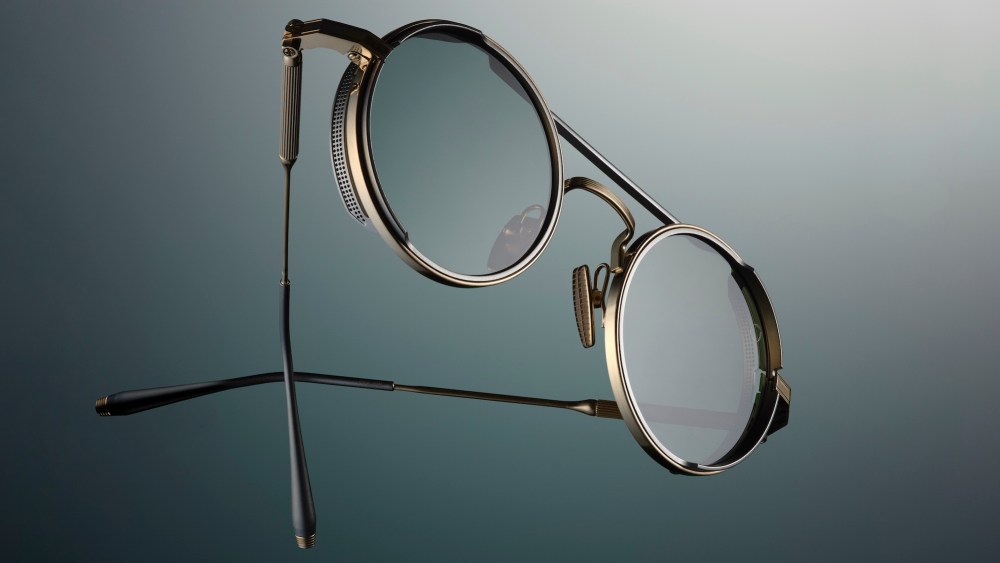
MILAN — In the three years since its launch, Akoni Eyewear has accrued a strong customer base among what chief executive officer Rosario Toscano bills as “innovators,” or trend setters.
Now, to better cater to that demographic, Akoni Eyewear is undergoing a rebranding aimed at further upscaling its positioning, following the brand’s mantra of shokunin, the Japanese philosophy of perfecting one’s craft, and in sync with the overall upscaling of the eyewear sector.
According to Toscano — who founded the brand in 2021 as part of the Akoni Group established two years earlier, which also operates the eyewear licenses for Balmain and Valentino — the new course is an “evolution” rather than a rebranding.
You May Also Like
Related Articles
“Last year, backed by strong results, we started thinking that as much as the product was right for the market, we needed to align all other Akoni assets to offer a true luxury experience for our customers,” Toscano told WWD.
“We are the youngest among the specialty [eyewear] luxury brands and that comes with flexibility to make branding changes that established juggernauts in business for years have a harder time making,” he said.

The first visible result of the evolution strategy is the debut of a new green nuance, emerald-like and deeper than the previous shade, which skewed toward the military-inspired. It will be applied to all brand assets and packaging. The latter, Toscano said, has also been revamped, with soft leather and hard cases that resemble a high-tech gadget, as well as new paper boxes and labels.
The first products with rebranded accessories will bow in October, while amplification initiatives are scheduled for December, the company said.
The new emerald green shade is to appear on lenses and Japanese acetate in the fall 2024 and spring 2025 eyewear ranges, respectively.
“We’ve carefully reviewed and evaluated how we want Akoni Eyewear to look like in the midterm,” Toscano said.
“Today the product is no longer enough to engage consumers… the market requests a certain coherence and consistency among all branding elements. Our luxury [offering] is quieter than other products and needs design elements, messaging and materials that open the hearts of consumers, unlocking a new world for them. In order to ensure that people fall in love with the brand, we have to aim for cohesiveness,” he explained.
The brand channeled most of its early investments and unique selling proposition into delivering cutting-edge eyewear rooted in Swiss precision and Japanese artisanship. All eyewear pieces are designed and developed in Switzerland, where the company is based, and handmade in Japan.
The approach gained Akoni Eyewear a strong following with about 1,000 stockists across 50 countries, largely specialty boutiques and opticians.
With retail prices ranging from 600 euros for entry price items to 1,200 euros for limited-edition styles, Toscano said the sweet spot price at retail stands between 900 and 1,000 euros, suggesting that Akoni Eyewear’s customers are already buying into the brand’s higher end.
“Our current customers are mostly ‘innovators,’ who are proud to be wearing Akoni but should increasingly be proud of being part of the Akoni [world],” he said. Being in its earlier stages of market penetration, Toscano believes the evolution strategy will enhance the brand’s footprint among the next target customer group, such as early adopters.
To this end, Akoni Eyewear plans to enhance its image direction and visual identity with campaigns, digital efforts, in-store visual merchandising and more activities expected to telegraph a luxurious feel in sync with the new branding.
Toscano said Akoni Eyewear’s year-to-date sales are up 32 percent, fueled by Asia — which represents 20 percent of revenues and is expected to further grow after the introduction, for fall 2025, of Asian fit eyewear.
Japan has been particularly brisk after the brand inked deals with the Hankyu Department Store and Isetan, where it opened pop-up stores, and more are coming in the latter retailer for the holiday season.
In the region, the eyewear specialist boasts distributing partners in South Korea, Singapore and Malaysia and directly handles distribution in Thailand, Japan, Hong Kong, Taiwan and China. The Chinese market is the next natural step to expand its footprint in Asia and Toscano expects the company to open a subsidiary there in the midterm.
The Middle East, including Saudi Arabia and Qatar, as well as Italy have shown significant growth in the first nine months of the year, while the U.S. has been flat, although the brand has increased the volume of goods sold there even without opening new doors.
“Akoni Eyewear has still a long way to go and we want the brand evolution to enhance the brand’s strength and appeal, convincing potential consumers that we’re not only about product but that we aim to provide them with aesthetics and qualitative codes across all brand segments,” Toscano said.