
NEW YORK — The Accessories Council, which began as a small trade organization to give voice to the needs of an overlooked retail sector, has matured into a vital supporter and player in the fashion industry.
Its annual Accessories Council Excellence Awards have become a high-profile celebration of the sector and its advocacy has become a welcome component, linking brands, retailers and consumers.
————————————————–
See more coverage of the Accessories Council here >>
————————————————–
The council was founded 15 years ago by Joel Pinksy of Omega, Reenie Brown, founder of the Fashion Accessories Benefit Ball and Andy Philip of Philip Associates, with principals from 18 vendors and two retailers — in an effort to increase consumer awareness of the accessories categories.
Related Articles
“We hope the Accessories Council will be a significant driving force in the expansion of this profitable and high-margin business,” said Barbara Khouri, executive director of the council at its inception. “We’d also like to mesh together a fragmented industry into a powerful consumer-oriented force.”
You May Also Like
At the time, accessories executives faced a momentous task, as minimalist fashions were en vogue and accessories lacked significant representation on the runways or in magazines.
“Think about our world 15 years ago,” said Karen Giberson, the current council president. “There were not as many brands and licenses, runways were void of accessories…it was the height of minimalism. The accessories industry said, ‘OK guys, if ready-to-wear isn’t going to do the whole outfit [including accessories], we need to come up with ways to access the consumer at their level.”
An article published in WWD in 1996, entitled “Executives Explore Minimalism’s Impact,” described the council’s first breakfast seminar. David Wolfe, creative director at The Doneger Group and panelist, said, “To make sure minimalism is overcome…the accessories industry must get to the fashion stylists and editors.” The topic was debated at length, and Wolfe also added, “I think that the next big trend might even be maximalism.”
He wasn’t far off, and changing fashions coupled with the council’s dogged advocacy helped to increase the exposure of the accessories sector. Ten years later, in 2006, WWD reported an upswing in accessories licenses, as well as integration into rtw presentations.
Michael Kors said, “American ready-to-wear designers have always treated accessories as a stepchild…but at the end of the day it’s the Europeans who really base their business on accessories.” In the same article, Donna Karan said, “I definitely plan to show accessories on the runway because this is how you communicate the totality of the lifestyle to the press and ultimately the consumer.”
The crescendo of accessories integration and market share continued into 2008, while the apparel industry was in the depths of the recession. The NPD Group reported at the time: “In last year’s fourth quarter, accessories was the revenue leader, generating a 32 percent share of department store sales, while apparel was 29 percent…. Jewelry and handbags also dominated third-quarter accessories dollar share at 52 and 19 percent, respectively. In jewelry, watches led at 21 of the 52 percent total.”
The Accessories Council’s work is hardly done, however, and in the last five years Giberson and her staff of one — Deborah Miliotto, the council’s event manager — have significantly increased the scope of the once “teeny trade group.” The council now regularly features educational seminars and lectures, networking events and even discounts on advertising for members.
“In the last five years, we’ve gone from about four events a year to one event a month,” said Giberson. “We’re always looking to up the ante on the quality of speakers and events that we have.”
Giberson began her tenure with the Accessories Council at its launch in 1995. She remembers, “I read an article in WWD mentioning that this was starting and I thought ‘This sounds really exciting.’” Co-founder Pinksy approached Giberson as well, and said, “‘I’d love to have you involved,’ and from that moment on, I’ve been involved,” she recounted.
Giberson became the council’s first secretary and next was a chairman for 10 years until in 2005, when she became president. Giberson ended up staying in the position far longer than she expected (“I thought I’d do it for a couple months”) and this month marks her five-year anniversary. She credits her diverse but accessories-focused background with helping her to empathize with all the council’s members needs.
“Having started as a merchant, working in a number of roles, I feel like I can understand where our different members are coming from,” she said, noting her time working as a buyer at Macy’s and, more recently, as a buyer and director of event marketing at QVC.
The Accessories Council is also governed by a board that meets seven times a year. There are currently 127 members of the council, ranging from established players like Kate Spade and Coach Inc. to relative newcomers like Alexis Bittar and Loeffler Randall. The membership fee is scaled based on a company’s annual volume, ranging from $500 to $2,000 annually.
Giberson estimates about 20 companies join every year, though current members don’t necessarily continue through to following years, as they “evolve,” get acquired or relinquish their membership.
Aware of the recession’s impact on finances, Giberson has been particularly anxious to ensure the council provides precisely what its members need.
“We stepped up everything because people are scrutinizing every membership,” she said. “[They’re asking,] ‘Is this organization relevant to my company?’ And we want to make sure we’re listening to our members and giving them enough.”
To that end, the council has initiated a host of new programs, beginning with a few social media ventures. The organization’s new blog (accessoriescouncil.org/blog) posts the council’s latest developments and news, as does its newly launched Twitter account (twitter.com/accessorynews).
“We figure, we want to increase consumer awareness, and the whole scope of social media has become more important…so we’re doing what we can do, directly,” Giberson explained.
A more auspicious program will be unveiled outside of social media, that stresses face-to-face socializing. The initiative is a mentorship program aptly named FACE (Future Accessories Council Executive) and launches this fall. FACE was created to “pair up some of our seasoned executives with the next wave of talent, to get them networking and get them active in our organization in the industry earlier,” said Giberson.
The organization also runs a host of educational programs and competitions with the Fashion Institute of Technology and LIM College, and has it’s own job site called “Talent Source.”
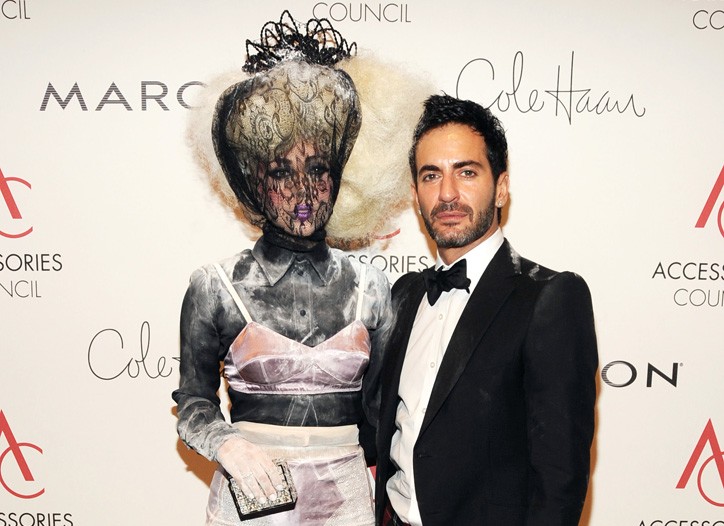
The real diamond pendant among the council’s string of offerings is the Accessories Council Excellence Awards. The ACE Awards recognize individuals for their contributions to consumer awareness and use of accessories. The event has grown from a trade function with standout guests like Kathie Lee Gifford and Joan Rivers to a must-attend celebrity function for anyone and everyone in fashion, music and film. The award categories have evolved, as well — in 1997 and 1998 a single ACE Award was presented — to the current incarnation, which boasts 11 categories, including Designer of the Year, Retailer of the Year, Humanitarian of the Year and Fashion Icon.
The 2009 ceremony awarded Tomas Maier of Bottega Veneta with Designer of the Year and Burberry with Brand of the Year. The evening also featured an eccentric performance by anointed “Stylemaker” Lady Gaga, who insisted, “the most important fashion accessory is a condom.”
Beyond the glitz and glamour of this headlining event, the Accessories Council’s most essential offering is the day-to-day networking for which it provides a platform. Upcoming events include a picnic in the park, a law seminar on social media, a book release event and a trend presentation. Citing a get-together where Kenneth Jay Lane connected with a Mundi executive with whom he ended up signing a licensing deal, Giberson said, “It’s a disjointed industry and we give people a chance to talk. These people often don’t step out of their showroom…it’s an opportunity to get people together and talking.”
