Fashion necessitates newness, and designers are constantly chasing the next trend or aesthetic. This hunt for innovation has traditionally been a strictly human endeavor, but trade show Milano Unica sees the potential for generative artificial intelligence to support and enhance these efforts.
Related Stories
Each season, Milano Unica, a biannual trade fair in Italy for high-end textiles and garment accessories, develops a Creative Concepts collection to inspire visitors. For the Spring/Summer 2025 Creative Concepts collection, the show’s artistic director Stefano Fadda leveraged generative AI. The resulting collection is dubbed MU Plus: Digital Sustainable Creativity, with the “plus” standing for the use of analytical tools and AI.
“We decided to work with artificial intelligence because it is increasingly becoming a true protagonist of contemporary living,” Fadda told Sourcing Journal. “The sentiment has spread that AI, with its fast, methodical, systematic learning, can potentially replace the human mind. Contrary to what common belief might suggest, AI instead proves to be an additional support for human inventiveness and creative inspiration. This decision also considers the pace of the fashion industry, which is constantly hungry for novelty, demanding new collections, ideas and creative stimuli.”
Fadda and his team input content including photos, drawings, renderings, samples and writing into image generation programs. The algorithm then assisted them in developing new shapes, prints, embroideries, materials, fabrics and more.
AI’s most frequently cited use case in fashion is aiding the creative and aesthetic ideation process. However, for MU Plus, Milano Unica is also focusing on the sustainability support that these tools can provide to the industry. “The industry must not see AI as a threat but as an ally,” said Fadda. “It will bring new possibilities for inspiration and creative ideas, suggest innovative solutions to optimize the design processes and quality, aimed at improving environmental impact, reducing waste, and promoting the reuse and recycling of materials, which are increasingly important in the market.”
MU Plus features three themes, each of which includes three product categories or concepts.
The first, MU Plus Regeneration, spotlights apparel made using regenerative practices. A Knitwear concept includes recycled fabrics, natural fibers such as cotton, wool, silk and hemp and 3D woven knits. Embroidery takes on this theme with treatments and styles like broderie anglaise, stretch cotton lace and macrame. Meanwhile, Lingerie speaks to regeneration with transparent, lightweight materials, tulle and crepe. Regeneration’s color palette includes white, gray, muted yellow, shades of pink including dusty and coral hues, red and burgundy.
MU Plus Design uses AI to blend aesthetics and influences, creating original looks. The Classic concept in this theme is described as “new office revised,” with wool and stretch cotton fabrics along with coatings on fabrics and trims. In this case, AI creates a more “dreamlike” impression. The next concept, Prints, takes fabrics in a graphic direction with color-blocking and brushstroke effects. Meanwhile, Shirts plays up stripes with different widths and color combinations. In MU Plus Design, pastels blend with neutrals, red, bright yellow and ochre.

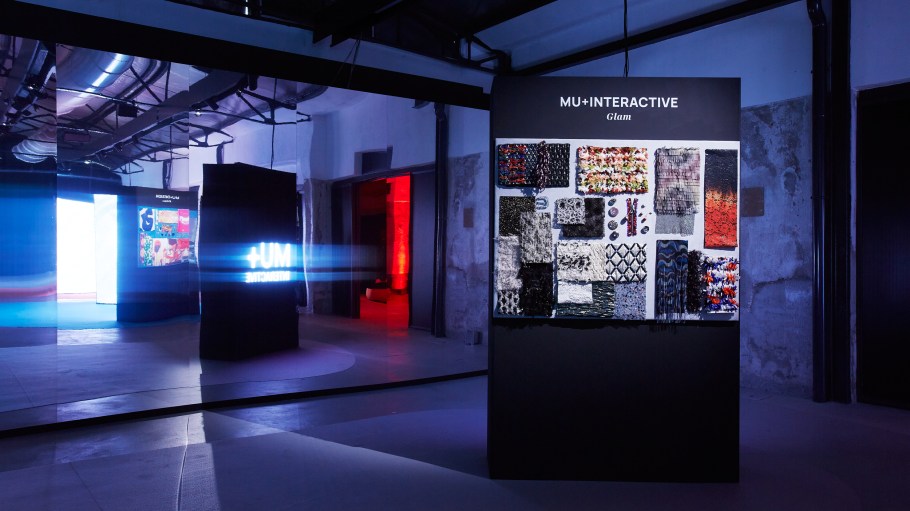
Finally, MU Plus Interactive blends performance and appearance. Glam offers long fringe, studs, rhinestones, sequins, embellished netting and fabrics that are embroidered, puffed and laminated. As its name suggests, the Shiny concept favors metallics, sequins and foils, whereas Tecno spotlights leathery looks, stretch jersey, neoprene and vinyl. In addition to metallic hues, Interactive features pomegranate, turmeric and sapphire colors that pop against shades like camouflage green and brown.
Milano Unica showcased MU Plus at an event in Milan on Oct. 12, and it has created a Trend Book with mood boards highlighting the collection’s themes. Samples from the collection will also be on display at the next edition of the trade fair from Jan. 30-Feb. 1 in the Sostenibilità Creativa (Creative Sustainability) section of the show. “Each sample will possess sustainability characteristics, reflecting the commitment of the textile and accessories industry in the fashion sector to produce high-quality creative productions in an environmentally responsible manner,” said Fadda.
Speaking of his experience using AI for this project, Fadda noted, “AI itself is not inherently creative, but it surprised me because it can generate new different ideas that can be integrated between human creativity and market demand, through marketing activities and design inspiration. A collaborative approach with AI is now indispensable, considering how technological speed is able to amplify knowledge and imagination.”