With geopolitical tensions and economic pressures continually evolving, American textile and apparel companies are exploring new options for how, and where, to sell their domestically made goods.
A U.S. Fashion Industry Association (USFIA) webinar featuring Dr. Sheng Lu, associate professor and director of Fashion and Apparel Studies from the University of Delaware, and his students, highlighted the current production and export strategies of U.S. manufacturers. According to the panelists, domestic producers are establishing the American market as a hotbed of sustainable innovation.
Related Stories
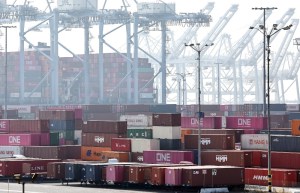
Kendall Ludwig and Miranda Rack said the production of Made-in-the-USA textiles and apparel has reached a record high over the course of the past five years. U.S. Bureau of Economic Analysis showed that production reached almost $28 billion in 2022—but unlike the 20th century, an increasing amount of these products are now being sold in foreign markets. Office of Textiles and Apparel (OTEXA) data showed exports of clothing and fabric topped $24.8 billion last year, a near-12-percent increase from a decade earlier.
“Made-in-the-USA products are not only consumed in the U.S.—many of them are sold overseas,” Ludwig said. Makers of technical textiles, fabrics and fiber and yarn are “already heavily exploring markets outside of the country,” she said, “and with domestic demand still being pretty limited, overseas markets are definitely playing a crucial role in the survival of U.S. textile production.” By contrast, fewer U.S. apparel and home textile producers reported selling overseas.
The vast majority of U.S. producers that sell in foreign markets make use of trade agreements (FTAs) like the U.S.-Mexico-Canada Agreement (USMCA) and Dominican Republic-Central America FTA (CAFTA-DR). About 90 percent of all fabric and technical textile makers exporting goods from the U.S. do business with Western hemisphere trade partners, along with 81.5 percent of fiber and yarn producers, 73 percent of apparel manufacturers and 78.4 percent of home textiles makers.
“We found that textile manufacturing is more geographically concentrated than apparel manufacturing—especially with fabric and technical textiles, which were the most geographically concentrated,” Rack said. California ranked highest in the production of fabrics, followed by Texas, North Carolina, South Carolina and New Jersey. Technical fabrics are produced in the largest quantities in California, too, proceeded by New York, North Carolina, New Jersey and Texas. The top five states across those two categories accounted for 70 percent of all production in the U.S.
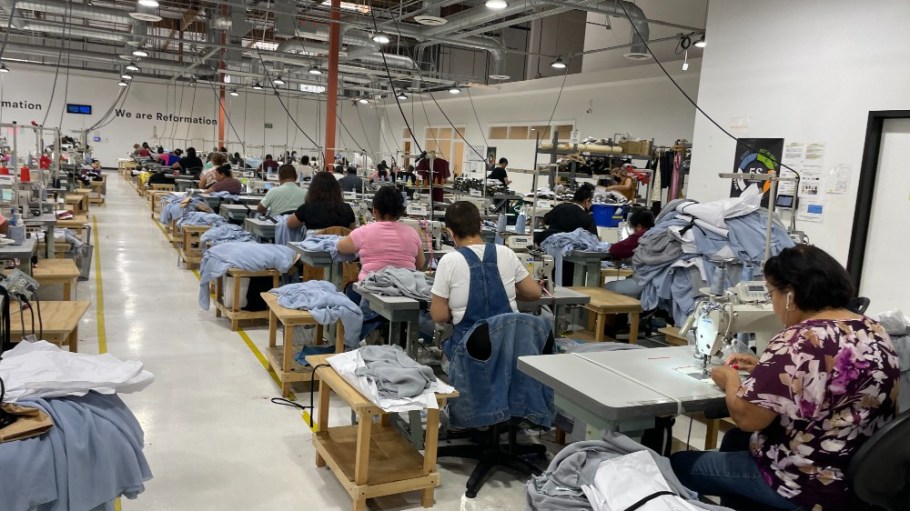
California and North Carolina also boast the most complete textile and apparel supply chains in the U.S., ranking in the top five across fiber and yarn, fabric, apparel, home textiles and technical textiles. Many businesses in the U.S. are small-to-medium-sized enterprises (SMEs); over 74 percent of apparel and almost 60 percent of home textile manufacturers are “micro-factories” with less than 50 employees.
Out of 432 businesses analyzed, just 38 were fabric mills, representing “a critical bottleneck” in the creation of a vertically integrated textile and apparel supply chain, the student researchers posited. Their conversations with industry insiders led to the conclusion that the high cost of labor, along with stringent environmental regulation and “intense competition with cheap imports from Asia” are the biggest factors holding back growth in the sector.
Hannah Laurits said that while the U.S. isn’t typically regarded as a leading apparel producer, sustainable clothing could represent a critical differentiator in the global market and an opportunity to showcase domestic manufacturing.
Studies show that shoppers have a favorable view of clothing made in the U.S., and naturally regard these products as more sustainable and socially responsible. The U.S. has access to the capital, talent and resources needed to foster innovation in the space—a unique point of contrast to developing countries where apparel is often produced.
“Contrary to common perception, data suggests a decent presence of sustainable apparel ‘Made in the USA’ in the world marketplace,” Laurits added. In analyzing data from global fashion companies’ websites between January 2022 and September 2023, Laurits observed over 15,000 Stock Keeping Units (SKUs) of U.S-made apparel developed with recycled materials. Another 6,000 SKUs made with organic fibers were on sale during that period in the U.S. and internationally. “Notably, even though clothing made from recycled textile materials is a relatively new and emerging product category, U.S. manufacturers are among the world’s top suppliers,” she said.
While U.S.-made sustainable clothing is popular in the domestic market, more than half of the SKUs made with recycled textiles studied during this time period were sold outside of the country to countries in Europe as well as Canada. The percentage was even higher for clothing made with organic materials, revealing foreign shoppers’ favorable views of the U.S. as a source of sustainable fashion. As such, policymakers should look for new ways to incentivize sustainable apparel production to up America’s profile on the world stage, she said.