Got silk?
For millennia, Silk Road trade routes connected Chinese silk to the rest of the world, powering global demand for the premium natural material. But while silk holds significant innovation potential for intimate apparel and aligns with China’s cultural heritage, the material often remains misunderstood. Despite its broad appeal, silk can be considered expensive, delicate and hard to maintain, thus intimidating designers and consumers alike.
INTERFILIÈRE SHANGHAI, an international intimate apparel exhibition focusing on the lingerie, swimwear and activewear value chain, aims to change that perception with “Silk: Awakening the Future,” a special zone introducing the rich heritage of Chinese silk to the global intimate fashion industry.
Related Stories
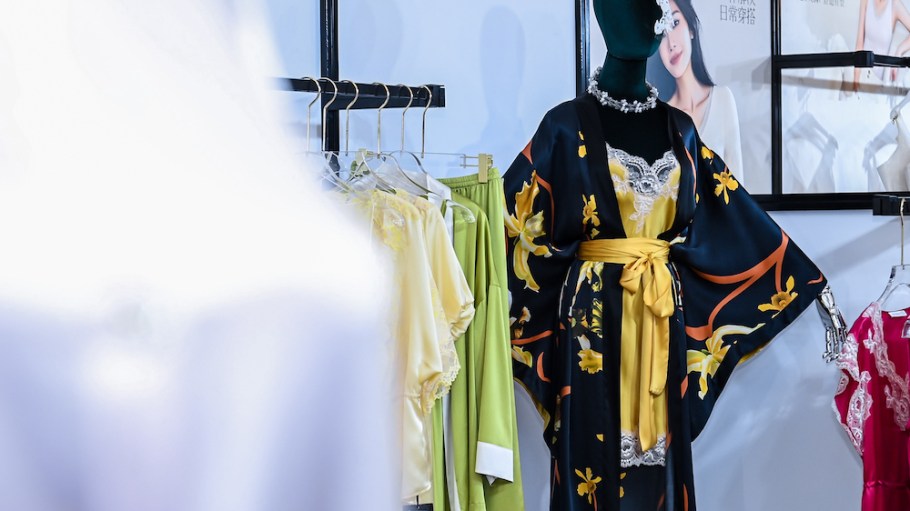
Running October 13-14, 2025, silk zone will feature interactive and static displays showing the full silk process—from sericulture to finished garments—as well as forums, launches and cross-sector dialogues. Additionally, a dedicated silk-themed fashion show will bring the material to life and show its potential.
“Chinese silk is exceptional in quality, but its influence in global fashion still needs to grow,” said associate professor Lu Cheng, Shanghai Donghua University. “Currently, China dominates [silk] raw material and processing but lacks in branding and consumer engagement. Many luxury brands trace supply chains to Italian mills, and further back to Chinese silk farms. If we can transparently present the full supply chain to consumers, it will significantly boost the sustainability of silk.”
INTERFILIERE’s Silk Zone will tackle silk’s rich Chinese heritage and cultural narrative; silk’s properties that make it ideal for intimate apparel, loungewear and sleepwear; trends that are driving a youth silk renaissance via social media; education on silk origin and value chain; and silk’s biodegradable and eco-friendly nature, the latter of which is often overlooked.
“Silk far outperforms synthetics in biodegradability. In ancient times, people valued silk for its durability—it could survive in tombs for centuries,” said Cheng. “And while silk is eco-friendly, its sustainable advantage is lost if dyed with harsh chemicals. We must emphasize ‘clean dyeing’ or natural processes. And while silk recycling technology does exist, the material’s market size is too small to support closed-loop systems. “Scaling up silk consumption is key to making recycling viable,” she said.
Innovation has been driving silk’s expansion. According to the China Silk Association, enhanced functionality such as stretch fabrics, wrinkle resistance and anti-static treatments have become mainstream, and niche products such as sun-protective fabrics, face masks and eye masks have grown the offering. Natural dyes and eco-friendly finishing processes are also tracking, aligning with global demand for sustainable materials.
Regardless, care must be taken to draw in the next generation of consumers. Young consumers receptive to silk lingerie and sleepwear still demand machine-wash convenience and price sensitivity, while design styles must balance traditional aesthetics with modern tastes—blending simplicity, comfort and a sense of technology.
Silk rebounds
According to the China Silk Association, while domestic demand rose to 60 to 70 percent of total consumption, the proportion of silk exports declined from 80 percent in the 1990s to the current 30 to 40 percent. But in the first quarter of 2025, the silk industry witnessed a notable recovery. Output of satin from large-scale enterprises increased nearly 12 percent year-over-year, while silk quilt production rose by nearly 9 percent. Major production region Zhejiang topped national silk exports, while the Guangxi region’s raw silk output surged by 23 percent, driven by increased orders from central reserve silk procurement projects.
And despite challenges such as complex international trade conditions and cultural differences, Chinese silk enterprises are leveraging their quality, innovation and flexible strategies to establish a foothold in global markets. High-end silk is also increasing in popularity, due to demand for premium fabrics like brocade and jacquard, thus accelerating upgrades in silk fabric development.
Jiaxin Silk’s “Golden Tower” brand, for example, which has focused on intimate apparel, has partnered with renowned IPs such as Dunhuang and the Palace Museum to maintain market share in Tmall’s high-end scarf segment. Meanwhile, Wensli has enhanced its brand premium by partnering with Huawei to launch silk smartphone cases and release NFT digital collectibles.
Chinese silk enterprises are also accelerating their overseas presence to adapt to changing global markets.
This March with a $40 million first-phase investment, Jiaxin Silk’s Di Seta brand broke ground on a fashion accessories and garment project in the Qantara West Industrial Zone in Egypt. “Egypt connects Asia, Africa, and Europe. We plan to make this an export-oriented base, supplying Europe, the US, and the Middle East, thereby optimizing our global supply chain,” said a Jiaxin Silk representative.
To learn more about INTERFELIERE SHANGHAI and the Silk Zone, click here.