Spring came early for Campbell & Kramer.
The Earle Girl-backed brand’s latest collection resurrected forgotten fabrics just in time. Whether it was foresight or good fortune, the drop landed at the intersection of intuition and international politics.
So much so that what looked like a textbook case of circular fashion in motion is starting to feel less like a closed loop and more like one that’s been locked. As the industry braces for the next wave of Liberation Day fallout, C&K’s earlier approach—sourcing deadstock through friendly, informal networks—may be a relic of a pre-tariff past. Given the shifting political winds and an escalating tariff regime, could the Los Angeles label retrace its steps under today’s trade conditions? Or is the spring capsule a trophy of pre-war terms, no longer replicable in a post-tariff reality?
Related Stories
It’s a question the conscious consumption brand considered in New York City earlier this month. Its college-roommates-turned-cofounders, Presley Campbell and Alden Kramer, celebrated the brand’s spring collection at Soho dispensary Mighty Lucky when talk turned heady: Liberation Day.
While C&K tends to favor the neighborhood’s local legacy surplus collector when sourcing deadstock, the Los Angeles label’s first-day-of-spring celebratory collection deviated for something new(ish).
When presented with a unique, time-sensitive opportunity, C&K’s production consultant connected C&K with one of her other clients, a designer who had some hundreds of yards of unused and unwanted fabric. So, she called Campbell and Kramer.
“The designer had all this velvet fabric milled in Korea and custom made for her,” Kramer said. “I guess she wasn’t going to use it and wanted to throw it away; when our consultant asked if we wanted it? We said, ‘Absolutely.’”
C&K took all the crushed custom velvet off the designer’s hands, Campbell confirmed, and some fleece to be used for future drops.
“We didn’t even use all of it [for] the collection, she said. “But we were like, we cannot let any of that go to waste’; it’s such nice quality.”
The spring collection was, in fact, “born from the fabric itself” as the duo had “rescued hundreds of yards of beautiful pastel stretch velvet from Korea,” a statement from the team reads. “The soft palette of light teal, pale purple and Easter egg blue instantly evoked spring—think warmer days, blooming flowers and a fresh pop of color.”
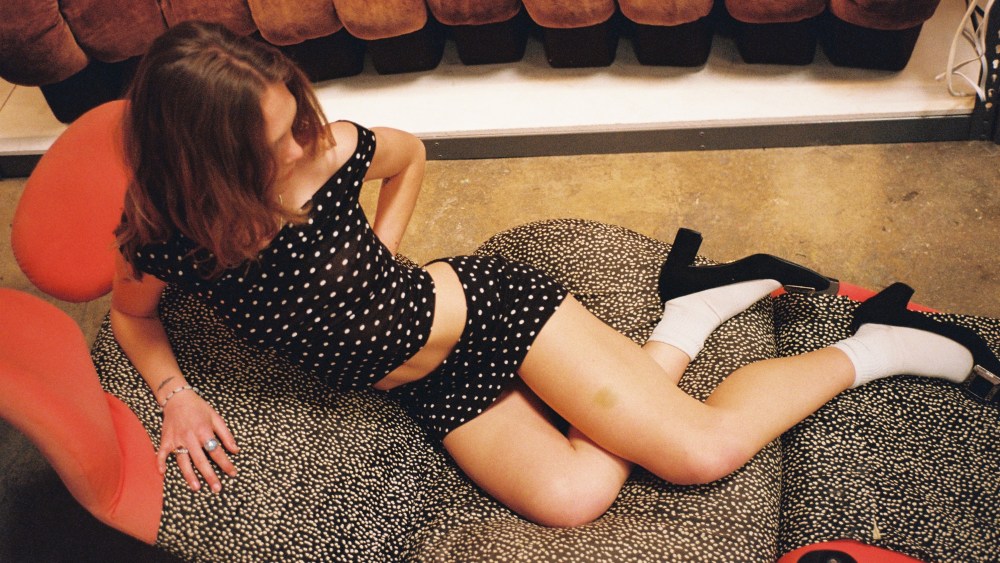
Inspired by “femininity and the essence of girlhood,” the collection consists of two equal ensembles: the Olympia and the Cleo. The former features a slinky Bardot-neck and matching micro skort, evocative of a “contrapposto silhouette.” The latter was defined as a “sultry keyhole-neck top with hot shorts.” The Olympia was made with the Korean-milled material, while the Cleo comprises deadstock jersey.
“When you’re using excess materials, the more people you know—in the fashion world or in your local area—and the more people that you talk to, the more these little opportunities can come up,” Campbell said. “Like this; we just got lucky. We got all this free fabric, and it inspired our whole spring collection.”
But was it, in fact, luck? It’s hard to say. Kramer did note, though, that successfully retracing these steps is unlikely, even if they were taken just six months ago. If that retracing were to happen again, though, a few other things need to happen first—namely, communication.
“I wish there was better communication; so many young designers would have loved to take this,” Kramer said. “We were lucky in the sense that we just had good communication.”
Campbell agreed, noting that as a small business, “time is everything.”
“When we were first starting out, we were just Googling, like, ‘factories with small minimums in LA’ and then trying them and getting screwed over a few times,” Campbell said. “That stuff is so gatekept in the industry; so, meeting just one person who’s gonna give you good advice makes such a big such difference.”
Case in point? C&K’s community-centric supply chain.
“We set the precedent about the types of fabrics we like to use, and [suppliers] will keep us informed on when they have a product that we might be interested in,” Kramer said. “Working locally, we see same people all the time—one of [our suppliers] has lived in LA his whole life; it’s such a local community that we now have, so that also helps.”
For context, the Orange County natives didn’t “meet” until 2018, as they had just graduated high school and were excited to build their college coterie. It was a place where many Zellennials did the same thing back in 2018: the internet.
In preparation for their respective freshman years, the prospective students joined a Facebook group for the incoming UCLA class of 2022. The two instantly connected—both IRL and URL—ultimately becoming college roommates.
Since connecting, the besties–turned–cofounders have channeled their shared ambitions into a clear gap in the market: beyond thrifting and vintage resellers, where are the trendy, sustainable brands a college student actually wants to wear—and can afford?
“When we were first starting, we were two people who loved fashion and constantly kept up with it. And we didn’t know of many sustainable brands that were on trend and had pieces that we would wear on an everyday basis,” Campbell said back in July 2022 for the first “Bruins Built This” podcast by UCLA’s student newspaper. “So, we wanted to sort of be a brand that could be that and also be at a decently accessible price point for people. Because the only accessible, sustainable shopping method we knew at the time was thrifting.”
Since May 2019, the roommates “poured” their mutual passion for fashion into Campbell & Kramer: a brand “strictly designed” with luxury deadstock fabric.
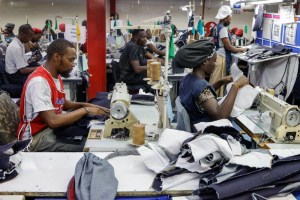
“Being held up in customs almost derailed our entire first wholesale order,” Kramer said. “But working with a local factory, we can get something quick; if we need to pull a sample, or get them a sample or something like that, we can do it within the same day, if necessary.”
The Bella Hadid-backed brand claims to rely exclusively on deadstock fabrics for its small-batch collections, all produced in partnership with a local, family-run sewing shop in Los Angeles. Naturally, the erratic availability of these materials—otherwise destined for landfills or incinerators—limits what and how much can be made. But that constraint is part of the appeal.
Committed to incorporating nothing new, C&K embraces the one-of-a-kind nature of its garments, each repurposed piece as singular as the person wearing it—Hadid (presumably) included.