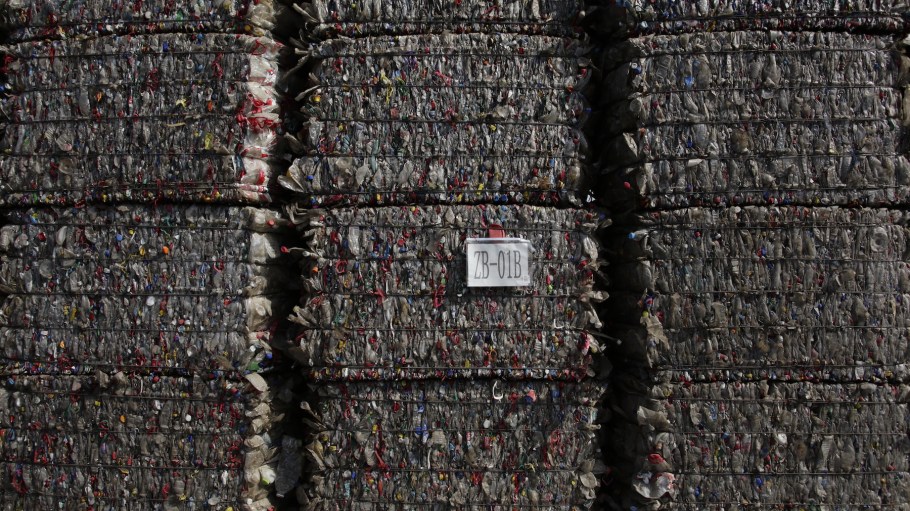
The use of recycled polyester has mushroomed as an alternative to its resource-draining virgin counterpart, rising by 3.5 percent to 8.9 million metric tons last year.
In an attempt to set the framework for navigating this groundswell, the Zero Discharge of Hazardous Chemicals (ZDHC) Foundation has published two new guidelines on the sustainable chemical management requirements for recycled polyester production for bottle-to-textile recycling (rPET) and textile-to-textile recycling processes.
Related Stories
The ZDHC Recycled Polyester Guidelines, along with its supplemental Industry Standard Implementation Approach report, structures the requirements for rPET manufacturers across three chapters.
The goal, the Amsterdam-based organization said, is to get in the weeds (from input through process to output) to address “critical aspects” of the production process as to create standardization and uniformity—thus transparency—throughout the sector.
Input management covers bottle-textile feedstocks and chemicals used as inputs in rPET production. The second chapter, focused on process management, covers best practices including chemical recovery, safe storage and handling of chemicals for worker safety. The final chapter on output management covers emissions from wastewater, sludge and air from rPET fiber production.
Meanwhile, the first chapter covers both feedstocks and input chemicals used to manufacture rPET. The feedstock for polyester recycling processes includes pre-consumer textile waste, post-consumer textile waste, post-consumer PET waste and ocean-bound plastic.
“Chemical recycling is a promising option for textile-to-textile recycling. In this process, fibers are depolymerized and converted into their molecular components, enabling the production of high-quality new fibers,” the guideline said. “This process achieves a closed-loop system, promoting circularity and minimizing waste.”
The second chapter on process management addresses environmental concerns relevant to the various recycling processes.
Regarding solvent recovery, the ZDHC recommends implementing efficient systems in chemical recycling processes (like glycolysis and methanolysis) with specific recovery rate targets.
To ensure safe chemical storage, the guideline suggests implementing appropriate secondary containment measures—therefore preventing accidental contaminations and preventing the spread of hazardous substances—plus proper labeling in accordance with Globally Harmonized System (GHS) guidelines—and displaying chemical safety cards at storage sites.
Worker safety requires providing adequate personal protective equipment (PPE) for those handling chemicals—particularly solvents—and establishing training programs on chemical management and safety procedures. The types of PPE recommended for solvent workers include filter masks, chemical-resistant gloves, face shields, disposable clothing and safety footwear.
Each recycling process—mechanical, thermomechanical, hydrothermal and chemical—has individual air emissions and associated impacts.
“The textile waste stream is a complex blend of various materials, including cotton, wool, viscose and synthetic fibers,” the report reads. “Effective textile waste recycling demands meticulous sorting and selecting appropriate recycling processes tailored to each type of textile waste.”
Thus, the ZDHC’s guidelines promote the monitoring and reduction of air pollutants, particularly Scope 1 and 2 greenhouse gas (GHG) emissions and volatile organic compounds (VOCs) associated with various recycling processes.
The final chapter centers on responsible output management, aiming to minimize the environmental impacts associated with rPET production. It covers two main areas: responsible wastewater discharge and sludge management as well as air emissions.
For wastewater discharge and sludge—AKA, what returns to the earth after being treated, either as a liquid or solid material—the mandatory requirements include compliance with local regulations, regular testing and reporting as well as sludge management.
This strict, specific strategy ensures that the discharged wastewater won’t compromise the quality of the receiving environment. The facilities must also test said wastewater for conventional parameters (like nitrogen) and heavy metals (like cadmium), regardless of how much—or little—wastewater was generated.
Compliance with local regulations for wastewater parameters is mandatory. However, wastewater testing requirements vary, depending on the discharge type; direct, indirect with(out) pretreatment, zero liquid discharge.
For sludge management, the same applies: Comply with local regulations for the slurry testing, treatment and disposal and report the major sludge disposal pathway used on the ZDHC platform.
Essentially, strict requirements are set for wastewater discharge, including monitoring conventional parameters and heavy metals, promoting responsible water stewardship and minimizing pollution.
“Brands should share these guidelines with their relevant suppliers and build in the request to implement these guidelines into their strategy and policies,” the Roadmap to Zero foundation wrote. “Suppliers should study these guidelines and take relevant action to ensure implementation. Solution providers should review the test methods and limits detailed in the guidelines.”