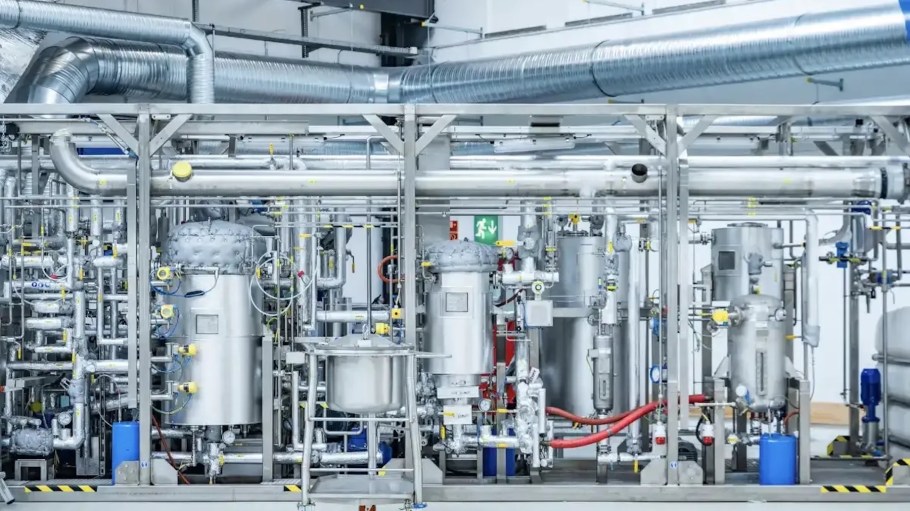
Worn Again Technologies has launched a pilot facility in Winterthur, Switzerland, designed to demonstrate the technical and economic feasibility of its textile-to-fiber recycling process for polycotton blends.
The so-called “Accelerator” plant represents the latest step in the company’s effort to move its chemical recycling technology beyond the lab and toward commercial deployment. The system is designed to separate and recover polyester and cellulose from end-of-life textiles—materials that are notoriously difficult to recycle due to their blended composition.
Related Stories
The move comes as the fashion industry grapples with a mounting waste problem. Global textile production now exceeds 120 million metric tons annually, yet less than 1 percent of clothing is recycled back into new fibers.
“The fashion industry is at a pivotal point,” said Michael Weiss, chief executive officer of Worn Again Technologies. “Blended polycottons, once nearly impossible to recycle efficiently, are now being reimagined through our groundbreaking process. This technology maintains material value, minimizes waste, and unlocks significant economic opportunities.”
In recent years, the company has been refining the chemistry and engineering behind its process, including solvent systems and separation techniques to recover high-purity polyester and cellulose from complex textile waste streams. Worn Again said the system is designed to recover more than 95 percent of the solvents used in the process.
The technology relies on a multi-solvent approach that can also separate additional components such as dyes and elastane—materials that often complicate mechanical recycling methods. The company said it successfully spun fibers from recovered outputs in 2024, a step it views as a key proof point ahead of larger-scale manufacturing.
The Accelerator facility itself is being built in phases. The first module focuses on recovering spinnable polyester from waste textiles, including post-consumer polycotton blends sourced from Switzerland, the European Union and the United Kingdom. That material—referred to by the company as “circular polyester”—will be made available for pilot testing with downstream partners.
A second module, currently in engineering development, is intended to produce next-generation cellulosic fibers and other cellulose-based materials.