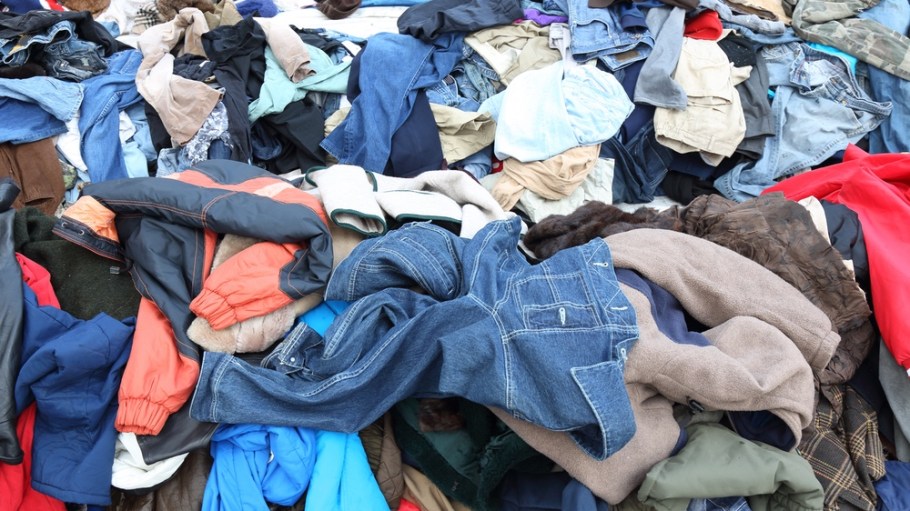
A recent event prompted me to reflect on the importance of planning for a better, more circular future for textiles. The G7 Agenda on Circular Textiles and Fashion (G7 ACT) workshop, hosted by American Circular Textiles and WRAP, presented essential considerations for the future: designing textiles with end-of-life reuse and recycling in mind. Eighty percent of a product’s environmental impact originates from its design stage. Durable, sustainable design is not just beneficial; it’s crucial.
Yet, while we rightly focus on designing better for tomorrow, let’s not overlook a powerful solution that exists today: reuse. Reuse isn’t a distant innovation or a theoretical concept; it’s a thriving, impactful practice happening right now, significantly reducing textile waste and transforming economies globally.
Related Stories
The statistics highlighted during the ACT event are alarming. Each year, 92 million tons of textiles are burned or end up in landfills. Fashion alone accounts for nearly 10 percent of global emissions and consumes 29 trillion gallons of water annually (Figures EPA; World Bank). Overproduction is relentless, with more than 90 billion garments produced yearly. Most shocking, the average piece of clothing is worn only 10 times before disposal.
Innovative design and regulatory shifts like Extended Producer Responsibility (EPR)—a policy approach that makes producers responsible for the entire lifecycle of their products, including post-consumer waste—are promising steps forward. However, these solutions focus primarily on future production. They don’t fully address the billions of garments already in circulation. Right now, 85 percent of clothing in the U.S. is discarded rather than reused or recycled, according to the EPA. I think this represents an enormous missed opportunity, and we do not need to put off tackling this issue while we work through the implications and practicalities of design innovation.
Every day, our team and others in the secondhand clothing industry demonstrate that reuse can significantly alleviate the environmental strain of textiles immediately. We divert millions of pounds of clothing from landfills annually, directly reducing waste and lowering the demand for resource-intensive new garments.
Reuse also powers economies globally. Contrary to outdated perceptions, secondhand clothing isn’t simply exported waste. Instead, it’s quality apparel that sustains livelihoods, generates employment and provides affordable clothing options for millions of people. This system creates a practical, positive cycle: one garment reused is one less garment polluting our planet.
But to fully unlock reuse’s potential, concrete actions are necessary. First, governments must enact policies that actively support textile reuse markets. Harmonized regulations are needed to remove trade barriers that inadvertently restrict the global second-hand clothing trade. Second, incentives and clear guidelines for businesses prioritizing reuse (domestic or international) over recycling must be integrated into upcoming EPR legislation. Finally, investing in global infrastructure for sorting, grading, and redistributing second-hand textiles is essential to scale reuse practices.
By committing to these actions now, policymakers can rapidly reduce the environmental impact of the textile industry. True circularity depends on understanding and collaboration across the entire textile ecosystem, from producers and policymakers to consumers. Immediate reuse solutions demand this same level of international cooperation and attention.
The circular economy isn’t just about designing for the future. It’s about effectively using what we already have today. Reuse is ready right now, so let’s embrace it.
“Lisa Jepsen is CEO of Garson & Shaw LLC, a global leader in the secondhand clothing trade, headquartered in Atlanta, Georgia. In the 1970s, whilst working as a teacher, Lisa organized clothing drives with her students and sold donated garments at charity flea markets to support development aid in Southern Africa. This experience laid the foundation for a lifelong career dedicated to promoting clothing reuse. Lisa began working full-time in the secondhand clothing sector in 1994, initially in Poland and later in the Netherlands, supplying wholesalers in both Eastern Europe and Africa. In the late 1990s, Lisa co-founded Garson & Shaw Ltd in the UK, which would later evolve into Garson and Shaw LLC in the U.S.