The U.S. Cotton Trust Protocol’s annual report revealed record grower participation and other environmental wins for the 2023-24 period, highlighting the program’s progress during the past year’s “challenging” economic climate.
The farm-level, science-based sustainability program reported planted acreage enrolled in the Trust Protocol—which now counts Carhartt as one of its 45-plus global parent companies and brands—hit 2.1 million acres, up 31 percent from the previous year.
Related Stories
Trust Protocol growers “continued to outperform national averages,” achieving a 14 percent improvement in yield. Resources were conserved as well, with water use dropping by 14 percent, energy use down by 27 percent, greenhouse gas emissions dipping by 21 percent and soil loss decline by 79 percent, all compared against a 2015 baseline. Almost three-quarters (74 percent) of growers achieved a positive soil conditioning index as well.
“This year’s report demonstrates the unwavering commitment of U.S. cotton growers to continuous improvement, even in the face of significant challenges,” said Gary Adams, president of the U.S. Cotton Trust Protocol. “The Trust Protocol is proud to support their efforts by providing the tools, resources and market opportunities needed to build a more resilient and sustainable future for U.S. cotton.”
The sustainable cotton fiber program, offering article-level supply chain transparency, undertook a “strategic planning initiative” in 2024 to plan its future value proposition. The resulting five-year framework is anchored by three “interconnected” pillars: environmental stewardship, traceability and continuous improvement.
With that in mind, the Trust Protocol expanded its board of directors to “better reflect the global reach of the program.” The 22-member “refreshed board composition” highlights the program’s international breadth. Joining the United Nations Fashion and Lifestyle Network also underscored the Trust Protocol’s global collaboration goals.
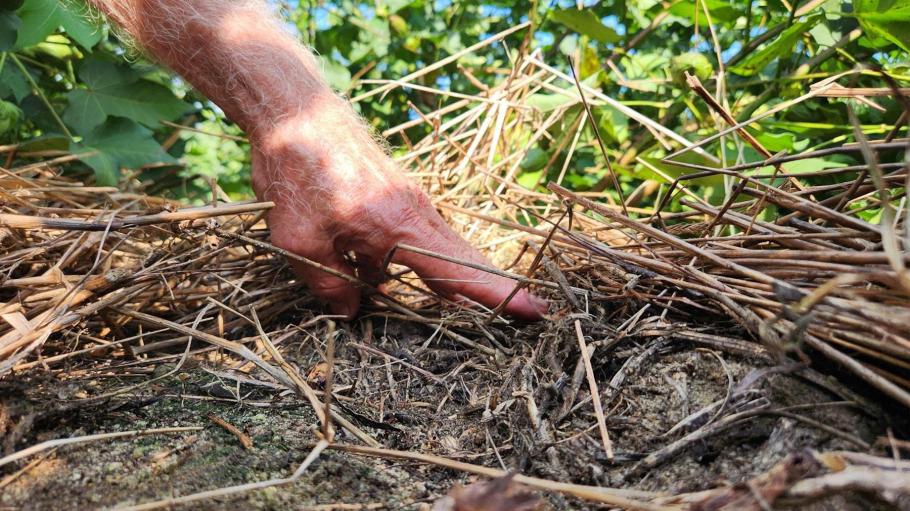
On the regenerative agricultural front, Trust Protocol growers focused on restoring and enhancing soil health. Slightly more than half of growers (56 percent) adopted no-till or conservation tillage methods, while 62 percent integrated cover crops into their operations. The self-assessment questionnaire filled out by these growers revealed that 88 percent of participants deployed natural rainfall conservation practices, with 63 percent using measurement tools like soil moisture probes and 40 percent implementing variable rate irrigation, per the report.
“The Trust Protocol is dedicated to providing tangible value to our growers, not only through environmental stewardship, but also by enhancing market access and recognizing their commitment to responsible production,” Adams said in the report. “Our Climate Smart Cotton Program, for example, offers a pathway for growers to participate in the emerging carbon market, creating new revenue streams while advancing climate-smart practices.”
Of those growers, the organization’s Climate Smart Cotton initiative, designed to help growers adopt these “climate-smart” practices, saw growth with 1,427 stateside farming entities enrolled, including 282 from “historically underserved” communities.
“It’s not always easy to take risks when you’re a farmer, especially financial risks,” said Alyssa Cain, a Texas-based Trust Protocol grower. “This program gives us the support to try new things, to build a better system for the long haul. That not only provides peace of mind, but a farm with healthier soil, cleaner water—a system that works with nature, not against it.”
In terms of traceability, the Trust Protocol’s proprietary Protocol Consumption Management Solution (PCMS) made “notable strides” in scaling, recording 1.2k shipments of cotton fiber—the equivalent of 3.4 million bales of U.S. cotton and 636,000 bales of Protocol cotton. Brands and retailers tracked nearly 110 million shipped units as the Trust Protocol transitioned its PCMS to a “revised technology platform” for “enhanced inventory reconciliation, improved data accuracy and AI-powered document verification.”
“This year’s report highlights both the progress our growers have made and the operational improvements within the Trust Protocol,” said Daren Abney, executive director of the U.S. Cotton Trust Protocol. “We’ve streamlined systems to make participation easier for all and introduced a new consumption-based membership model launching in 2025 to support companies of all sizes in responsible sourcing.”
While membership dues saw a 27 percent increase, they were a “relatively small portion” of overall funding (less than 30 percent of projected revenue), the program said. Thus, a revised membership structure—shifting from a revenue-based system to one based on cotton consumption—should allow the program to better support its partners and growers.
“We understand that sustainability is a journey, not a destination,” Adams said in the report. “The Trust Protocol is committed to working alongside our growers, providing the tools, resources, and support needed to navigate the challenges ahead and build a more resilient and sustainable future for U.S. cotton.”