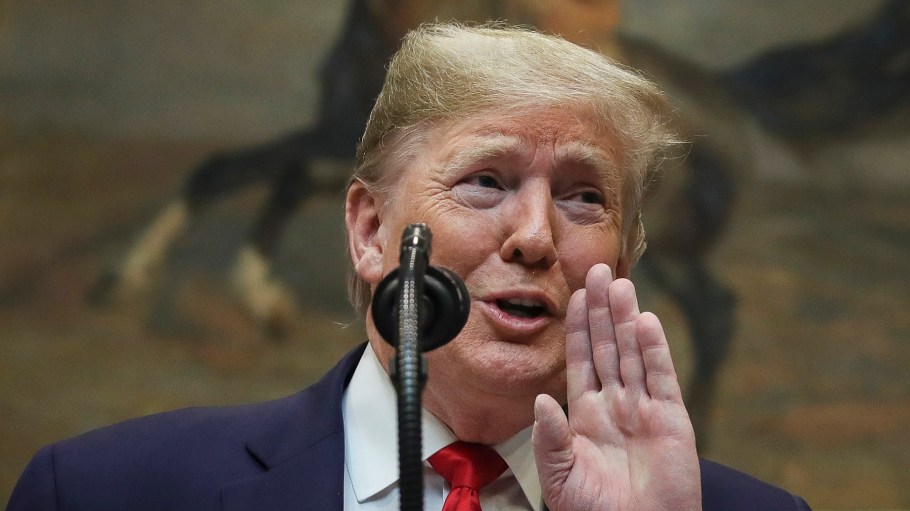
The United States’ stance on international diplomacy, led by President Donald Trump, has put another stake in the ground—or, perhaps, pulled out 66 of those that form the bedrock of global ESG etiquette.
On Wednesday, President Trump signed a memorandum to withdraw from 66 global organizations and treaties—those deemed redundant, mismanaged, ineffective and contrary to American national interests—citing the country’s sovereignty and national interest, according to a memo issued by the White House.
Related Stories
“As this list begins to demonstrate, what started as a pragmatic framework of international organizations for peace and cooperation has morphed into a sprawling architecture of global governance, often dominated by progressive ideology and detached from national interests,” Secretary of State Marco Rubio said in a statement. “We will not continue expending resources, diplomatic capital and the legitimizing weight of our participation in institutions that are irrelevant to or in conflict with our interests.”
Federal agencies have been directed to end U.S. participation in all listed entities.
The list comprises 31 United Nations entities and 35 non-UN organizations, spanning expert commissions, policy-forums and treaty-based frameworks; military alliances (like NATO) and intelligence axis (like the Five Eyes) are not included—nor is the UN International Law Commission (ILC): an expert body elected by the UN General Assembly to, essentially, create new rules for new things that aren’t yet covered by international law.
Here’s an SJ-coded rundown of what, exactly, some of these programs are and why their removal is notable.
The United Nations Framework Convention on Climate Change (UNFCCC) is the foundational treaty for international climate action and a parent (see: legally binding) treaty to the Paris Agreement.
With near-universal membership, the UNFCCC provides the overarching structure for international efforts, holding annual “Conference of the Parties” meetings—commonly called COPs—to review progress and make decisions.
“The UNFCCC underpins global climate action,” EU climate commissioner Wopke Hoekstra shared on social media. “It brings countries together to support climate, reduce emissions, adapt to climate change, and track progress. The decision by the world’s largest economy and second-largest emitter to retreat from it is regrettable and unfortunate.”
The framework was adopted 34 years ago at the Rio Earth Summit and approved by the U.S. Senate during George H.W. Bush’s presidency. It is widely regarded as the leading international body for addressing the climate crisis.
“While all other nations are stepping forward together, this latest step back from global leadership, climate cooperation and science can only harm the U.S. economy, jobs and living standards, as wildfires, floods, mega-storms and droughts get rapidly worse,” UNFCCC executive secretary Simon Stiell said in a statement. “It is a colossal own goal which will leave the US less secure and less prosperous.”
The Intergovernmental Panel on Climate Change (IPCC) is the world-leading scientific body for assessing climate change science, as noted by the U.S. Department of the Interior. The IPCC was established in 1988 and comprises 194 member countries, with reports that collate the latest updates in the sector—largely regarded as the primary source for steering global eco-action.
“The preparation of the scientific reports agreed by the member governments for this assessment cycle is underway,” Jim Skea, chair of the IPCC, said in a statement. “The panel continues to make decisions by consensus among its member governments at its regular Plenary sessions. Our attention remains firmly on the delivery of these reports.”
The International Union for Conservation of Nature (IUCN) is a global authority that provides technical advice on conservation, while the International Renewable Energy Agency (IRENA) is an intergovernmental organization that supports countries in their transition to sustainable energy.
“Renewables are essential in today’s uncertain environment to ensure energy security and strengthen geopolitical positions,” Francesco La Camera, director general of IRENA, said in a statement. “International collaboration is more critical than ever.”
The International Cotton Advisory Committee (ICAC) is the only intergovernmental commodity body covering cotton that is recognized by the UN. It’s an association of governments from cotton-producing, consumer, and trading countries, formed in 1939 to “act as a catalyst for change by helping member countries,” according to the Washington, D.C., committee.
“By withdrawing from the IPCC, UNFCCC and the other vital international partnerships, the Trump Administration is undoing decades of hard-won diplomacy, attempting to undermine climate science, and sowing distrust around the world,” former vice president and climate activist Al Gore shared on social media on Wednesday evening. “Fortunately, 198 minus one does not equal zero.”
Gregory W. Meeks (D-N.Y.), the leading Democrat on the Foreign Affairs Committee, called the withdrawal “yet another example of how Donald Trump’s version of America first is, in practice, America alone.”
“This decision endangers American lives by undermining organizations that combat threats from foreign terrorists and our global adversaries,” Meeks said in a statement. “Furthermore, it will cede our influence to foreign competitors—and diminish our leadership in designing the rules that govern the global digital economy, raising costs for U.S. businesses.”