Textile recycling is a chore. Wouldn’t it be nice to get paid for being sustainable? Maybe you can.
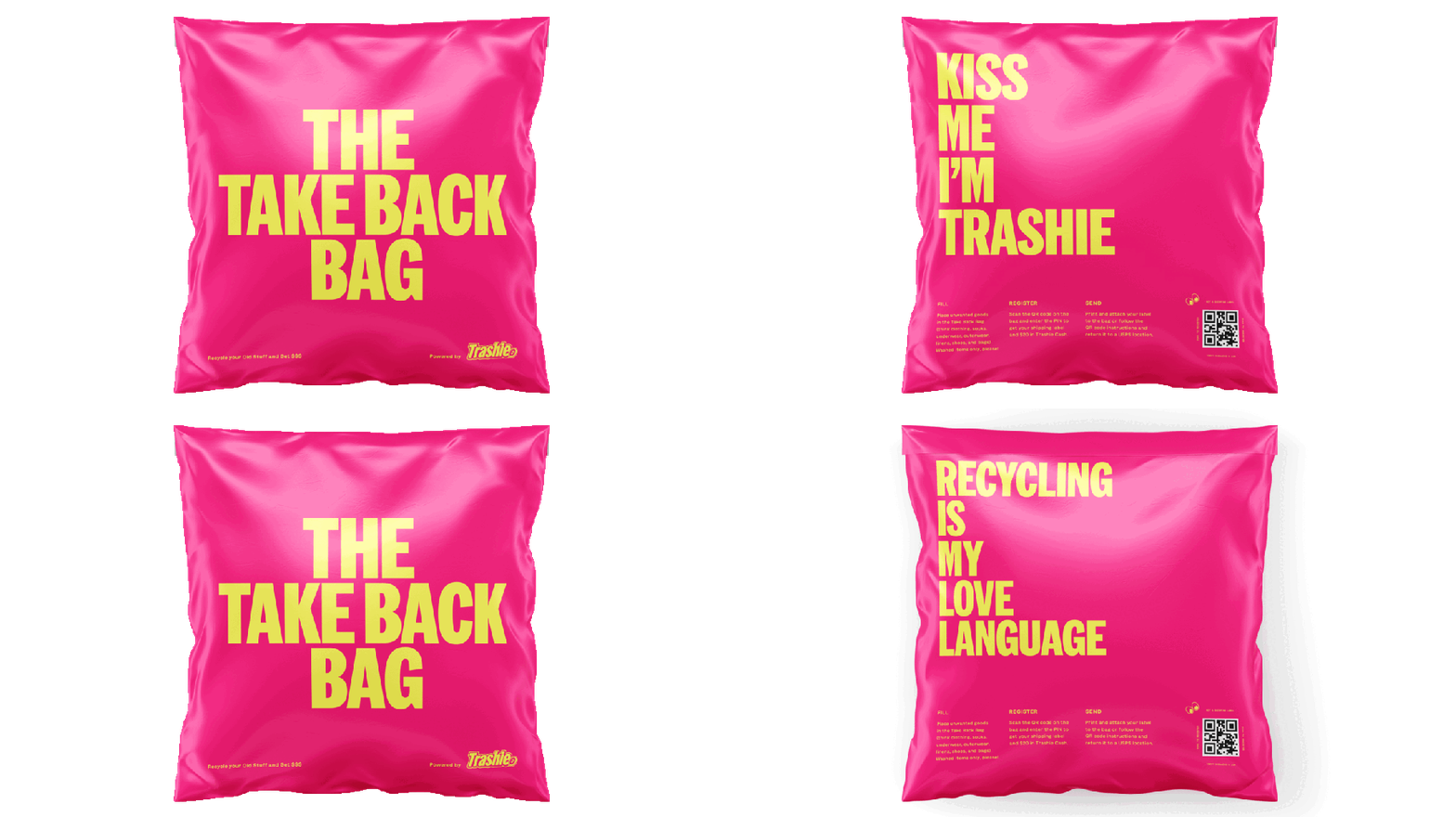
Meet Trashie: a recycling and rewards platform from the minds behind For Days that rewards consumers for recycling textiles via its TikTok-famous “Take Back Bag” with cash to spend at participating brands like Lululemon and DL1961.
“Everyone has too much stuff that they struggle to get rid of in an environmentally responsible way and yet sustainable options are often inconvenient and expensive,” said Kristy Caylor, Trashie’s founder and CEO. “Trashie makes it easy, rewarding—and fun—for people to make the sustainable choice. In 2023 alone, Trashie sold 380,000 Take Back Bags, which means we diverted 5.8 million items, totaling 2.9 million pounds, from landfills.”
Related Stories
Here’s how it works: Order a Take Back Bag for $20 or snag one from a brand like ThirdLove or Walmart—major U.S. retailers will soon be offering the bags as well, though Trashie was unable to name who those partners are at this time. Fill it up with unwanted (but washed) clothing, bags, shoes and linens. Scan the QR code on the bag for a prepaid label and shipping instructions and earn $20 in “TrashieCash.” Send the fully recyclable bag—which can hold about 15 pounds of textiles—back. According to the company, each Take Back Bag saves 151 pounds of carbon emissions from the lower atmosphere and conserves 1,596 gallons of fresh water.
That TrashieCash ($20 for each Take Back Bag) is redeemable through over a dozen partners, including retailers like Ulta and Zappos as well as denim brands like Levi’s and Madewell. The selection of companies is updated weekly with new deals and discounts. Consumers can also earn TrashieCash at more than 15,000 brands while shopping online through a Chrome extension. Those partners include Allbirds, Outdoor Voices and Dr. Martens.
And Trashie takes just about any and all textiles, regardless of the condition. Those “oldies” get a new life with the help of the startup’s recycling partners and are diverted from landfills. All collected items—from either individuals or partnerships—are sorted and processed by 253 grades, factoring in quality, category, seasonality and material, at a facility in North America. A data system monitors all collections, generating sorting and grading reports in real-time, and tracks each grade through its second life.
The items are then funneled through a few different channels. If an item still has use in its original form, it’s cleaned and resold to a global network of small, local retailers; cashmere, for example, is shipped to Italy and coats go to Latvia. If it’s not up to snuff, the right materials are pulled out for recycling and then sent to downcycling and fiber-to-fiber recycling partners in the United States, Central America and Europe. It’s also worth noting that Trashie is testing and building feedstock strategies with companies like Evrnu, Circ, Ambercycle and Renewcell.
The rest is downcycled for things like paper-making and fortifying building materials. The New York-based company said its sorting and grading system gets over 90 percent of what’s collected (it can handle up to 1 million pounds of textile waste per week) to the correct destination.
And just like how individuals struggle with cleaning out their closets, so do retailers. That’s why Trashie partners with retailers looking to reach their carbon-neutral goals. Those partners can then sell the Take Back Bag to their customer base and plug it into Trashie rewards—which in turn bumps up customer acquisition and retention.
“Many of us struggle to get rid of unwanted fashion in a way that feels good. Resale can be time-consuming, and no one is thrilled to get $2 for barely worn jeans,” Caylor said in a LinkedIn post. “Throwing things out is guilt-inducing and we can’t ignore that donations also get tossed. The hard truth is that people aren’t solely motivated by ‘doing the right thing.’ They have to find value in doing the right thing.”