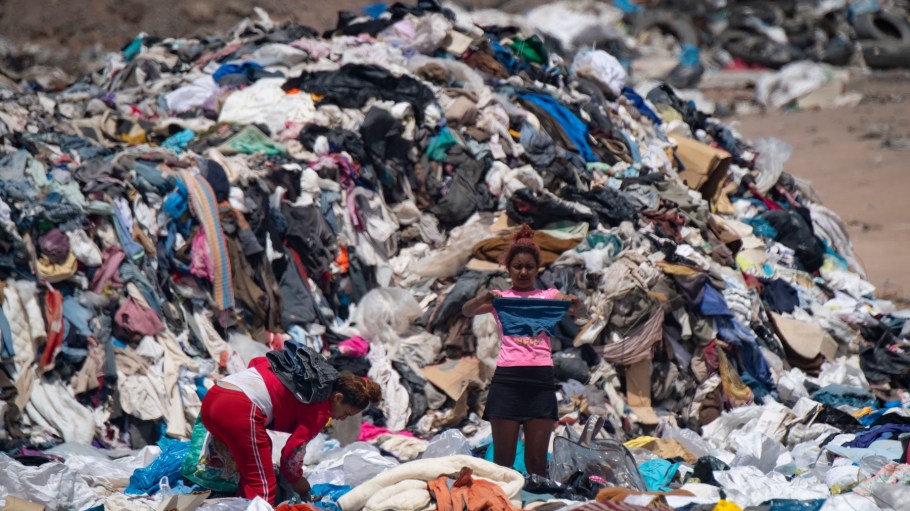
Global textile waste exceeds 92 million tons annually, according to the United Nations Environment Program (UNEP). Recycling rates are less than 15 percent; most is landfilled or burned.
Loom Carbon and RTI International have entered a new strategic research collaboration to address the proliferating problem by advancing a credible pathway to textile circularity.
The textile valorization company and independent scientific research institute’s partnership will enable the scaling of Loom’s proprietary thermal chemical recycling platform, designed to turn non-recycled and hard-to-recycle textile waste into “new,” carbon-neutral materials.
Related Stories
“Together with RTI, Loom is demonstrating that blended textile waste can be recycled into valuable resources,” said Kimberly Landry, CEO of Loom Carbon. “This collaboration moves us from pilot to commercial readiness proving textile waste is a resource, not a liability.”
The Singapore-based climate tech company’s process converts mixed and contaminated textiles into high-value outputs that can re-enter industrial supply chains. That includes circular pigments and materials—to replace fossil-derived inputs in textiles, coatings, and plastics—as well as carbon materials that can be integrated into cement, asphalt, and composites—to support infrastructure decarbonization—and excess thermal energy that powers operations efficiently, reducing reliance on external sources.
These pathways, according to the partners, demonstrate how textile waste can be recycled into durable, circular products rather than landfilled or incinerated.
Over the next year, the program will test whether Loom’s recycling system actually works at scale, especially with hard-to-recycle textiles. The goal is to prove the quality of the output and get the technology ready for commercial use, starting in regions where governments are tightening rules around textile waste, including parts of Southeast Asia, Europe and North America.
The 12-month project will take place at RTI’s Pilot Xcelerator (RPX) facility—the only privately owned energy pilot laboratory in North Carolina, according to the nonprofit Research Triangle Park —used to develop and scale technologies that convert agricultural waste into biofuels, capture carbon emissions, and produce low-carbon-intensity aviation fuels.
The plant helps startups, commercial partners , and government-funded teams scale solution-oriented technologies from the lab to real-world applications with speed and spirit.
“We are proud to leverage RTI’s world-class Pilot Xcelerator facility as well as our expertise in process engineering and emissions validation to help accelerate a proven, scalable solution to textile waste,” said David Dayton, senior fellow and director of biofuels at RTI International. “Together, we aim to deliver real, sustainable benefits as this technology moves toward commercial deployment.”