Upholstery textile and faux leather manufacturer Nassimi has been tracking and benchmarking its sustainability initiatives internally since 2015, but now the company is publicizing its progress for the first time with its inaugural sustainability report.
The report chronicles the company’s actions across environmental and social responsibility, from its sustainable material innovations to its facility and process updates that provide a lower carbon footprint.
“We started collecting data several years ago, and at this point in time the data has become meaningful and demonstrates trends,” Iwan Nassimi, executive vice president at Nassimi, told Sourcing Journal. “We decided to publicly share our sustainability metrics now because we believe in transparency and accountability.”
Related Stories
Nassimi’s actions are guided by the United Nations’ Sustainable Development Goals and the company’s own science-based targets that it set in 2022. The company’s SBTs cover emissions from Scope 1, or its own operations, and Scope 2, which includes its energy purchases. By 2030, Nassimi targets a 25 percent reduction in greenhouse gas emissions and a 25 percent lower energy consumption.
To accomplish its energy goal, Nassimi is generating renewable energy through sources like solar power and building in efficiencies that reduce its consumption. For instance, non-electric ventilation systems provide airflow without blowers or fans, while Low E glass windows and roof panels have been installed in the company’s headquarters and all of its production facilities to provide more natural light. For GHG reduction, Nassimi entered a partnership with One Tree Planted in 2021, and together they have planted 20,000 trees to-date.
Nassimi’s SBTs also include shrinking its water usage by 25 percent. In service of this target, its production facilities have capabilities to capture and reuse water, and they are also outfitted with rainwater harvesting systems on the ground or roofs.
Additionally, the company established an SBT to reduce material waste by 25 percent. The work toward this target began by assessing the waste in its production process in 2022. To actively lower waste, Nassimi’s manufacturing facilities have programs to reduce or recycle materials used in production, including paper. For instance, when release paper used to make textiles gets worn out, it’s given a second life as packing materials. Outside of manufacturing operations, from 2019 to now, Nassimi’s headquarters shrank its paper footprint by 60 percent.
The sustainability report comes on the heels of the company’s commitment to fully eliminating PFAS (per- and polyfluoroalkyl substances) from its products by 2024. Commonly used to imbue textiles with stain and water resistance, PFAS are considered “forever chemicals” that persist in the environment, including bodies of water and soil. Although Nassimi made this choice ahead of legislative pressure, last fall, California passed a bill banning PFAS in clothing and textile products starting in 2025.
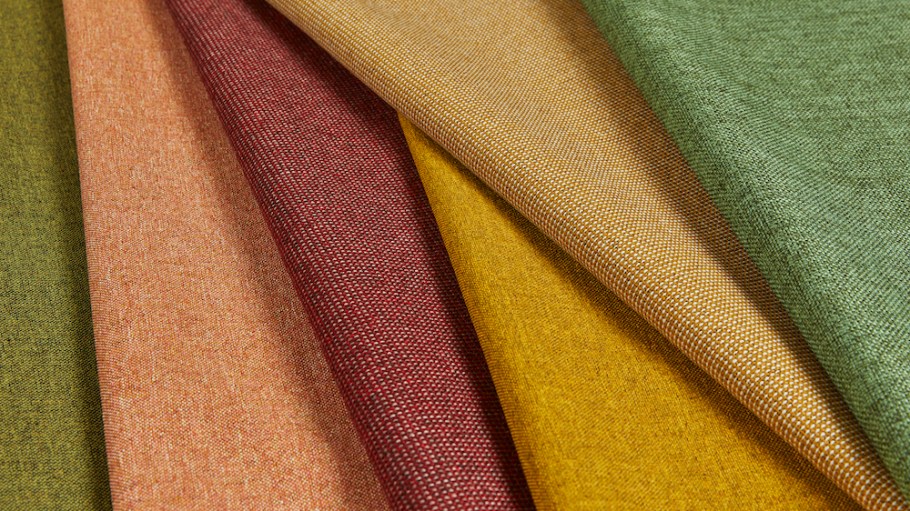
To provide liquid resistance without PFC or PFAS, Nassimi created Supreen in 2020. This textile is made from silicone, polyester and polyurethane and has a woven look. As part of its development effort, Nassimi investigated which solutions being used for the performance and outdoor spaces could work for its own needs.

“Achieving sustainability goals requires active collaboration with our supply and manufacturing partners, as well as with customers,” said Nassimi. “We hold our partners to a high standard and foster open communication, knowledge sharing and joint problem-solving to drive sustainable solutions throughout the supply chain.”
The report also traces some of Nassimi’s earlier milestones in product sustainability over the last two decades, starting with its launch of a PVC-free faux leather in 2000. In 2013, the manufacturer removed phthalates from its PVC, and four years later, it eliminated antimicrobial, antibacterial and flame-retardant chemicals from its full product range.
“Over the past years, we have been fortunate to accomplish many [industry] firsts,” said Iwan. “That said, we aren’t resting on our laurels and know that we have more work to do.” He hinted about a “sustainable performance innovation” that will be coming out in the next year.
When it is developing new fiber innovations, Nassimi focuses on three must-haves: the physical design or aesthetic, performance and sustainability. “Balancing performance and sustainability can be seen as a challenge, but it doesn’t have to be,” said Nassimi. “Creating a sustainable option, without sacrificing durability or performance usually just requires more attention to the details, and going the extra distance.” This “distance” includes research and collaboration up and down the supply chain.
In addition to environmental sustainability, Nassimi is focused on creating a positive work environment, including talent and education development. The plants growing at its facilities also serve a dual purpose of capturing carbon and providing a space for workers to relax.
Following the launch of its first report, Nassimi will publish the report on an annual basis going forward. “By sharing this data, we aim to demonstrate our commitment to sustainability and inspire others in the industry to join us in our efforts,” said Nassimi. “We believe that sharing our progress and challenges can foster collaboration and innovation toward a more sustainable future for our company and the entire industry.”