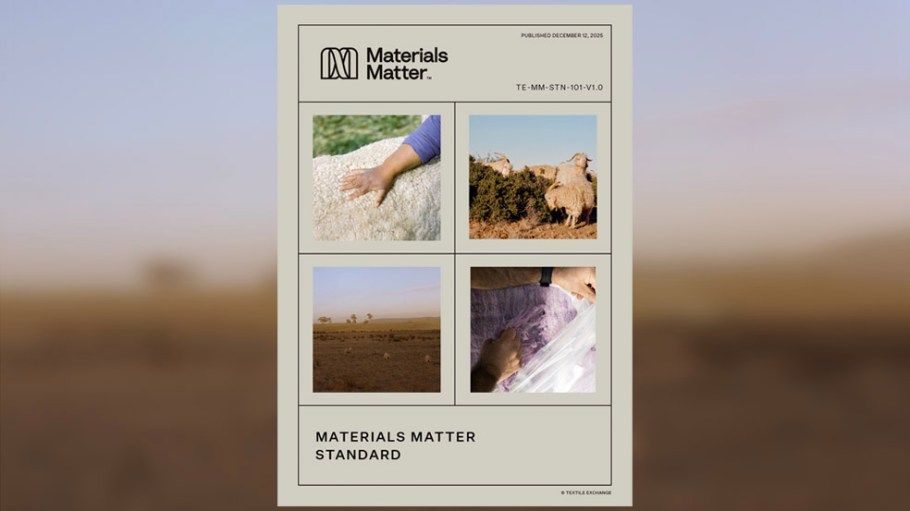
Global nonprofit Textile Exchange has published the final criteria for its Materials Matter Standard, a unified, impact-driven standards system for raw material production and primary processing in the textile industry.
Textile Exchange began developing the framework for the Materials Matter Standard in 2021 with the goal of aligning the ambition, rigor and expected results of its material-specific standards into a more coherent, science-aligned way to measure and verify impact. For more than two decades, the Textile Exchange has been developing and maintaining material sustainability standards, with more than 90,000 sites worldwide certified by at least one of its programs, including the Global Recycled Standard and the Responsible Wool Standard.
Related Stories
To create a more streamlined system, the Textile Exchange worked with stakeholders across the supply chain to design and test a framework that is robust and workable in production systems. The standard is built on a combination of practice- and outcome-based expectations, and includes comprehensive criteria for land management, animal welfare, human rights and the livelihoods of workers. The Materials Matter Standard also addresses primary processing, which includes water, chemical and energy use, as well as waste and emissions management.
“The Materials Matter Standard is more than a certification; it’s a commitment to driving measurable impact at the very start of the supply system,” said Claire Bergkamp, CEO of the Textile Exchange. By aligning expectations and outcomes across the industry, this standard accelerates progress toward climate and nature goals and ensures that sustainability becomes a shared responsibility.”
Textile Exchange collaborated with a designated international working group made up of brands, suppliers, producers, NGOs and technical specialists to develop drafts and a pilot version of the standard, which was tested in key material production regions from Peru to Italy. That testing allowed the Textile Exchange to further refine the standard’s criteria to ensure alignment with the ISEAL Code of Good Practice for Sustainability Systems, which provides a globally recognized framework that defines practices for effective and credible sustainability systems.
The first version of the Materials Matter Standard includes all materials currently covered by the Textile Exchange’s Responsible Animal Fiber framework, including wool, alpaca and mohair, as well as recycled materials falling under the Global Recycled Standard and the Recycled Claims Standard. The Materials Matter Standard also will include organic cotton, as the Textile Exchange will gradually incorporate the Organic Cotton Standard into the new system. The Textile Exchange said this transition will preserve essential functions such as traceability while strengthening the system to enable more holistic, farmer-centered outcomes.
The organization said it plans to expand the Materials Matter Standard system through additional partnerships with credible programs that align with the Textile Exchange’s vision for climate and nature impact. This includes exploring ways to incorporate fibers such as cotton produced through preferred systems, along with man-made cellulosic fibers.
“The Materials Matter System strengthens integrity, reduces complexity and connects
best practices to real outcomes,” said Ashley Gill, chief standards and strategy officer at the Textile Exchange. “By consolidating our existing standards into one system, we’re creating a clearer, more scalable pathway to systemic change across the textile and apparel industry.”
To aid businesses with compliance, the Textile Exchange also released the Material Matters Claims and Labeling Policy, which guides brands in clearly and accurately communicating certification by the standard to consumers. The organization said it will continue to offer practical guidance over the coming months to assist partners with certification and piloting procedures outlined in the new standard.
The Materials Matter Standard will be effective on Dec. 31, 2026, to give sites time to be certified before the program becomes mandatory on Dec. 31, 2027. In the meantime, organizations can continue to use the Textile Exchange’s current standards.