Fashion is heating up, and not just on the runway.
The global South—where most apparel production occurs—may have always been hot, but human-driven climate change is exacerbating the increases. Last year was the warmest on record, with 26 more days of extreme heat than previously registered, according to researchers. For countries closer to the equator, that extreme heat was all the more, well, extreme.
And the workforce of the global South is feeling the burn. Garment employees report oppressive conditions that make functioning—let alone working—impossible, due to headaches, dizziness, cramps and fatigue resulting from the heat. If these common symptoms of overheating and dehydration are ignored, organ failure and even death can ensue.
Related Stories
Ko Barrett, deputy secretary-general of the World Meteorological Organization, previously said heat is “becoming the silent killer,” causing a scale of premature deaths and economic costs, including reduced labor productivity.
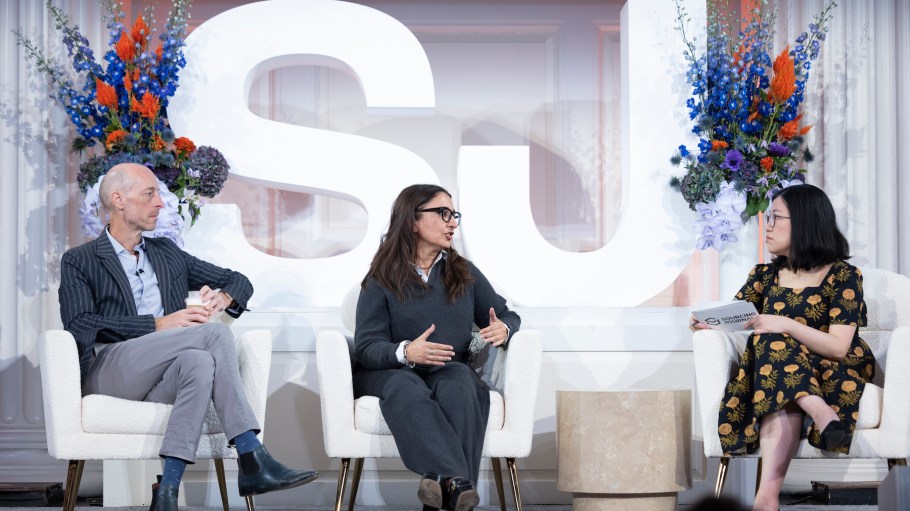
Cornell Global Labor Institute’s executive director, Jason Judd, joined Pakistani denim mill Crescent Bahuman Limited’s advisor of sustainability, Naurin Muzaffar, for a conversation on what this means for the textile sector at large during a panel titled “Climate Change and Industry Impact” at Sourcing Journal’s Fall 2024 Summit, moderated by sourcing and labor editor Jasmin Malik Chua.
The New York land-grant college explored what Cornell called the “climate breakdown” and its impact on apparel production in partnership with global investment firm Schroders. While most of the analysis was around mitigation and decarbonization, it also examinded how extreme heat and intense flooding manifest in workers’ lives.
The analysis confirmed that extreme heat and flooding are genuine threats, to the tune of $65 billion worth of export earnings across four major production hubs.
“We took 2030 production centers and ran the model so that we could estimate how many days in each year the wet bulb globe temp, this heat and humidity index, would exceed the threshold of 30.5 degrees Celsius. The answer is a lot, especially in places where apparel production is a big deal,” Judd said. “Those numbers are not encouraging.”
He’s right. A worse-cast-scenario environmental disaster, such as a 100-year flood, is now possible every five to 20 years. And while flooding is “dramatic,” Judd said, it’s really the heat that is doing the most damage.
“It’s heat that eats away at earnings and worker health,” Judd said. “In the last slide, we show the numbers—they’re a little frightening—you can see in an industry that adapts, that makes necessary investments to reduce heat and protect against flooding. It’s a little grim but it’s not as dark as these figures make it look because there are investments that suppliers and brands together can make to reduce impact.”
While Cornell highlighted the difference between climate mitigation and climate adaptation, do suppliers also see this distinction? Is one worth more than the other? For Muzaffar, the distinction is clear. The issue is not weighing one more than the other—rather, it’s in viewing and communicating mitigation and adaptation through a supplier-focused lens.
“From a supplier point of view, there is definitely a difference. From an industrial point of view, there’s definitely a difference. But unfortunately, what’s happening for the last many years, we do not see that changing anytime soon,” Muzaffar said. “As the players, we’re trying to bring this topic into the mainstream conversation, but we are failing as suppliers, and I think we’re failing as an industry.”
While harsh, Muzaffar makes a point: Brands and retailers consistently give suppliers their emissions reduction targets. But how successful can these collective targets be, if the suppliers attempting to meet them are all coming from different baselines and abilities? Why is a supplier in China given the same target as another in Pakistan?
“We do not, as suppliers, get an opportunity to talk about decarbonization, let alone adaptation,” she continued. “As suppliers, our targets are set for us. We do not have a say in it. As manufacturers, we have a responsibility to reduce, but we cannot—we do not—have a conversation around it with the brands and retailers we work with.”
With that in mind, the shared responsibility of adaptation and mitigation between suppliers and brands is another undiscussed conversation. If these conversations keep going unsaid, it’s not just the fashion industry that will pay the price.
“I think, I mean, it’s in front of us: we’re seeing the deterioration happening. Unless there is that conversation and that engagement, we are all doomed,” Muzaffar said. “If we don’t address it, the industry just does not survive. Nobody survives.”