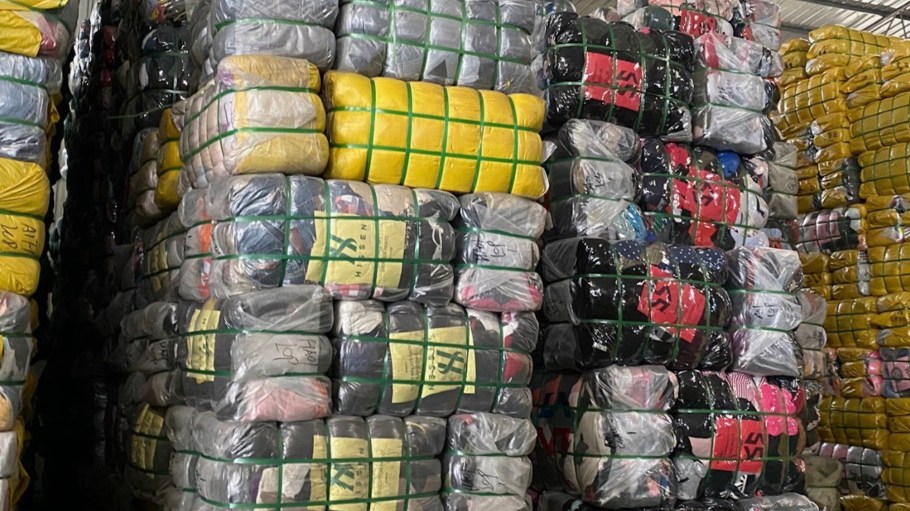
The European Union is proposing changes to the Basel Convention that would subject textile waste to stricter rules—including a potential ban on exporting “hazardous” textile waste. The question remains: Should the international trade of used textiles be regulated as “waste” under this global treaty?
The Secondary Materials and Recycled Textiles (SMART) Association, for one, doesn’t think so.
The global body, representing the used textiles and circular trade sector, argued that such measures, while well-intentioned, are based on flawed data. SMART submitted a formal response to the United Nations Environment Program (UNEP) and the Basel Convention in strong opposition to the proposals that would reclassify used textiles as “waste,” “hazardous waste” or “plastic waste.”
Related Stories
More specifically, SMART urged the Basel Convention—an international agreement to control the transboundary movement of hazardous waste—to reject reclassifying secondhand textiles. The association warned that such a move would dismantle an otherwise well-functioning global reuse system; in turn, threatening millions of livelihoods in the Global South and stalling real circular progress.
“Used textiles are not waste—they are the backbone of the global circular economy,” Franken said. “If we classify secondhand clothing as hazardous or waste, we risk destroying the very system that’s already delivering real environmental and social impact at scale.”
The core of SMART’s position is that secondhand clothing (SHC) is a valuable commodity, not waste. A central pillar of the Virginia-based organization’s argument is that policy discussions have been disproportionately influenced by unsubstantiated figures regarding waste levels in secondhand textile shipments. To that end, SMART shared research data confirming that 80-95 percent of used textiles are reusable or recyclable, with 5-10 percent proving unwearable—findings that “directly refute commonly cited, flawed estimates about high waste volumes.”
The association urges UNEP and Basel Convention parties to adopt a more nuanced and evidence-based approach. SMART’s recommendations begin with a call for international frameworks to first clearly distinguish reusable goods from actual waste. Building on this, the association asks for the formal recognition of the four distinct and legitimate trade flows of used textiles: unsorted mixed collections, items sorted for reuse, materials sorted for recycling, and textiles sorted for repurposing.
Emphasizing the environmental benefits of reuse, given that the eco-lever drastically diminishes carbon emissions compared to producing new garments, SMART said that textiles should be clearly distinguished as valuable goods, not as waste streams. Ultimately, the organization recommended that policy efforts be redirected to address the true root cause of the issue—overproduction and fast fashion—primarily through strengthened Extended Producer Responsibility (EPR) measures.
“Our submission provides a comprehensive, evidence-based analysis on the realities of the global used-textile trade,” Franken said. “The path to genuine circularity lies in smart, collaborative policy that addresses overproduction and poor design—not by restricting the reuse, recycling and repurposing systems that are already delivering results worldwide.”
SMART urged the Basel Convention to adopt a balanced, evidence-based approach through four key recommendations. That includes clearly distinguishing reusable goods from waste within international frameworks and trade codes (HS 6309 and 6310).
The submission strongly opposes the application of “burdensome” Prior Informed Consent (PIC) procedures—what the organization said would create prohibitive administrative barriers, per the letter. The international trade association also requested that the parties recognize distinct textile reuse and recycling flows to safeguard legitimate circular trade and focus regulatory efforts.