Regenerative-material supply chain startup Ponda announced the close of its $2.4 million seed funding round.
The UK biomaterials company’s oversubscribed round was co-led by Faber Ventures in Lisbon and Counteract in London, with participation from PDS Ventures, Evenlode Impact and the Royal College of Art.
“The Ponda team embodies the rare combination of deep scientific expertise and visionary regenerative leadership,” Matt Isaacs, co-founder and partner at Counteract, said. “Their ability to navigate the frontier of wetland regeneration and material science to develop the scalable, carbon-negative solution of BioPuff is profoundly impressive.”
Related Stories
The latest raise brings Ponda’s total funding to $6.5 million, combining venture capital with substantial non-dilutive support from Innovate UK as well as international recognition through the H&M Foundation’s Global Change Award and King Charles III’s Terra Carta Design Lab, the Imperial College London and Royal College of Art spin-out said.
And Ponda has been developing novel and regenerative materials for the fashion industry over the last five years, “on a mission to regenerate carbon-emitting wetlands and create a more sustainable future for people and the planet.” And now, the Bristol-based startup formerly known as Saltyco has announced its seed fundraising round, to be used to commercialize its flagship insulation, BioPuff.

“That’s what innovation is about; finding unique ways to solve modern challenges,” said Julian Ellis-Brown, chief executive officer of Ponda. “We really feel the answer lies in these incredible wetlands ecosystems where we source our materials from—there’s so much that hasn’t been truly explored for the natural fibers and materials we use for 99 percent of the materials we use.”
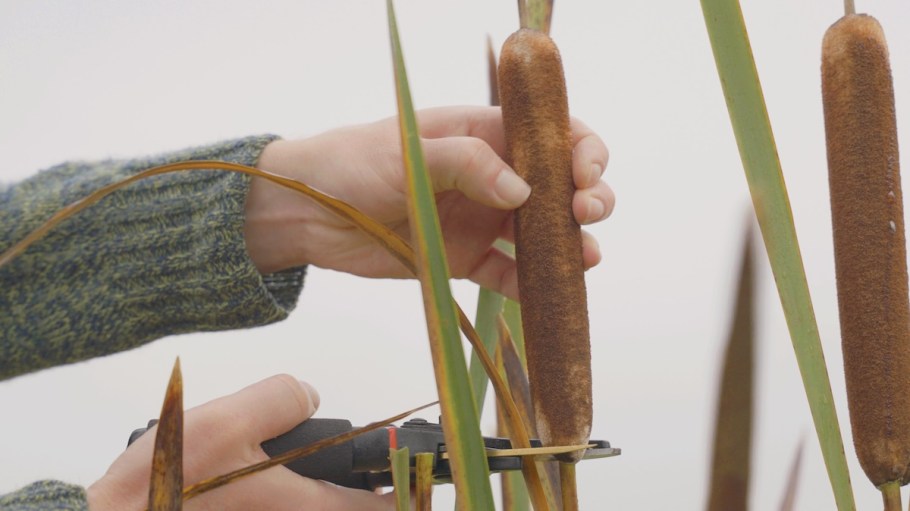
That said, most wetlands are in a rather sad state—siphoned for farming or grazing animals as well as meat and fiber production and annually releasing around two gigatons of carbon dioxide globally. To that end, Ponda works to regenerate areas of drained and damaged wetlands back into the oases of carbon sequestration and then works with the farmers to grow specific plants that Ponda can use. Those plants include cattails, which thrive in wet and marshy conditions. These perennial bio-remediators, known for extracting heavy metals and, potentially, PFAS, are harvested for BioPuff.
“After this year’s flooding, it’s obvious that restored wetlands can play a pivotal role in protecting farmland and farmers’ livelihoods,” said Will Barnard, a farmer in Ponda’s supply chain. “Working with Ponda shows these landscapes can stay productive even under pressures like climate change and create new commercial opportunities. Initiatives like this help push the government’s agenda forward while strengthening rural resilience and future income streams.”
BioPuff is a first-of-its-kind, plant-based insulation made from Typha, a wetland crop cultivated through paludiculture: the rewetting and sustainable cultivation of degraded peatlands. It’s made by extracting fibers from plants that aid in wetland regeneration, designed to keep wearers warm whilst revitalizing some of Earth’s most important ecosystems: drained wetlands. Peatlands are responsible for about 5 percent of human-caused global carbon emissions—and that’s from soil, not cars, as the exposed peat decomposes and releases carbon dioxide.
“There’s no way to reduce those levels other than by rewetting the land,” Ellis-Brown said. Ponda’s next-generation insulation reduces reliance on feather and synthetic fillers; the company estimated that swapping current jacket fillings with BioPuff can regenerate 10 square meters of land and abate 40 kilograms of carbon dioxide.
“We’ve designed BioPuff to meet the demanding performance standards of leading brands as a direct alternative to synthetic and animal-based insulation, while remaining cost competitive to enable widespread adoption,” he continued. “Every jacket filled with BioPuff doesn’t just avoid emissions, it directly funds peatland restoration, one of the planet’s most powerful carbon sinks.”
The cellulosic cattail fiber is spun into wadding with a 20 percent binder currently made from a biodegradable poly filament, as used to secure those fibers together. The company’s Bristol facility now houses pilot-scale fiber processing, blending and prototyping capabilities—what Ponda said allows for the rapid testing and delivery of BioPuff, offering equivalent thermal properties to goose down while being significantly cheaper, at industrial standards.
“By coupling regenerative coastal wetland farming with an advanced material with strong potential in textiles and beyond, Ponda is well positioned to unlock significant business opportunities across multiple industries while delivering meaningful biodiversity impact at scale,” said Rita Sousa, partner at Faber Ventures.
Ponda has already partnered with global names such as Berghaus, Stella McCartney, Parley for the Oceans and Sheep Inc., “providing material prototypes and co-developing garments that demonstrate BioPuff’s performance in real-world conditions,” the company said. While early collaborations emphasized outdoor and fashion garments, Ponda said BioPuff can be used for various applications and sectors requiring lightweight, warm and durable insulation.