Polyester lives forever, or so the common wisdom goes.
Ciclo offers a way to dissolve polyester in textiles so it doesn’t linger in the environment for too long, but a team of researchers in Copenhagen has discovered a cheap and easy way to isolate PET, the most common kind of plastic, and remove it from common poly-cotton textile blends. The researchers say 60 million tons of polyester are produced annually, but only 15 percent gets recycled.
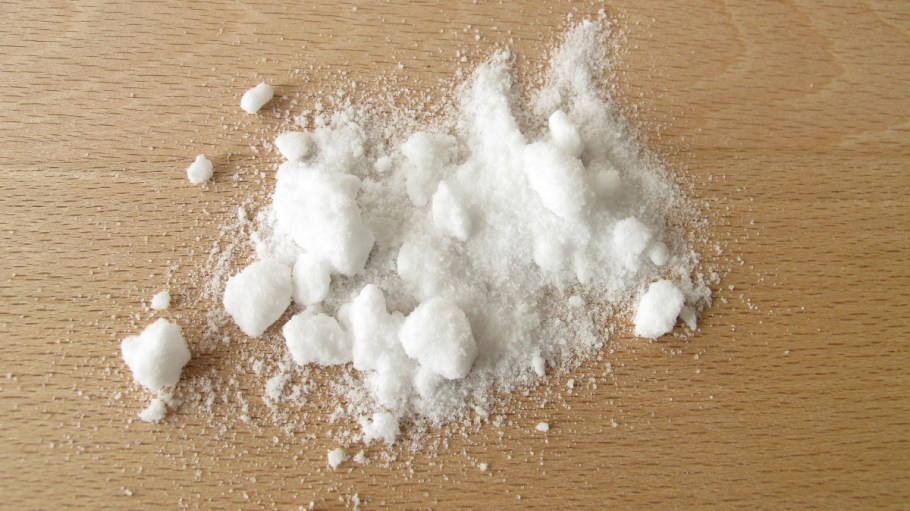
Separating the synthetic component is done by putting the fabric in a mixture with a common household ingredient called hartshorn salt, a leavening agent in baked goods that consumers might know as baker’s ammonia. Also called ammonium bicarbonate, when it is put with the fabric, along with a non-toxic solvent, and heated for 24 hours at 320 degrees Fahrenheit, the liquid mix settles into distinct layers of plastic and cotton fibers, much as oil separates from vinegar.
Related Stories
During the process the ammonium bicarbonate gets broken down into ammonia, CO2 and water, with the ammonia and CO2 acting as an agent that liquifies the polyester but spares the cotton fibers. The mild nature of the combined chemicals ensures that the cotton fibers remain intact, although ammonia is toxic on its own.
“It’s a simple and cost-effective process,” said Shriaya Sharma, a doctoral student and co-author of the study by the Jiwoong Lee group at the University of Copenhagen’s department of chemistry.
The research team succeeded in the challenge of eliminating the polyester while conserving the cotton. Previously, the scientists discovered that CO2 could be used to break down nylon, which led them to experiment with hartshorn salt. They were encouraged to see it work on PET beverage bottles first, then pleased with the results they got with the polyester textile.
“It was indescribable,” said Carlo Di Bernardo, a doctoral student and co-author of the study. “That it was so simple to perform was nearly too good to be true.”
Derivatives of hartshorn salt used on polyester-blend textiles have only been tested in labs at the University of Copenhagen but scientists see the potential of depolymerizing polyester down to its monomers while salvaging the cotton, according to Yang Yang, a postdoc in the Jiwoong Lee group at the school. They see its scalability and potential for keeping textiles out of landfills or getting incinerated, with all that implies for the environment.
“This traceless catalytic methodology could be the game-changer,” he said.