Material World is a weekly roundup of innovations and ideas within the materials sector, covering what’s changing in how fashion is made, scaled or engineered from emerging biomaterials and alternative leathers to sustainable substitutes and future-proof fibers.
Carbios

French biotech firm Carbios has pushed construction of its flagship PET biorecycling plant in Longlaville, France, by three months, citing the need to finalize project financing. The delay, announced Dec. 18, does not change the company’s commitment to completing the facility, which is expected to supply recycled materials to apparel partners including Patagonia, Puma and Salomon.
Related Stories
Roughly 10 percent of the project’s total financing remains unsecured. Carbios said it has already locked in pre-commercialization contracts covering nearly 50 percent of the plant’s future production capacity, with a near-term target of reaching 70 percent. Those agreements span cosmetics, beverage and tire textile filament applications, underscoring what the company described as strong demand for biorecycled polyethylene terephthalate (PET).
The Longlaville project is backed by 42.5 million euros ($49.98 million) in public funding, with Carbios aiming to close the remaining financing by the end of the first quarter of 2026. The company said it expects to end 2025 with more than $64.5 million in cash, providing visibility beyond the next 12 months. The plant is structured as a non-recourse project, meaning any debt would be secured against the facility itself rather than Carbios’ balance sheet.
With the revised timeline, commissioning is now targeted for the first half of 2028, pending financing completion. Separately, Carbios said it remains focused on scaling its technology through licensing, pointing to a December 2 agreement with Wankai New Materials to deploy its PET biorecycling technology in Asia. Additional licensing deals are being pursued across Europe, North America and South America.
Milliken & Company
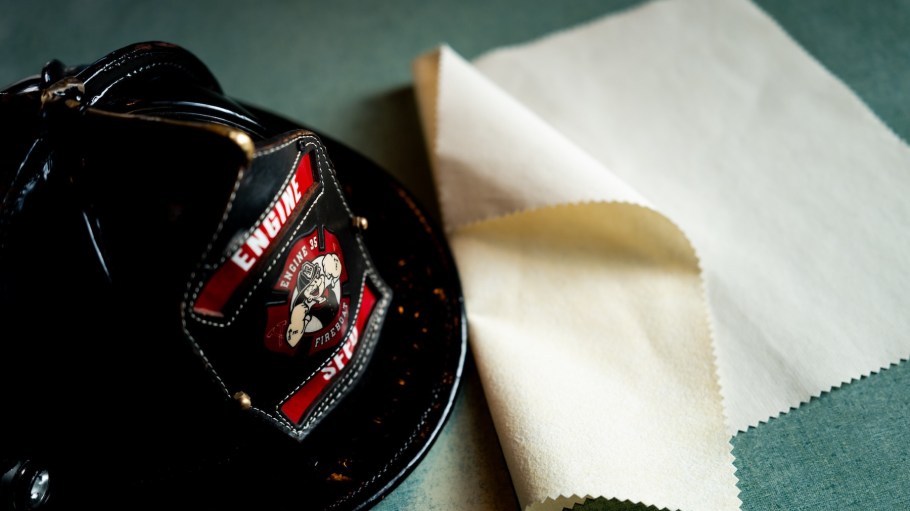
The San Francisco Fire Department (SFFD) has become the largest fire department in the United States to transition its entire fleet to non-PFAS turnout gear, Milliken & Company announced, referencing Milliken Assure—a PFAS-free flame-resistant moisture barrier for firefighter turnout gear in North America.
The textile innovator reported that the gear was purchased in part through a $2.35 million Assistance to Firefighters Grant (AFG) from the Federal Emergency Management Agency (FEMA) and matching funds from the department. And the department worked with Milliken and the personal protective equipment (PPE) manufacturer Fire-Dex to fulfill the order, with the first shipment delivered earlier this month. The department shared plans to receive 1,100 sets of non-PFAS turnout gear—one set for every frontline suppression member—by the end of the month.
“Transitioning to PFAS-free equipment is a critical step in advancing our mission: safeguarding the public by ensuring our firefighters remain healthy and able to serve at their highest capacity,” said Dean Crispen, fire chief of the SFFD. That transition follows an ordinance passed last May to make San Francisco the first stateside city to ban the use of PFAS chemicals in its firefighters’ turnout gear—with a June 30, 2026, deadline to make the switch.
“A non-PFAS moisture barrier was the missing piece for departments wanting to move away from fluorinated chemicals,” said Marcio Manique, senior vice president and managing director of Milliken’s apparel business. “With Assure, we refused to trade one hazard for another. It meets the strictest performance standards without adding weight or compromising breathability—giving firefighters exactly what they asked for.”
By design, Assure eliminates two chemistries that have long been used in moisture barriers: per- and polyfluoroalkyl substances (PFAS) and halogenated flame retardants. Its lightweight and breathable construction joins Milliken’s portfolio of non-PFAS fire service fabrics. It’s certified to both NFPA 1971-2018 and NFPA 1970-2025 standards, with the selected gear undergoing performance and safety testing, including a 90-day wear trial with 50 firefighters participating in live-fire training.
“We’re grateful to work alongside Milliken and MES in delivering this solution,” said Jeff Koledo, vice president of sales at Fire-Dex. “Our goal has always been to provide fire departments across the country with options that meet their needs—and ultimately ensure they have the essential protection required to keep their communities safe.”
Nan Yang Textile Group
Vertically integrated textile group Nan Yang has been honored at the International Innovation Awards (IIA) 2025, organized by the non-governmental organization Enterprise Asia, for the development of its 360-degree stretch fabric, Elitech.
The annual IIA program recognizes outstanding innovations and, in the process, encourages organizations to continue investing in such efforts.
“This award reflects our ongoing commitment to driving textile innovation forward,” the organization said on LinkedIn. “Nan Yang Textile Group will continue to pioneer the fabric solutions of the future—enhancing quality of life and advancing Thailand’s textile industry toward a sustainable global presence.”
Elitech 360 is a lightweight, high-performance fabric engineered with complete stretch to enhance mobility. It combines a specially developed elastic synthetic yarn with an equally specialized knitting technique to achieve a woven-like appearance and stretch—without using spandex. The fabric is quick-drying, wrinkle-resistant and highly durable, maintaining its color and appearance even after more than 150 washes. Selected constructions provide permanent UV protection.
Lvcy Pearl x UrbanGeekz
Lvcy Pearl, a startup founded by British-Nigerian designer Shina Xifregas, has developed a modular handbag system called Building Bags that lets multiple small clutch-style bags physically connect into one larger bag, then detach again.
“Most handbags give you one shape, one look and one purpose—whereas what I’m bringing to the market is a bag that, in effect, can have its size and look change repeatedly,” Xifregas said.
The system is patented (granted, not pending) in the UK, Italy, France and China. The product is currently seeking funding via an active Kickstarter campaign operating under the platform’s all-or-nothing model. That said, the funds raised are intended for initial production and manufacturing, not R&D.
Each unit is a fully functional, standalone clutch, though multiple units can be mechanically joined to create a larger bag with a shared internal compartment. Users can reconfigure size and shape by adding or removing components. The novelty claims rest on physical modularity— not software, digital customization or interchangeable straps.
To note, UrbanGeekz didn’t fund, license, or distribute the product; rather, the multicultural digital news platform is simply amplifying its presence, aligning with its mission to highlight underrepresented founders and tech-forward entrepreneurship.
“Our goal is to shine a light on bold ideas and the talented founders driving them forward,” said Kunbi Tinuoye, founder and CEO of UrbanGeekz. “This invention introduces a new way of thinking about design, fashion and engineering.”
Desert Harvest
Vitamin and supplement supplier Desert Harvest has dropped Lunation: what the Whitefish, Montana-based company is calling “life proof underwear.”
“Lunation was born from walking in real women’s shoes—especially those with interstitial cystitis,” said Heather Florio, CEO of Desert Harvest. “It’s care, comfort and confidence all rolled into one.”
Desert Harvest’s patented period-absorbing underwear is made from a unique combination of plant-based, natural-origin fibers from aloe vera—offering antimicrobial, antibacterial and moisture-wicking properties. Lunation features five specialized layers—including a ginger fiber layer and a bamboo fiber layer—to hold three tampons’ worth of protection. It’s machine washable and reusable, too.