Waste not, want not, right?
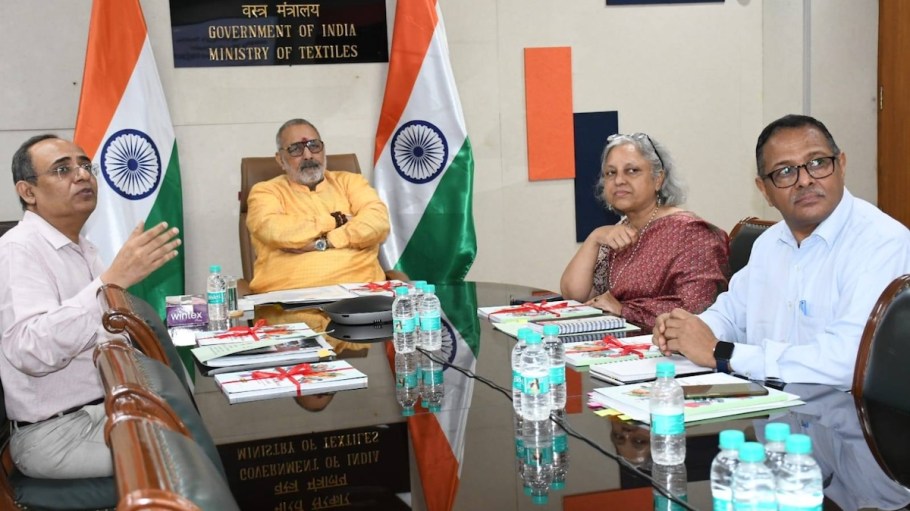
India produces over 70.7 million metric tons of textile waste every year, a new Ministry of Textiles report revealed. Yet the nation maintains high recovery rates, with over 70 percent of total waste—and more than 95 percent of pre-consumer waste—being recycled or reused, according to the state’s latest report, released by Union Textiles Minister Giriraj Singh.
India’s textile recycling market could reach $3.5 billion by 2030, with the potential to generate green jobs—something Singh said underscores the urgency to bolster the region’s recycling infrastructure.
Related Stories
“As the world moves toward more sustainable and responsible forms of production, India has both an obligation and an opportunity to lead. The challenge of textile waste is central to this moment,” he said. “How we manage the materials we use—and reuse—will shape not only our environmental footprint but also our industrial competitiveness in the years ahead; addressing this challenge with clarity, purpose and innovation is essential if we are to build a future-ready textile ecosystem.”
The report, titled “Mapping of Textile Waste Value Chain in India,” outlines a plan based on data to turn textile waste into a valuable economic asset and provides practical ways to recycle, reuse and recover materials, he continued. Commissioned and released by the nation’s federal body, the study examined waste before and after product use and identified recycling methods in relevant manufacturing areas, suggesting policies to make India’s textile industry more circular.
“Our country has a long tradition of valuing resources, repairing what we own and extending the life of materials. As we modernize and expand our textile capacities, these values must remain at the heart of our progress,” Singh said in the report. “A cleaner, more efficient and more circular value chain is not only an environmental aspiration—it’s an economic imperative.”
For Pabitra Margherita, the Indian government’s minister of state for external affairs and textiles, what stands out in this study is its close attention to the realities on the ground.
“By drawing on the experiences of recyclers, workers, manufacturers and local collection networks, it offers a clearer understanding of how materials move through the system,” Margherita said in the report. “These insights are essential for developing approaches that are fair, practical and inclusive—especially for the small and medium enterprises and informal actors who support much of our textile economy.”
Among the key findings is the role of industrial clusters in managing textile waste flows. Panipat was identified as the country’s primary hub for mechanical textile recycling, processing an estimated 3,500-5,250 metric tons of waste per day, transported from manufacturing centers across India.
The city’s recycling ecosystem produces recycled yarn as well as finished goods such as mink blankets and felt used in lower-grade textile applications. Other clusters contribute to the system based on their manufacturing specialization. Surat, a major polyester hub, generates roughly 762 metric tons of textile waste per day—about 90 percent of which is polyester—while Ludhiana’s knitting and garment sector produces clip waste that’s largely sent to recycling facilities in Panipat and parts of Uttar Pradesh.
“Strengthening recovery systems in clusters, encouraging modern recycling technologies and improving connections across the value chain can support new livelihoods, reduce environmental pressures and enhance India’s position in global markets,” Margherita said in the report. “As we work towards these goals, it is important that our solutions reflect the needs of our people and the diversity of our industrial landscape.”
A shift toward cluster-level recycling infrastructure to strengthen the value chain was recommended, starting with decentralization. Establishing recycling facilities within each textile hub, per the report, would enable processing closer to the source of generation—in turn, improving efficiency by reducing the logistical burden of transporting waste to distant centralized hubs (like Panipat).
Mechanical recycling remains the most established pathway for textile waste. Chemical recycling technologies, per the study, are gaining ground for their ability to recover fibers at the molecular level and enable textile-to-textile recycling. Longer-term goals include establishing export-grade facilities for recycled yarn within these hubs—to ultimately position India as a global center for sustainable textiles.
“Particularly valuable is the way the report brings structure to a system that is often fragmented and poorly documented,” Secretary Neelam Shami Rao said in the report. “At a time when global sustainability expectations are evolving rapidly, this analysis gives us the confidence to shape India’s response based on evidence rather than assumption.”
India generates approximately 7.8 million tons of textile waste annually and is among the world’s largest contributors to the problem. Unlocking value from this waste represents a significant economic opportunity, according to a report by Fashion for Good, particularly as local and international regulations increase demand for compliant recycled materials.
“Mapping of Textile Waste Value Chain in India: A Comprehensive Look at India’s Textile Waste Ecosystem” was published by the Ministry of Textiles, Government of India, to give “insights into textile waste management practices and emerging circular economy opportunities in the country,” per the apex body.
“We believe circular solutions exist, the challenge lies in achieving scale, speed, and synergy across the value chain,” the report reads. “The transition to circular textiles represents not merely an environmental imperative but an industrial transformation that will determine India’s competitive position in the global textile market for decades to come.”