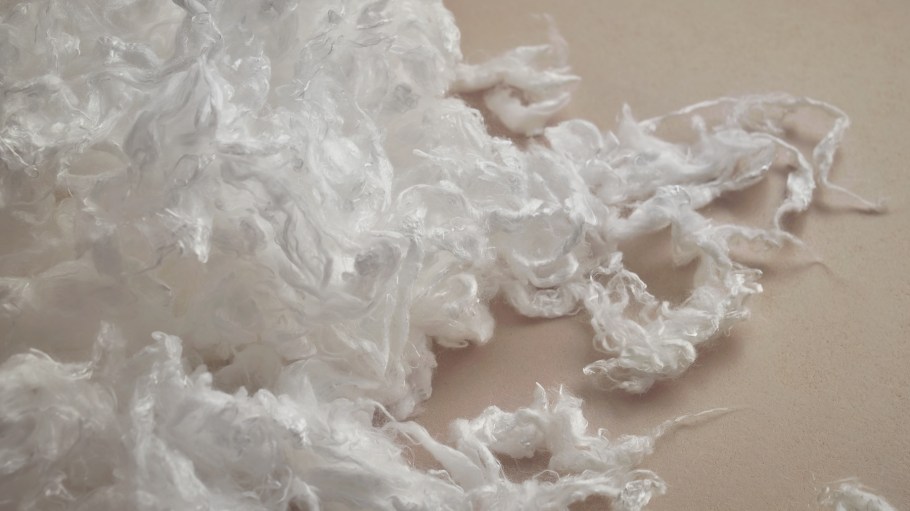
The Lenzing Group has acquired a controlling majority stake in TreeToTextile, a Swedish innovation company that Lenzing said represents the next technological leap in cellulosic fiber production.
“TreeToTextile is among the world’s most advanced next‑generation fiber technologies and represents the most promising development on the market,” said Georg Kasperkovitz, chief operating officer of Lenzing Group. “Since our initial investment in 2025, the collaboration between the innovative TreeToTextile team and Lenzing’s fiber experts has enabled significant technological progress.”
Related Stories
When Lenzing announced its minority stake in October 2024, the Austrian group joined the ranks of TreeToTextile’s other shareholders—retailers H&M and Ikea, pulp manufacturer Stora Enso and family-owned investment firm LSCS Invest; all of which were “united” by the belief that sustainably produced fibers have the power to “change the textile industry to the better.”
Subject to regulatory approvals, per Lenzing’s earlier statement, the execution of that transaction was expected by the first half of 2026; Lenzing said the controlling stake’s transaction would be executed through the issuance of new shares. Which means that now, Lenzing brings its 85-plus years of experience in scaling new fiber technologies to the table, accelerating the next phase of growth for the Stockholm-based company.
“We are fully committed to the joint scale‑up and commercialization,” Kasperkovitz continued. “H&M Group, Inter Ikea Group and Store Enso will continue to support this path as minority shareholders, contributing valuable market and consumer perspectives.”
LSCS Invest, meanwhile, reaffirmed its “confidence in the joint technology platform through its long‑standing commitment since the foundation of the company and continued role as a shareholder,” per Lenzing.
The regenerated cellulosic fiber supplier reported that TreeToTextile has 57 employees and operates three facilities; while its headquarters is in Stockholm, the demonstration plant in Nymölla—of which Lenzing shared plans to “significantly increasing” its output and to prepare its first industrial-scale facility. Its R&D center is in Mölndal, Gothenburg.
Established in 2014 by the Swedish entrepreneur Lars Stigsson, TreeToTextile’s mission has been to develop and commercialize a renewable, resource-efficient man-made cellulosic fiber that’s both environmentally responsible and financially attractive to the industry. The Textile Exchange member has two flagship fiber brands: Nyense for textile applications and Nyvado for nonwoven applications. Both are “built upon new technology creating a unique cellulose fiber with distinctive properties and a low environmental footprint.” The fiber equally has the potential to complement or replace part of the cotton, viscose and polyester markets, per the producer.
“Innovation at industrial scale requires time, expertise and strong partnerships,” said Roxana Barbieru, CEO of TreeToTextile. “Lenzing Group’s increased ownership is a clear endorsement of our technology and our ambition to become a major player in the global fiber market.”
With a comparable mission in mind, Lenzing teamed with German mechanical engineering company Karl Mayer to advance warp knitting with scalable cellulose fiber solutions.
“We opted for ring and SIRO compact spinning technology because it guarantees yarns with low hairiness and better performance and quality of the fabrics made from them,” said Bernd Schleuchardt, senior manager of apparel in the business development division at Lenzing. “By combining fiber innovation with downstream processing expertise, we aim to support scalable, industrial solutions that open up new commercial opportunities for cellulose fibers in warp knitting.”
With a capsule to debut during Premiere Vision Paris, the joint innovation project can reportedly identify new, efficient ways to process Tencel Lyocell and Modal fibers with Micro technology on warp knitting machines; combining yarns with reduced hairiness and a high level of homogeneity established the preconditions for processing several thousand threads at maximum speed, per the partners, without lint contamination.
“The project with Lenzing has shown that efficient processing of cellulose fibers on knitting machines is possible by using the right fibers and the right spinning process,” said Markus Otte, senior expert in textile development at Karl Mayer. “We are currently working on optimizations to achieve even higher output.”
The Premiere Vision Paris capsule collection will debut a mix of applications across lingerie, innerwear and lifestyle pieces for everyday wear.