Some fashion companies are finding that resale isn’t just a sustainability initiative—it’s a way to keep their brands relevant, too.
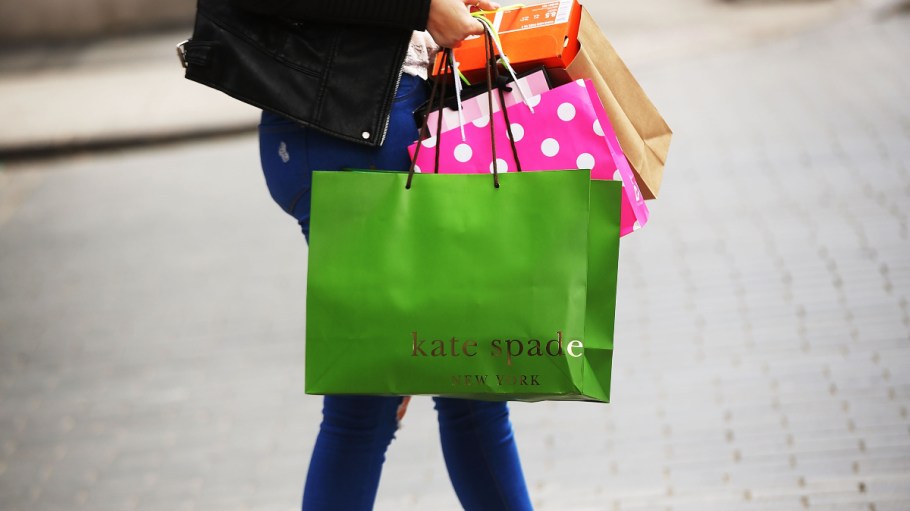
“We really believed in the circular economy; we saw the demand was there, but we also really wanted to make sure that we were appealing to a young and new customer as well,” said Jenny Campbell, chief marketing officer for Kate Spade at The Lead Innovation Summit in New York on Wednesday. “I would say right now 90 percent of the people who come into our pre-loved section are new customers, which is higher than what is normally on our site.”
Related Stories
Kate Spade is still in the “test-and-learn” phase, six months into its pre-loved journey, according to Campbell. However, 35 percent of those new customers are 25 to 34, who may not have the income now for a new Kate Spade handbag, but might someday, and will remember their first secondhand experience, she said.
“I can say right now that there has been absolutely no cannibalization,” Campbell added. “If anything, what I think we’re seeing is lifetime value; you start to build brand loyalty.”
James Reinhart, co-founder and CEO of ThredUp, launched in 2009 as one of the original online resale platform, echoed Campbell’s example that resale can be a valuable customer acquisition tool.
“One of the things brands are starting to appreciate is that resale is not a panacea for all direct-to-consumer challenges, but it is a very important part of staying relevant,” Reinhart said. “I think that’s sort of where the generational transformation is happening, and I think Kate Spade is doing a really good job of getting both the access ease and the relevance piece.”
ThredUp is one platform for resale, but other companies are working to address the challenge of reselling items on other sites that have already been marked for return.
Several technology companies at The Lead Innovation Summit offered solutions solving for this conundrum. Among them was Toronto-based Frate, a returns management software that tries to resell returned items before they even get to the warehouse. It claims to be successful 44 percent of the time, which results in a 21 percent profit increase and 33 percent decrease in emissions per return since launching in April 2022.

“What we do is, during the returns process, the customer actually takes pictures of the items and we assess the condition,” Frate founder and CEO Bailey Newton told Sourcing Journal. “Then we basically say, OK, this should either go directly to another customer, it should go back to the warehouse, or potentially, just don’t even ship it back at all because it’s damaged.”
Newton said using photos taken by customers has resulted in accurate assessments 98 percent of the time.
“If it’s in perfect condition, we’ll tell the customer to hold on to the item for up to seven days and we’ll get you 10 percent off your next order, re-list back on the retailer’s website as a new collection called, like, Eco-Drop so customers know they’re returns coming from other customers,” Newton said. “But if it’s in, say a 2 or 4 condition out of 5, we’ll partner with re-sellers and have it re-listed there. Then, the customer returns it directly to another customer.”
Newton said apparel and footwear brands are some of his main clients. Shoe damage or excessive wear can be easily shown in photos, making the footwear category a prime prospect. He said one footwear client had 60 percent of returns going to the warehouse not in original condition. Now that happens just one time in 50.
“We’re unique in that other return software wants to get it to the warehouse as fast as we can and then figure out what to do with it,” Newton said. “We basically say, let’s add some friction to the returns process and add some optimization.”
The more channels keeping returns out of landfills, the better, Reinhart said.
“Almost 70 percent of the stuff we donate ends up in a landfill,” the ThredUp founder said. “And that’s not because anybody’s being a bad actor; it’s just there aren’t great channels and supply chains that can reinvent this. I think that is the conversation we need to have with brands and consumers—let’s be part of the solution in inventing a new supply chain because I think that’s where we need to go.”