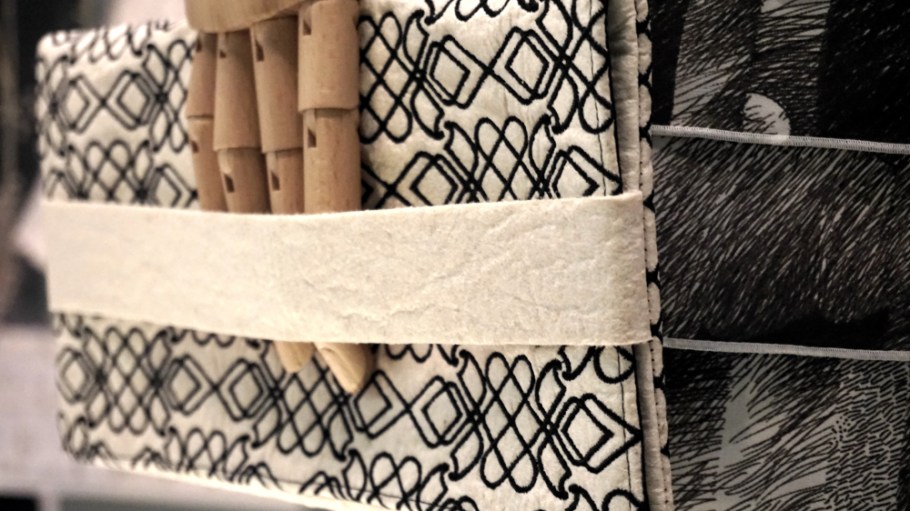
If pineapple “leather” is still a niche fabric, it may not be for long.
The latest company to employ the material? James&Co, a PETA-approved vegan clothing firm that’s poised to debut a line of outerwear and accessories made from Piñatex, a plant-based leather alternative derived from the fibers of a pineapple leaf.
James&Co, which hails from Australia, typically sells jackets clad in conventional faux leather made from polyurethane (PU) and polyester, both petroleum products.
Piñatex, on the other hand, requires neither livestock nor fossil fuel, a feature founder and CEO Anne Hurley found especially compelling once the innovation had time to mature.
Related Stories
“In its initial development, it was not soft or flexible enough for jackets and was adopted for shoes and accessories,” Hurley said. “Earlier this year, I followed up again and it looked to have developed to the stage where it could be used for outerwear.”
James&Co cranked out a sample trench coat and feedback was “100 percent positive,” she added.
The brainchild of Carmen Hijosa, who had come to question the environmental and social impact of mass leather production after years in the industry, Piñatex is produced in the Philippines, where pineapple leaves are usually discarded, left to rot or burned after the fruit is harvested.
Ananas Anam, the London- and Barcelona-based company Hijosa founded, uses roughly 480 leaves from 16 pineapple plants for every square meter of Piñatex. Farmers receive extra income by processing the leaves, which are felted together to form a non-woven substrate, and any leftover biomass from the process can be returned to the pineapple fields as fertilizer. Because the leaves are an agricultural byproduct, they require no additional land, water or chemicals to grow.
Pineapple “leather” is more expensive than vegan leather but can be less so than its animal counterpart, Hurley said. But its best characteristic, in her opinion, is its lack of affectation.
“It doesn’t pretend to be conventional vegan leather or conventional PU,” Hurley explained. “It’s a stunning fabric, in great colors, that makes the statement that it’s an eco-friendly fabric that creates beautiful outerwear as alternative choices to conventional leather and conventional vegan leather.”
Piñatex is increasingly making inroads in the fashion industry, appearing in shoes by Hugo Boss and a dress by Trussardi, among others.
James&Co is currently putting the final touches on its pineapple-inspired range, which it expects to launch before year’s end.
The company is also investigating ways to make its traditional vegan leather better for the planet, by perhaps manufacturing it using water rather than chemicals.
“In addition to our Piñatex line, all our core styles will be made in this eco-friendly fabric,” Hurley said. So James&Co is both vegan and sustainable.”