The H&M Foundation announced a partnership with the Sustainable Environment & Ecological Development Society (SEEDS) to reinforce resilience in a few vulnerable and disaster-prone Indian communities impacted by climate change.
The three-year project (running 2024-2027) is backed with a “financial commitment” of 7.5 million krona (about $681,000) from the Swedish retailer’s nonprofit arm, which the Stefan Persson family privately funds. This funding is expected to benefit a quarter of a million people, emphasizing communities in Assam and Uttar Pradesh.
Related Stories
These regions are hot spots for climate-related calamity, leading to both short-term (death, forced relocation) and long-term (financial strains, emotional distress) disruptions. Thus, the project is taking a multi-phase strategy, triaging emergency response and relief before rehabilitation and reconstruction.
Holistically, the project’s overall objective is to “go beyond” the actual disaster to create sustainable and “equitable disaster-affected” communities. The systems change approach will address policies, practices, resource flows and behavioral change.
“This partnership marks a significant step towards building resilient and sustainable communities in Assam and Uttar Pradesh,” said Kristina Svartling, project manager at the H&M Foundation. “By addressing both immediate relief and long-term recovery, we aim to empower the most vulnerable populations to withstand future disasters and climate challenges. This collaboration is not just about rebuilding what was lost, but about creating a foundation for a brighter, more inclusive future.”
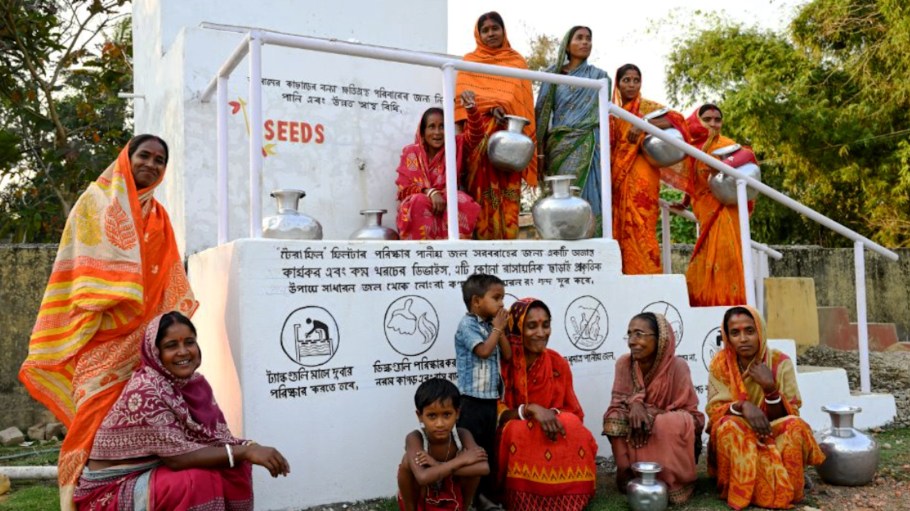
One portion of the budget is for immediate relief efforts— covering water, food, shelter and medical supplies. Most of the financing, though, is funding the long-term recovery efforts. That includes ensuring access to clean water and secure shelters, ultimately equipping these regions with the tools needed to be ready (as ready as one can be, I guess?) for the next climate disaster.
“Further, environmental sustainability is integrated in the project with the aim of providing long-term health of eco-systems and communities,” the H&M Foundation said in a statement. “By implementing sustainable infrastructure such as waste management, renewable energy, and biodiversity conservation, environmental well-being and community resilience are recognized as interconnected systems.”
SEEDS is a not-for-profit organization that has been around for three decades, working to build resilience among marginalized communities that are vulnerable to disasters and the impacts of climate change.