To find innovation, consider iteration.
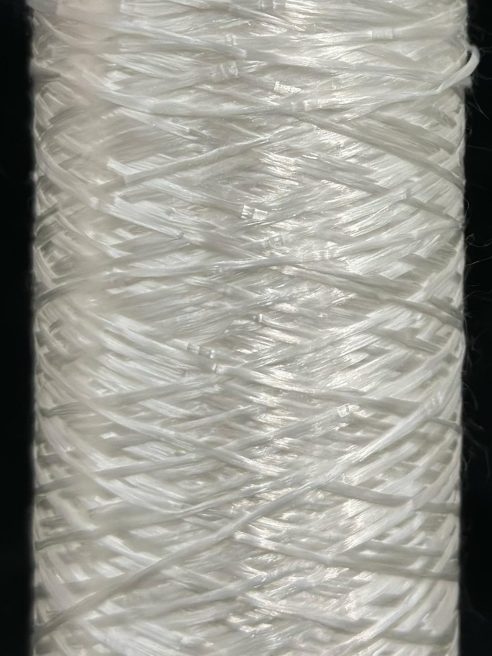
Using waste cotton fabric and a (presumably) proprietary production process, the Hong Kong Research Institute of Textiles and Apparel (HKRITA) and Seiko Epson Corporation (Epson) have successfully developed regenerated cellulose fiber with a silk-like sheen.
“As an applied research center, HKRITA is dedicated to solving real-world problems and enhancing current practices and products,” said Jake Koh, HKRITA’s chief executive officer since joining the subsidiary last October. “We are thrilled to collaborate with Epson to recycle fibers and repurpose them into high-quality yarns. This cross-industrial collaboration is not only reimagining materials but also redefining the future of sustainable production.”
Related Stories
Epson, too, is “extremely pleased” with the joint development project’s yielded results.
“The selective application of this new wet process and our previously developed dry process should enable fiber to be regenerated from all waste cotton fabrics while reducing environmental impact,” Satoshi Hosono, executive officer at Epson, said.
The process starts by combining each company’s offerings.
For Epson, that would be its Dry Fiber Technology. The Japanese multinational corporation’s proprietary set of tech tools is used for breaking down fabrics without the use of water. This defibrating textiles technology then, “integrates” with the HKRITA’s nondescript fiber-dissolving technology.
The process itself is something of a mass-balancing equation.
First, defibrate the discarded cotton fabric into a powder-like state. Then, dissolve the cotton in a special solvent. Finally, extrude it through a nozzle into a coagulation bath, where it solidifies and is spun into fiber.
The resulting regenerated cellulose should be strong like cotton and smooth like silk, per the partners, of expected use by sateen seekers and those “in high-end materials such as scarves, neckties and suit linings.”
“Moreover,” a company statement read, “since the short fibers that occur during the regenerated fiber production process can also be used rather than discarded, as was usually the case, this regeneration process can help to increase the total clothing recycling rate.”
The HKRITA’s booth at the UKFT-partnered Textiles Recycling Expo in Brussels next week will have additional details surrounding the development. Looking further, the HKRITA and Epson aim to accelerate the adoption of regenerated fibers in an iterative effort to mitigate the mounting global textile waste challenge(s).
The two signed a joint development agreement last January to “establish technology for defibrating hard-to-recycle fabrics and expand real-world fiber recycling,” Epson said at the time.