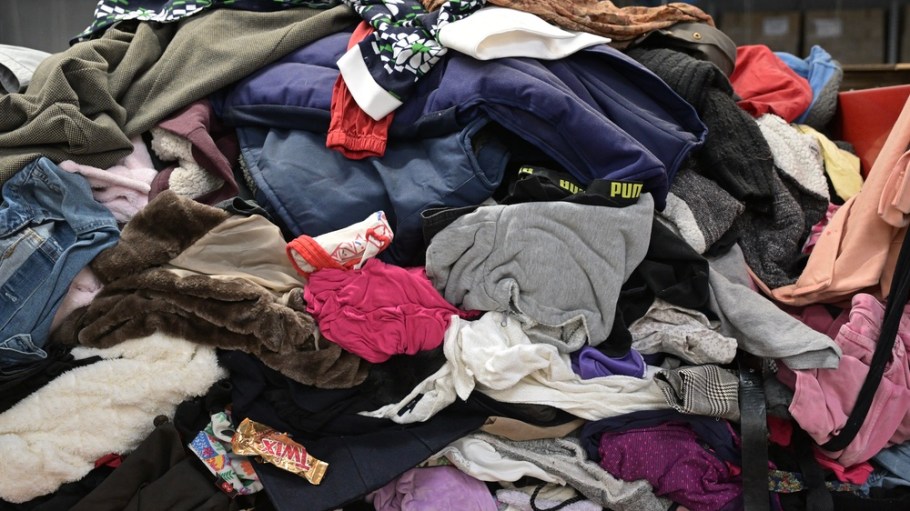
The European Union is moving forward with its ban on destroying unsold clothing, footwear and accessories.
On Monday, the European Commission adopted new measures under the ecodesign for sustainable products regulation, including requirements for companies to disclose the volumes of unsold consumer goods they write off as waste and clarifying the circumstances under which destruction is permissible, such as for safety reasons.
The new rules, the 27-member bloc’s executive body said, will “help cut waste, reduce environmental damage and create a level playing field” for companies seeking to implement more circular business models.
Related Stories
The prohibition, together with the delegated and implementing acts, will apply to large companies from July 19. Medium-sized firms are poised to follow in 2030. Disclosure rules under the ESPR, which big businesses are already expected to comply with, will also take effect for their medium-sized counterparts in 2030.
The destruction of unsold inventory is an open secret in fashion, even though exposures of the practice inevitably spark public outrage. A memorable recent example is Burberry’s 2018 incineration of nearly 30 million pounds ($41 million) worth of bags, clothes and perfume to prevent their resale on the gray market.
But brand protection is only one reason this happens. Simply put, it’s often cheaper and easier to get rid of surplus goods than figure out how to recirculate them, especially in a supply chain that’s designed to flow one way.
The rise of online shopping has resulted in nearly 20 million returned items being discarded annually in Germany alone. Amazon drew criticism in 2021 after Greenpeace Germany released undercover footage showing employees at a Winsen logistics center in Lower Saxony sorting unsold products at so-called “destroy stations,” in violation of a “duty of care” law intended to prevent intact and usable goods from being thrown away.
The European Commission also estimates that 4-9 percent of unsold textiles are destroyed before being worn each year on the continent, generating roughly 5.6 million tons of carbon emissions, or the equivalent of Sweden’s total net emissions in 2021. Instead of tossing this stock, it said, companies should manage it more effectively by exploring alternatives such as resale, remanufacturing, donations or reuse.
Jessika Roswall, commissioner for environment, water resilience and a competitive circular economy, said that although the textile sector is leading in the transition to sustainability, the statistics on waste reveal a need to act. The new measures, she added, will allow the textile sector to be “empowered” to “move toward sustainable and circular practices,” boosting the EU’s competitiveness and reducing its dependencies.
Still, there are several exceptions to the ban, including health and hygiene reasons, damage from handling that cannot be repaired cost-effectively, non-acceptance of products offered for donation, the expiration of licensing agreements, unsaleability due to intellectual property infringement and cases where destruction has the least negative environmental impact. This, the European Commission said, ensures the prohibition applies “in so far as it is needed and proportionate.”
At the same time, the law fails to address what many see as the main driver of rampant destruction: overproduction. The concept of “degrowth” remains controversial, even though the burden of the constant churn almost always falls on the global South, whose secondhand markets struggle to shoulder it.
“Here’s the uncomfortable truth that doesn’t fit neatly into a policy press release. Unsold stock is not an accident. It is a business model,” Muchaneta ten Napel, founder of the fashion policy consultancy Shape Innovate, wrote on LinkedIn. ”So when the EU says that 4–9 percent of textiles are destroyed before ever being worn, I don’t hear ‘waste problem,’ I hear ‘overproduction problem wearing a sustainability costume.’”
And while Emily Macintosh, senior policy officer for textiles at the European Environmental Bureau, a network of environmental citizens’ organizations, said that a ban on the destruction of unsold goods should help prevent the accumulation of excess inventory, as well as change the culture around the high rate of consumer returns, “regrettably, some of the derogations to the law set out by the European Commission could be used as loopholes for companies to sidestep the ban and see many products in usable condition being destroyed.”
She said that one carve-out involving products that are unsuitable for remanufacture due to technical unfeasibility, such as challenges with stripping off labels and logos, could, for instance, provide companies with an incentive to design hard-to-remove logos on their items.
But there’s also hope—and more than a bit of expectation—that the regulation will begin to reshape supply chains. For Muhamad Ayyazuddin, chairman of the Pakistan Readymade Garments Manufacturers and Exporters Association’s North Zone, manufacturers should heed the 2026 and 2030 deadlines as “immediate signals” to invest in circular infrastructure today.
“Brands will be forced to internalize waste costs, pushing circular design, improved demand planning and reverse logistics,” he said. “Suppliers who can provide recycled fibers, take-back solutions and traceability will be preferred partners.”