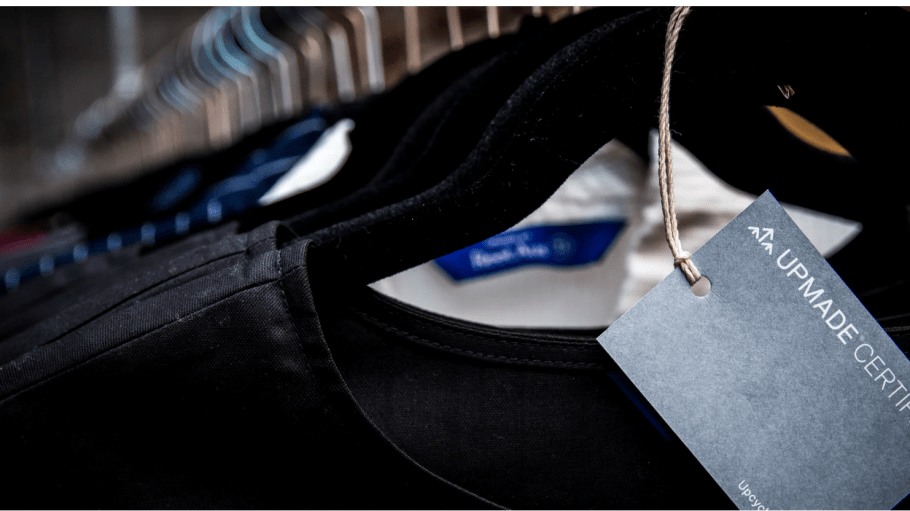
While pursuing her Ph.D. in sustainable design, Estonian fashion designer Reet Aus focused much of her research on how to increase circularity in the fashion industry.
“I was trying to understand how we could implement circularity to the production level,” she said. “And I realized there is huge potential, but at that time it was really far away still, and no one had done it in a systematic way.”
In 2012, Aus founded her own eponymous clothing brand and incorporates upcycled textile waste in her designs. And over the past three years, she has worked with other brands and entities to help them create circular collections using her Upmade upcycling process and certification.
Related Stories
Aus created the Upmade industrial upcycling method and certification through years of scientific analysis to expand broader use of pre-consumer textile waste to create new garments and other products. Upmade goes beyond simply transforming leftovers into new t-shirts and other clothing by working with manufacturers to integrate circular principles into their production process to reduce waste.
“Industrial waste is such an issue,” Aus said. “If we were able to get the materials before they become waste, but they are still leftovers, then we can actually do something with them.”
Aus said they piloted the program with the Beximco factory in Bangladesh and quickly learned that incorporating leftover fabrics back into the production process improved efficiency and the facility’s environmental impact. Aus estimates that a t-shirt made with virgin materials requires 1,571 liters of water to produce, while the same shirt made with upcycled materials only takes 11 liters to make.
From there, Aus began working to scale the Upmade process to more factories, working with the Stockholm Environmental Institute to develop the certification standard. Along with the facility in Bangladesh—which is one of the largest in that country—Upmade works with small- and medium-sized factories in India, Estonia, Canada, Turkey and Poland.
In addition to creating upcycled shirts and other items for her own brand, Aus has begun working with other companies and entities such as festivals and even a police department to produce custom Upmade garments. Over the past three years, Aus has worked with around 375 companies such as Bolt, the Song and Dance Celebration and the Tallinn Black Nights Film Festival to create garments incorporating upcycled textile waste. For the Bolt project, Upmade shirts and tote bags represented a waste reduction of 800 kg. of new denim and 3,500 kg. of jersey material being saved from the landfill. And in 2023, Aus’ UpMade method saved 11,616 kg. or around 25,608 pounds of leftover fabric from entering landfills.
Aus said these partnerships work because her collaborators have been open to design experimentation in the name of sustainability.
“We always have to consider what kind of fabrics are available, because we might not have a full palette of colors available,” she said. “Usually when a brand comes to this solution, they already have that open mindset.”
Each UpMade-product comes with a digital product passport and a transparent lifecycle analysis that quantifies waste diverted, CO2 savings and water and energy reductions.
“Transparency is key so that everyone understands how products are designed and what materials are used,” Aus said. “Every design decision affects the outcome. When your supply chain is transparent and you have this lifecycle thinking, it’s easy to put together a circular product.”
So far, Aus has mostly worked with brands in Estonia, but she’s in talks to expand UpMade globally to the United States and other areas. She hopes the approach will inspire others in the textile industry to rethink how they design their products.
“I would really like to see circularity become part of design, so we stop talking about it in terms of a problem we have to deal with separately,” she said. “When we have good circular design, we don’t have the waste issue. Big brands have to understand that circularity is something that you have to implement in the design and product development phase.”
While upcycling, repair and recycling programs are a good start, Aus said ultimately, the apparel industry has to address the problems of over-production and overconsumption largely driving by fast fashion.
“If we continue producing and consuming the way that we have been—it’s unsustainable,” she said. “And the solution is not the end of the lifecycle—the solution should be at the beginning.”