Consumers might think of cotton as a soft, natural fashion and lifestyle product, but Cotton Incorporated views it as a scientific challenge.
At Cotton Incorporated’s Research and Development Center in North Carolina’s Research Triangle Park, the team works with production-scale equipment to develop innovative and sustainable cotton yarns, fabric structures and finishing techniques that can be scaled up by brands. In fact, since the 1980s, Cotton Incorporated’s R&D team has developed almost 8,000 fabrics.
Related Stories
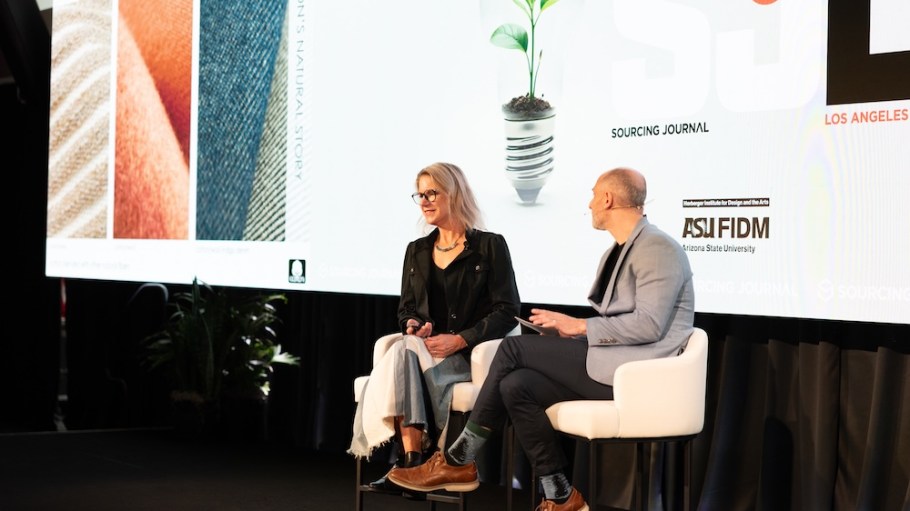
In the panel “Cotton: Engineered by Nature” at Sourcing Journal’s LA Sustainability Summit, Yvonne Johnson, senior director of product development at Cotton Incorporated, explained how these innovations make cotton and its blends more biodegradable, durable and efficient, with sustainability the major throughline. “The big push really has been, how can we do things with less water, energy and chemicals? In other words, we want to do less harm.”
One focus of Johnson’s team has been enhancing cotton’s natural properties so they can match—and even rival—synthetic fibers, especially for activewear and outerwear categories. Cotton Incorporated’s development of water-repellent and abrasion-resistant technologies, including Storm Cotton for water resistance and Tough Cotton for durability, help reduce waste and extend product lifespan. Such technologies have already made their way into consumer products at Duluth Trading, Kohl’s and Walmart.
For activewear, the team’s TransDry moisture management technology reduces cotton’s high absorbency, rendering it hydrophobic—or “water hating”—and thus boosting moisture wicking. “We engineered fabric structures where we combined TransDry cotton with regular cotton, so now it’s really great for activewear you can wear to the gym,” said Johnson, noting that Under Armor utilizes the technology.
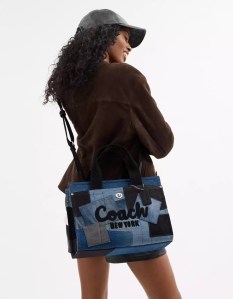
Circularity is also key, with innovations like quilted fabrics made from 100 percent recycled cotton fibers or sourced from post-consumer denim and T-shirts. These materials not only incorporate recycled input materials but are constructed using entirely cotton-based elements like sewing threads, making them fully biodegradable at the end of their lifecycle. “You have to think about that,” said Johnson. “If you’re sewing something that’s got a polyester core, what are you going to do with it at end of life?”
The R&D team is also working on incorporating cotton into other areas traditionally dominated by synthetics—particularly warp knits and seamless apparel. Warp knits, which are typically 100 percent synthetic, are being reimagined with cotton applications for categories like activewear pants. Similarly, seamless apparel (which evolved from hosiery and relies heavily on synthetics) is another cotton frontier. “We are seeing a lot of opportunity there,” Johnson said.
Cotton also “plays well” with other natural fibers, such as linen and wool, offering breathability and insulative properties when made with double-layer constructions and three-dimensional pockets in the fabric to reduce air permeability. Cotton Incorporated’s R&D team has been working for years on a natural, cotton/wool fleece-like alternative that isn’t just biodegradable, but naturally flame retardant as well.
Other ways Cotton Incorporated has been reducing the industry’s reliance on water, chemicals and energy is to develop fabrics made from cotton in its natural, undyed state. “Cotton in its natural, cream-colored state is so beautiful,” said Johnson, adding that the company uses natural, protein-based enzymes to clean waxes and dirt off the cotton without chemicals.
Lastly, technology like digital sampling is another way to mitigate cotton’s impact during the production phase. Cotton Incorporated offers “digital twins” of their physical fabric swatches, enabling designers to prototype digital garments before committing to physical production. “Being a textile designer, tactility is still so important, but it helps reduce how many physical prototypes you make,” she said.