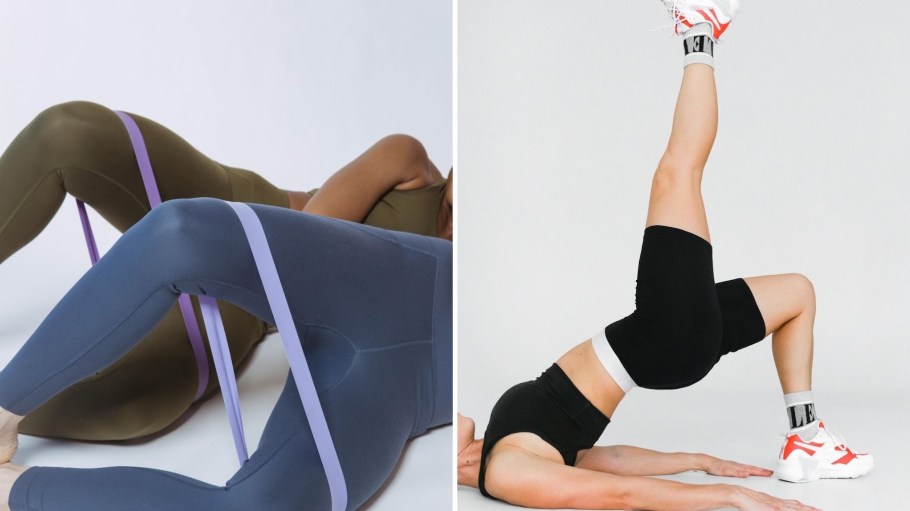
Elastane may account for just a sliver of most garments, but it’s one of fashion’s biggest circularity blockers.
Often referred to as spandex or sold under brand names like Lycra, the polyurethane-based synthetic fiber is prized for its extreme stretch and recovery, capable of extending up to five times its original length before snapping back into shape. That performance has made it indispensable across everything from denim to athleisure.
Today, elastane is present in roughly 80 percent of apparel. While it is typically added in small amounts—often 1 to 5 percent by weight in cotton or wool garments, and up to 20 percent in polyester or polyamide blends—those trace percentages carry outsized consequences. Even minimal elastane content can contaminate textile recycling streams, disrupting fiber-to-fiber recovery for high-volume materials like cotton and polyester. The result? Most elastane-containing garments remain locked out of circular systems, with downcycling or landfill often the only viable end-of-use options.
Related Stories
That bottleneck is the target of Stretching Circularity, a new initiative launched by Fashion for Good. The project is designed to pressure-test whether elastane alternatives—and emerging recycling pathways—can meet the performance, scalability and commercial thresholds brands require to move beyond pilots.
While a wave of so-called next-generation elastane solutions is beginning to surface, most remain fragmented and early-stage, lacking the pilot-scale validation brands need to move forward with confidence. Serious technical, economic and processing hurdles still stand between these materials and large-scale adoption. Stretching Circularity’s coalition model is intended to close that gap by bringing brands, innovators and supply-chain partners together to generate shared, comparable data that can de-risk adoption and support scale.
“Lower-impact elastane solutions exist, but they lack the pilot-scale validation brands need to scale them confidently,” said Katrin Ley, managing director at Fashion for Good. The initiative, she added, aims to provide that missing data—turning a well-known recycling “contaminant” into a “functional component of a circular supply chain.”
The initiative is structured around two workstreams. One focuses on evaluating next-generation elastane made from alternative inputs, including biobased and other non-fossil feedstocks. That testing includes demonstrator garments—a technical T-shirt containing 10 percent elastane and a non-technical version with 2 percent—to assess real-world performance. The second workstream examines regenerated elastane produced through early-stage recycling innovations. Both tracks follow a pilot-scale validation model intended to generate comparable data on durability, environmental impact, cost and scalability.
Beyond material testing, the initiative also aims to clarify what’s viable—and what’s missing—in circular elastane. That includes mapping the current innovation landscape by reviewing biobased and recycled elastane materials, alongside emerging separation and recycling technologies, to pinpoint gaps across the value chain.
To that end, Stretching Circularity brings together a cross-value-chain consortium of industry players. Innovation partners include Reformation and On, with Levi Strauss & Co. participating via its Beyond Yoga brand and Ralph Lauren Corporation serving in an advisory role. Implementation support comes from Paradise Textiles and Positive Materials, while the ecosystem partners—the Ellen MacArthur Foundation and Materiom— support benchmarking and knowledge-sharing across the group.
“Elastane is one of the most overlooked blockers to true circularity in fashion: it’s everywhere and yet there is a significant challenge to recovering it at scale,” Carrie Freiman Parry, senior director of sustainability at Reformation. “Stretching Circularity is about tackling that problem at the root and proving that lower-impact stretch materials and new recycling pathways can meet real performance and design standards.”
Looking ahead, the initiative is also intended to support adoption and scale by producing comparable data on material performance, commercial feasibility and barriers to growth. In parallel with pilot programs, the group will assess how elastane alternatives perform at the end of use—particularly within complex blended textile systems—where circularity efforts have historically stalled.