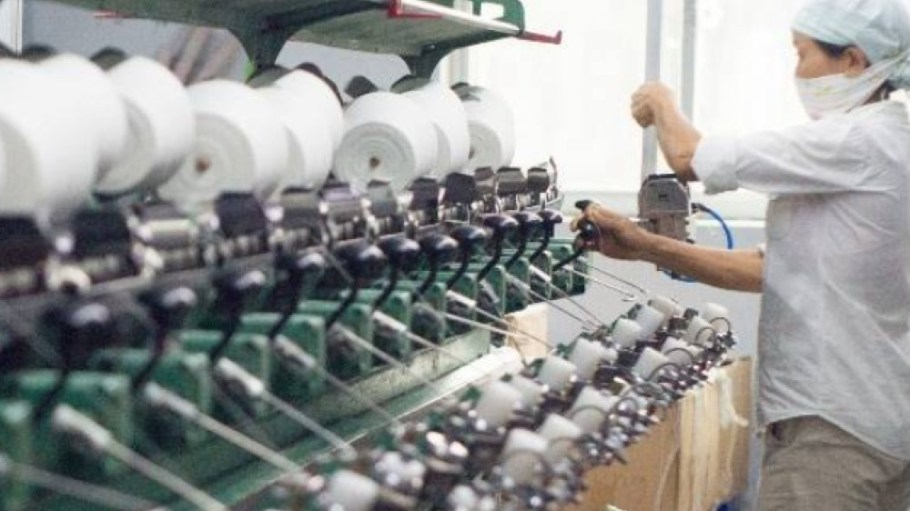
Global apparel manufacturer Crystal International has made a new move toward its sustainability goals by joining environmental nonprofit Textile Exchange.
Hong Kong-based Crystal International recently outlined a number of environmental goals such as increasing circularity and climate action as part of its Sustainability Vision 2030. Currently, more than 90 percent of Crystal’s factories have earned sustainable material certifications such as the Global Recycled Standard (GRS) and the Organic Cotton Standard (OCS). The company’s vertically integrated fabric mill in Vietnam also had around 55 percent of its raw materials receive GRS or Recycled Claim Standard certifications.
Related Stories
Crystal International recently launched its CirClimate collection, which is made with biodegradable, climate-adaptive fabric made with sustainable wood pulp and recycled waste. And earlier this month, Crystal launched the Corporate Waste Management System Framework, which coordinates waste management across the company’s factories to maximize the re-use of waste materials. Additionally, five of Crystal’s factories piloted sharing textile waste data on the Reverse Resources platform for enhancing traceability and transparency while also advancing textile-to-textile recycling.
Joining the Textile Exchange as a partner will help Crystal International to expand the adoption of preferred sustainable alternatives in materials and manufacturing processes that will allow the company to minimize its environmental impact. That includes exploring fiber solutions aligned with the Textile Exchange’s Preferred Fiber & Materials Matrix.
“Combining the available tools established by Textile Exchange with our own expertise, we aspire to connect with pioneers and innovators within the driven community to co-develop more nature-friendly fashion products through collective action,” said Catherine Chiu, vice president of corporate quality and sustainability at Crystal International.
Crystal International manufactures a wide array of apparel primarily in six categories: lifestyle wear, sportswear, outdoor apparel, denim, intimates, sweaters and knitted fabrics. In addition to its facilities in Hong Kong and Vietnam, the company also operates nearly 20 production factories in China, Cambodia, Bangladesh and Sri Lanka.
Last fall, Crystal rolled out its Sustainability Vision 2030 covering three goal categories: Regenerating nature, resourcing people and revitalizing community. Built in reference to the United Nations’ Sustainable Development Goals, which include clean water and sanitation, climate action, affordable and clean energy, no poverty and zero hunger. Along with its company-wide plan, Crystal’s individual factories have their own specifically designed goals and timelines for sustainability.
Earlier this year, Crystal released its 2024 sustainability report, which outlined gains toward reaching its longer term environmental goals. Last year, 40 percent of the company’s sportswear fabrics incorporated recycled polyester and around 85 percent of its denim was made of BCI cotton. The company also has focused on scaling smart manufacturing, including a smart warehouse management system, smart AGV system, smart cutting system and smart production lines. Crystal also is using RFID technology to track the movement of semi-finished and finished products along its production process, with the overhaul expected to be completed mid-2026.