For two years, the Autosort for Circular Textiles Demonstrator (ACT UK) project has worked to create a blueprint for an automated textile sorting and pre-processing (ATSP) plant that can convert non-reusable textiles (NRT) into high-quality feedstock for textile-to-textile recycling.
Engaging the public for citizen pre-sorting trials emerged as a key means for measuring the challenges and opportunities in enhancing collection processes, ACT UK’s final, 324-page report revealed.
“The aim of the project has always been clear: to lay the groundwork for a facility that turns waste into opportunity and to support the UK market in moving toward circularity,” said Adam Mansell, CEO of the UK Fashion and Textile Association (UKFT). “What was really encouraging about the ACT UK project was how it brought together the entire textile supply chain—from major retailers to local manufacturers, technology specialists to recyclers—to tackle a global challenge with shared purpose.”
Related Stories
For context, ATSPs are facilities designed to rapidly and accurately sort NRTs using advanced technologies—like near-infrared spectroscopy, machine learning and robotic handling. Considering these automated plants can consistently churn out high-quality feedstock, the program said ATSPs act as the “missing link” needed to seriously scale up textile-to-textile recycling—something of significant interest, considering the UK discards an estimated 744,000 metric tons of post-consumer textile waste annually.
“We’re under no illusion about the scale of the challenge,” Mansell said. “But this report shows that change is possible.”
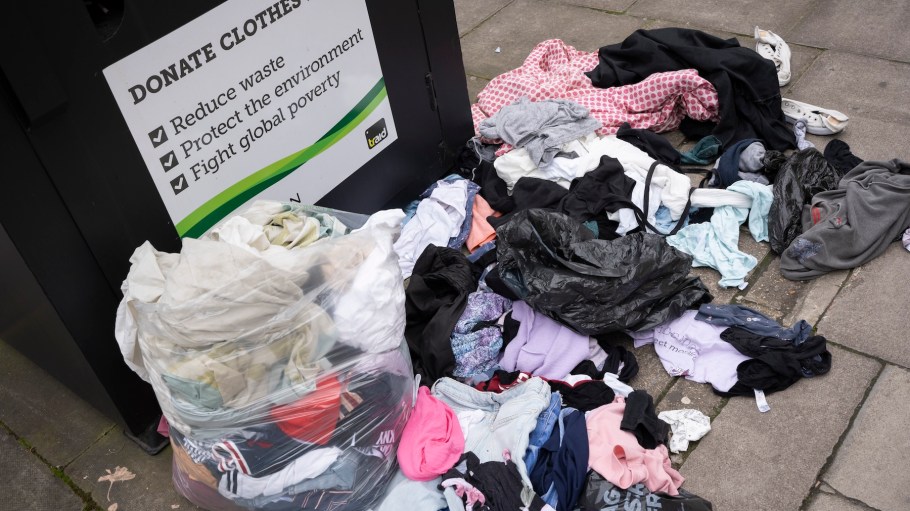
To support the business case for this planned ATSP network—and to understand how to improve the collection process—six citizen pre-sorting trials were conducted. Measured against four collection types, the core goal was to determine if the public could effectively sort textiles into reusable (RT) and non-reusable (NRT) categories before collection.
Ideally, this pre-sorting process affords a direct and efficient NRT stream to ATSP facilities—thus eliminating the need for commercial operators’ manual sorting.
The Tesco x Salvation Army trial focused on bring-bank collection, while the Dunelm x Salvation Army trial was on postal take-back collection. The Reskinned trial focused on postal take-back collection, too. The Marks & Spencer x Oxfam trial focused on postal collection.
The Crisis trial was the only one to focus on in-store collection, aiming to understand customers’ ability to pre-sort, to increase total volumes collected. The charity encouraged customers to pre-sort their donations before dropping them off at two of the organization’s London storefronts. It found that, while customers welcomed recycling options for their NRT, the process was challenging for staff. Shoppers typically expect to donate, browse and leave—extended discussions about an item’s lifecycle caught the teams off guard, per the report, with some shop teams reported initially feeling uneasy initiating those conversations as well.
That said, citizens showed sincere support across all trials. Most saw noticeable gains in textile donations compared to control sites; what ACT UK said demonstrates potential to divert NRT from landfill—and incineration.
“Feedback gathered from surveys and notes left in sorting bags showed that citizens overwhelmingly supported the trials, primarily motivated by environmental concerns,” the report reads. As for their success? Not as overwhelming. The accuracy of pre-sorting was a recurring challenge across several trials, causing the trials to fall short of a direct NRT stream.
“Overall, citizens did not separate NRT from RT to the levels needed for a direct stream to ATSP facilities. However, the trials showed promising signs that accuracy could be improved,” the report reads. “A clear market demand for recycled content and financial viability for NRT is needed to enable effective collections interventions. Ultimately, building a NRT market will require systems-level change.”
To recap: ACT UK’s final report assessed the feasibility of developing a blueprint for a commercially sustainable ATSP facility. And, while the project looked at textiles systems through this singular lens—which is automated sorting and pre-processing for textile-to-textile recycling—the 20-month-long project’s results “made it increasingly clear that a full systems-based approach to policy, people and planet is required to secure a sustainable future for all,” the report reads.
Transforming the value chain into a circular ecosystem will require collaboration across multiple entities, per the consortium, not isolated action. A network of ATSP facilities could drive this shift, though success needs new government policies and upfront investments to overcome immediate and long-term commercial challenges.
“The UK has a genuine opportunity to modernize its textile manufacturing infrastructure and build a circular, resilient supply chain,” Mansell said. “While investment, innovation and collaboration are still urgently needed, the foundations being laid today across sorting, recycling and skills can unlock long-term potential for sustainable growth.”