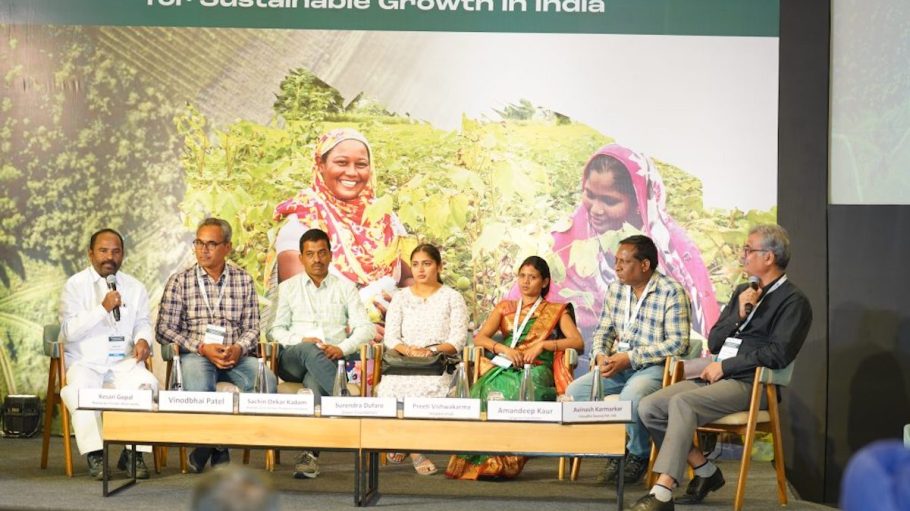
Cross-commodity collaboration was the theme last week in New Delhi at an event sponsored by Better Cotton which was designed to find common ground and common opportunities among all stakeholders in India’s massive agricultural community.
Called AgriClimate Nexus: Food, Fiber and Regeneration for Sustainable Growth in India, the event convened participants from farming communities, the private sector, civil society and government to explore a sustainable and regenerative future for farming that would protect the environment and improve the lives of the millions of small farming communities involved in the production of food and fiber crops in India.
Related Stories
Hosted by Better Cotton, the world’s largest cotton sustainability initiative, with IDH, the Sustainable Trade Initiative, the goal was to build consensus on the merits of regenerative agriculture and identify opportunities for action across policy, business, finance and research. Discussions centered on the most pressing problems in India, where 46 percent of the workforce is involved in agriculture. They included climate change and carbon sequestration, preventing soil degradation and water scarcity, the loss of biodiversity, food security, greenhouse gas emissions and restoring ecosystems.
Jyoti Narain Kapoor, the director of Better Cotton’s India program, noted the importance of making the right kind of progress to ensure the future of farmers in India, many of whom are smallholders operating on parcels no bigger than two hectares.
“Scaling the use of regenerative agricultural practices will be important to farming communities globally if they’re to ensure their operations are resilient in the face of climate change,” she said. “This convening will go a long way to strengthening cross-commodity relations and aligning organizations committed to supporting this cause.”
Almost one million farms in India hold Better Cotton licenses.
Pramit Chanda, global director, textiles and manufacturing for IDH, reiterated the goals of the cross-commodity initiative. “Through this event we aspire to create a dynamic, multi-sectoral network and mobilize stakeholders towards a more sustainable and regenerative future for agriculture in India,” he said. “In this, it is paramount that each stakeholder group considers the role they can play to make this a reality.”
Better Cotton’s approach to regenerative agriculture is based on the notion that farming can give back to nature and society rather than take away from it. It emphasizes the dependency between sustainable farming and sustainable livelihoods. It places great importance on the reduction of emissions and carbon sequestration.
Better Cotton updated its Principles and Criteria earlier this year, revising its standards on regenerative practices including maximizing crop diversity, minimizing soil disturbance and maximizing soil cover.
It is considering adding another license level that would focus on regenerative practices and create funding and market opportunities. It is seeking out partners to help drive change at the field level.
The 2030 Impact Targets that Better Cotton launched in April restate the organization’s commitment that 100 percent of participating farmers improve the health of their soil.
Together, Better Cotton and IDH will continue to engage in the cross-commodity dialogue on regenerative agriculture, soliciting input from the food and fashion industries, governments, civil society organizations, academia and finance.