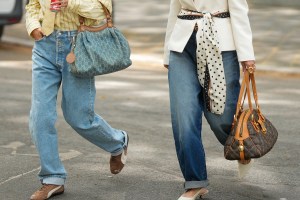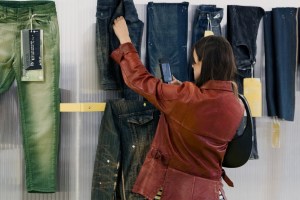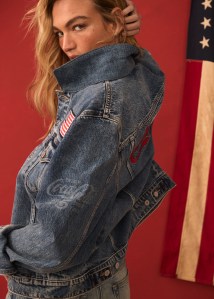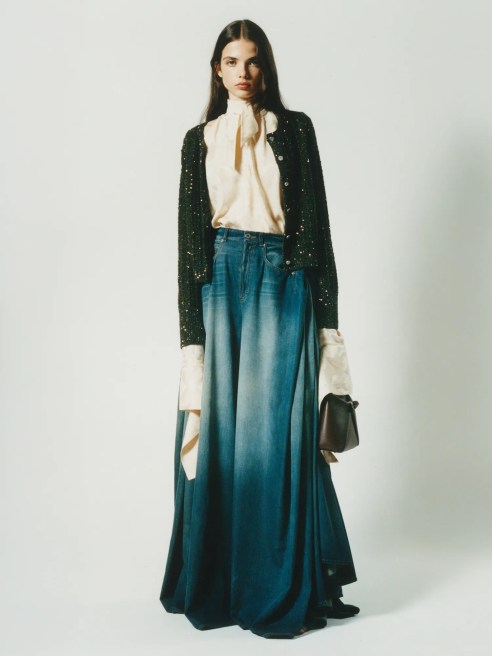
While 2025 denim was nearly a carbon copy of 2024—loose fits, Western influences, denim coordinates and minimal distressing—2026 could see an injection of newness. Slimmer footwear is streamlining leg shapes. Creative leadership changes are bringing fresh ideas to established labels and designers are looking beyond the ’90s for vintage inspiration.
“After a few seasons of over-the-top, more-is-more design, I do think there’s a slow return towards core and heritage jeanswear happening,” said Amy Leverton, founder of Denim Dudes, adding that trends aren’t as reliable as they were a decade or two ago.
Related Stories
The cadence of denim trends also appears to be slowing, especially as the hard-wearing, democratic fabric is woven into a wide breadth of collections and categories. Although trends may appear fast-moving and widespread, Ana Paula Alves de Oliveira, strategic director at Be Disobedient, cautioned against being misled by technology. What once took months to spread across the globe can now circulate in seconds on social media—but that speed doesn’t necessarily reflect real popularity or justify investment.
“In 2026, it’s difficult and risky to bet on a single dominating silhouette. We’re entering a multi-plural moment, where consumers prioritize personality, individuality and personalization over prescribed trends,” she said.
Additionally, brands need to consider younger consumers’ mindsets.
Gen Z—and soon Gen Alpha—are pragmatic, research-heavy buyers, according to Alves de Oliveira. Whereas prior generations would overspend on aspirational products and labels, she said these young cohorts seek authenticity, value, resale potential, repairability and brands with clear messaging. “They spend intentionally also because they don’t have much to spend,” she added. “They think more, they search better. This economic behavior shapes design.”
The eras tour
Denim has always kept one foot in the past but instead of the ’70s or ’90s, the bold, vibrant spirit of the ’80s is reshaping vintage design with a new perspective.
Aligning with trends seen on Saint Laurent, Chloe and Versace’s Spring/Summer 2026 catwalks, Pinterest said a stripped-down version of ’80s opulence is on the horizon. Sculptured shoulders, exaggerated silhouettes, color blocking, chunky belts and hearty gold hardware are some of the ways the trend could infiltrate the denim category. Metallic gold coatings could replace cool blue and silver tones that dominated during the height of Y2K’s revival.
Leverton said a higher waisted, ’80s mom silhouette is “creeping back in” after seeing it on notable runways such as Celine and Dior. “Crease-front details and softened acid finishes [are] optional but advised,” she added.
The extravagant decade is also on WGSN’s radar, which named opulent gold a key trend driver for the year. “We’ve been tracking the rise of ’80s influences in recent seasons, seen in the colorful denim spotted at the S/S ’26 shows, as well as maximalist, ’80s party and office wear aesthetics,” said Susie Draffan, WGSN’s senior denim strategist.

It’s a look contrary to the old money aesthetic brands like The Row and Loro Piana helped cultivate a few years ago.
“I think we are moving away from the strong quiet luxury trend that has dominated fashion for a few seasons. Now we are entering a much more hybrid, complex, and expressive way of dressing,” said Julieta Mercerat, the PV Fashion Team’s denim project manager, and Desolina Suter, head of fashion at Première Vision. “Maximalism is growing in silhouettes, shoulders, and volumes, as well as in richer texture combinations and multicultural references that fuel creativity.”
The briefly shunned skinny jean may have a good year as well, thanks to consumers’ rising nostalgia for the 2010s.
Skinnies are in the mix, according to Draffan, noting how the body-con fit has been picking up momentum on the catwalks for several seasons. “We’ve been looking at stovepipe styles making a return, but also super stretch, true skinnies have been spotted at Michael Rider’s influential debut Celine show, and they were also part of Telfar’s second denim drop, so watch this space,” she said.
Skinny’s comeback chimes with the rise in nostalgia for the 2010s era, which Draffan said will continue to “build with darker, indie sleaze inspired looks coming through, in line with the revival of rock music.”
Leverton has been tracking the youth-driven indie sleaze revival for several seasons. In youth culture, she said skinny black drainpipe jeans are back. “Although this market is niche and emerging, it’s already been noted on the Burberry, 424 by Guillermo Andrade and Dsquared2 runways as well as the Alice of Hollywood x Ksubi collaboration,” she said.
The 2010s are also showing up in the revival of boho. Leverton said the aesthetic is bringing back a “certain degree of embellishment and opulence, where laser effects, ruffles, stud work and embroideries reign supreme.”
Mercerat and Suter tie these feminine details to an edgier vibe. “The punk aesthetic is evolving into a more decorative and romantic direction, with more embellishment, lace, and embroidery,” they said.
Y2K influences are still around but in more subtle, indirect ways, Leverton said. For instance, she said late ’90s and early 2000s jeanswear codes like twisted seams, utilitarian detailing and technical accents is an emerging trend in the vintage market.
Tilmann Wrobel, creative director of Monsieur-T, predicts that one defining Y2K revival trend for 2026 will be low-rise jeans. Unlike their early-2000s predecessors—typically slim and low only at the front—the new iteration will sit lower at both the front and back. The silhouette will also be looser, favoring pear and balloon shapes that reflect the broader move toward wider fits.
Practical matters
Instead of referencing a decade or subculture, Alves de Oliveira predicts the next wearable trend to be a smart, functional, and tactile aesthetic rooted in workwear and heritage techniques.
“We’re firmly moving into a hybrid aesthetic,” Alves de Oliveira said. “Today’s consumers understand longevity, seasonless design, repair culture and circularity, and designers must respond with pieces that last, both physically and emotionally.”
Wrobel agrees, adding how Gen Z is “not looking back that much.”
“I feel that we are losing this idea, basing trends on digested come-back decades,” he said. “Gen Z sometimes doesn’t even have the time to learn or understand of what used to be cool.” Instead, he said “accents of local culture and handicraft” from Africa, Japan and the American West, or luxurious craftsmanship is feeding novelty designs.
Comfort and individuality will continue to outweigh fleeting fads and TikTok-driven trends.
“I think that if we’ve learned anything in the past few years, post-pandemic, it’s that one silhouette is unlikely to dominate the denim landscape in the near future,” Draffan said. “It’s still going to be about a range of jeans silhouettes that can be switched out, depending on the wearer’s look and mood.”
Wide legs will continue as the de facto key style, with straight legs remaining appealing for their versatility and timelessness, while barrel and balloon legs are gaining momentum. Draffan called out the exaggerated, tapered carrot-leg styles that seen at Marni and at the S/S ’26 Celine show.
Details help give these roomy fits a new look. “2026 is still going to be predominantly baggy still, but the twisted seam detail is continuing to update that silhouette to give it 2026 freshness,” Leverton said.
The unconventional construction has been a fixture in runway collections for several seasons. Designers like Juun.J, Junya Watanabe and Daveed Baptiste have embraced it and now its trickling into mainstream brands’ collection via barrel shape legs or other nostalgic-inspired styles like Levi’s Twisted Baggy Straight Jeans.
Additionally, mom jeans never full left the picture, rather they lingered under the guise of new monikers like barrel fits and balloon jeans.
Alves de Oliveira said there is a “clear return of volume and engineered proportions” such as baggy, balloon, slouchy shapes and re-constructed silhouettes that express identity through structure. This demand aligns with consumers’ focus on comfort—be it through tactility, weight or structure that visually communicate quality. Additionally, she said consumes are seeking natural fiber blends.
“This awareness explains the comeback of rigid fabrics, blended cotton alternatives and sculpted fits. For 2026, brands that combine comfort, proportion, identity and transparent storytelling will stay culturally relevant,” she said.
Beyond fits, Wrobel said to watch wool blends in 2026 as well as crosshatch and other novelty texture effects. These details, he added, are not intended to be standout from afar, but instead draw the savvy denim consumer closer to touch and feel the product.
Down the road
Behind the scenes, denim manufacturers are innovating new ways to produce and elevate jeans—and the payoff from their R&D investments will begin to surface in 2026.
“Denim remains one of the few businesses where technology and craftsmanship truly coexist, and 2026 will reflect both,” Alves de Oliveira said.
Leverton anticipates seeing more from digital denim innovators like Next Printing and Lab Denim, which is now speaking openly about its alignment with Levi’s and Pacsun. Additionally, China-based Stella Blu is pushing the envelope with creative trompe-l’œil designs achieved through NTX’s Cooltrans technology. “There’s so much more growth expected in this field,” she said.
From high-definition prints on denim twill to printed raw and washed jeans, Wrobel is enthusiastic about the creative and sustainability potential that digitally printed jeanswear presents. “I think we still have to learn and discover a lot more about printed denim,” he said.
Regarding fibers, Mercerat and Suter said recycled cellulosic and cotton fibers remain promising, while refined blends such as cotton mixed with wool or silk can introduce new aesthetics and performance qualities to cotton fabrics.
Advancements in coatings are also giving denim new and surprising looks. Finishes that give fabrics a natural and sophisticated shine—such as calendaring and natural resins or waxes on cotton bases—are interesting avenues to explore, according to Mercerat and Suter.
Leverton called out Isko’s new coatings that give denim a plastic-like finish or a super soft, liquid metal effect. She added that almost every mill and manufacturer is playing with coatings as well as jacquard, and some are layering and combining these techniques to create something genuinely unique.
“Laundries are going to be loud next year,” Leverton said.