Soorty is advancing its spinning mill.
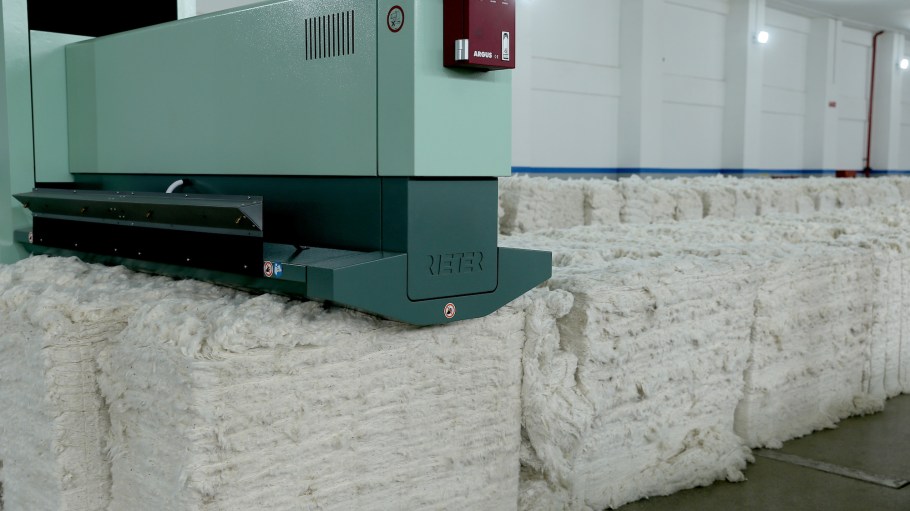
The Karachi, Pakistan-based vertical denim manufacturer announced last week that its state-of-the-art spinning mill is now fully powered by Rieter’s advanced ring spinning technology.
Soorty entered the partnership with Rieter earlier this year. Rieter is a Switzerland-based supplier of systems for manufacturing yarn from staple fibers in spinning mills. Through this strategic collaboration, Soorty can run 22 different fibers, from man-made cellulosic to recyclable synthetic fibers, efficiently at any given time.
Related Stories
The integration of Rieter’s spinning system includes 20 G 38 ring spinning machines running at spindle speeds between 12,000 and 18,000 rpm and the Autoconer X6 winding machine. The technology supports the production of high-quality slub yarns with diverse effects, which Soorty said are ideal for contemporary denim applications. Additionally, the spinning systems lowers Soorty’s energy consumption by optimizing performance.
“We’ve invested in the most advanced, fully automated machinery from Rieter for Soorty Spinning—not only for the performance, but also because we believe the technology that drives us should serve both quality and the planet. These systems give us the flexibility to work across a range of materials while using energy as efficiently as possible,” said Kashif Suleman, COO of Soorty Spinning.
To offer end-to-end traceability, Soorty and Rieter have also collaborated with Haelixa, whose technology provides a seamless solution integrated into Soorty’s spinning processes. By applying unique, invisible DNA markers to fibers during the blowroom stage, Soorty creates a verifiable fingerprint for each batch of textiles. This authenticates the yarn from fiber to fabric, all the way through to the finished product.
These enhancements reinforce Soorty’s broader vision for a regenerative, transparent textile value chain built on both performance and responsibility. Suleman said Soorty is motivated to adapt, reduce waste, recycle fibers and optimize resources.
“This is what building a future-ready, responsible textile operation looks like to us,” he said.