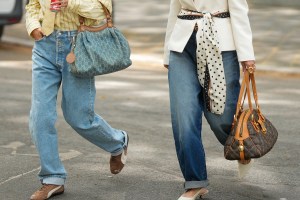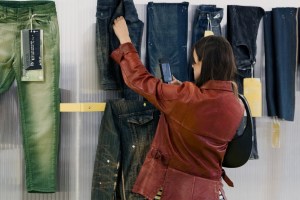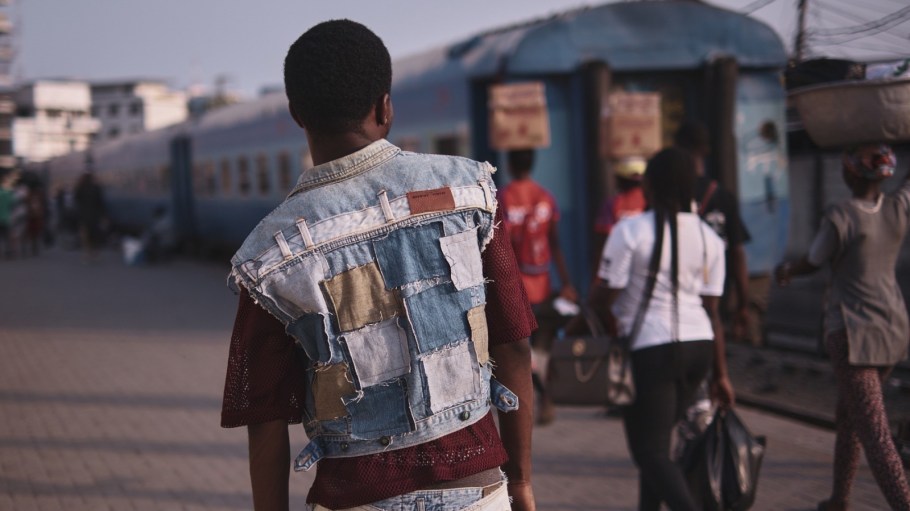
Kantamanto Social Club is on a mission to repurpose a fraction of the textile waste discarded in West Africa and resell it to the Global North.
Founded by Anabel Poh and Daan Sonnemans, this innovative venture supports a diverse network of retailers, tailors, designers and recyclers at Kantamanto Market in Accra, Ghana—the world’s largest secondhand clothing market. Through pop-ups and e-commerce platforms, Kantamanto Social Club showcases one-of-a-kind garments crafted from discarded denim and tapestries, while raising awareness about the harmful cycle of overproduction and overconsumption that plagues the fashion industry.
Related Stories
The marketplace is the product of a residency program with the Or Foundation, a not-for-profit organization working to develop solutions to fashion’s global waste crisis and the communities that are most impacted by it. The hybrid online program offers an in-depth exploration of the secondhand textile system, focusing on how vast quantities of clothing end up in Africa. Participants are encouraged to initiate small interventions in their local communities as part of the program.
“For us, we thought what if we sell these upcycled garments back to the consumer at a premium price to showcase the absurdity of the secondhand textile ecosystem,” Sonnemans said. “And that’s what we did, starting with a small exhibition in London.”
The Or Foundation estimates 15 million secondhand garments arrive weekly from the Europe and North America to the market. A community of more than 30,000 people working in the market is responsible for recirculating 25 million pieces of secondhand clothing every month through resale, reuse, repair, and remanufacturing. However, of the 15 million garments that enter Kantamanto every week, 40 percent leave as garbage because they’re too stained or damaged to resell.
Though still in its early stages, Kantamanto Social Club reinvests all profits into developing the project. Sonnemans currently works with eight designers, with plans to expand. Communication with designers largely takes place via WhatsApp, and Sonnemans plans to return to the market strengthen these connections. Garments are transported using the “suitcase trade” method, where items are carried by individuals traveling between Europe and Ghana, helping to keep the operation sustainable despite its small scale.
The garments range from bleached denim kimonos to jean jackets featuring Marvel comic prints. Sonnemans explained that denim is often of higher quality than other materials like cheap synthetics, making it a preferred choice for designers who appreciate its durability and aesthetic, particularly for patchwork designs.

Support for the vendors has never been greater. On Jan. 1, a fire of unknown origin devastated the market, killing two people and burning eight acres of stalls, or the equivalent of 60 percent of the market’s retail-facing side. More than 10,000 vendors have witnessed their livelihoods literally go up in smoke, including several of the businesses that work with Kantamanto Social Club. Two designers lost their whole shops, while others lost machinery and inventory. Sonnemans said some had to take out loans to buy new machines and have been struggling financially to get new materials to work with.
While selling one-of-a-kind garments online presents challenges—especially due to the variability in sizing—Sonnemans remains optimistic about the project’s long-term impact. He believes Kantamanto Social Club’s broader mission, to establish the market as a circular and sustainable fashion ecosystem, will resonate with consumers.
“I think it’s time to have communities like this take the lead in the conversation on how we should move to more sustainable, regenerative fashion,” he said.